 Yusuf Yesil, MD, MIS
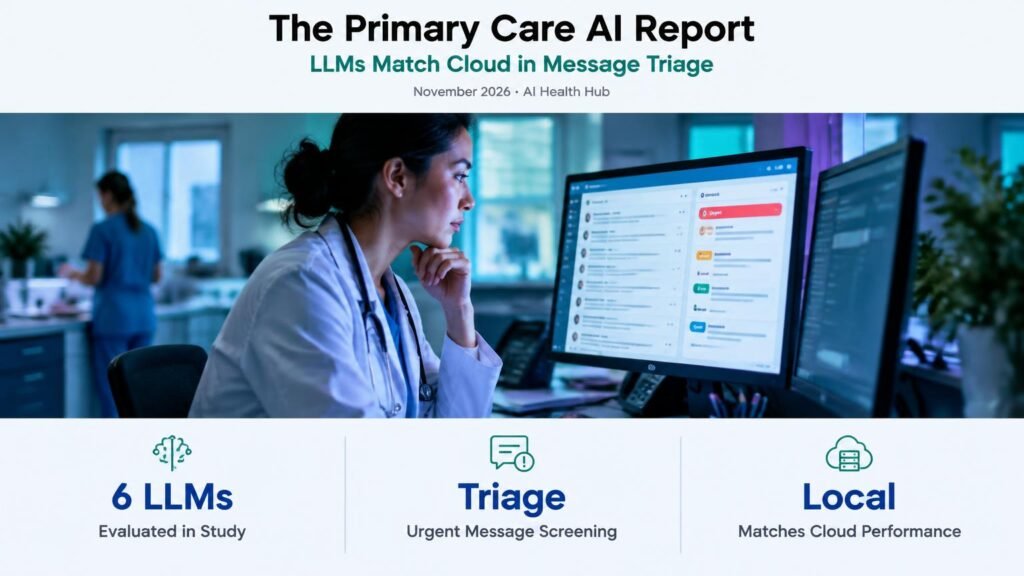
Patient portal messaging represents a substantial portion of primary care and outpatient communication. As inbox volumes surge, clinicians face increasing administrative workload, creating a risk that urgent patient concerns hidden within routine messages are delayed or missed.
Local vs. Cloud Portal Triage
A comparative evaluation published in npj Digital Medicine evaluated six large language models—including cloud-based (GPT-4o, GPT-5, GPT-5 Mini) and locally hosted open-weight models (such as Llama 4 variants)—to determine their efficacy in triaging urgent patient portal messages (npj Digital Medicine). The study demonstrated that locally hosted models can match the screening performance of cloud-hosted architectures. This finding offers health systems a pathway to deploy automated message screening without transmitting sensitive patient data to external servers.
Clinical Practice and Safety Considerations
While the study demonstrates technical accuracy in distinguishing urgent from non-urgent traffic, diagnostic classification performance alone does not equate to improved clinical outcomes. Retrospective evaluations of inbox screening cannot guarantee safe real-time execution without human oversight, as highlighted in previous evaluations of autonomous EHR workflow tools. Integrating automated triage into primary care operations requires strict clinician verification to prevent false-negative classifications from jeopardizing acute patient care.
Implementation Strategy
Health systems evaluating AI-assisted inbox management should prioritize pilot testing open-weight models on local infrastructure to address privacy concerns while validating triage accuracy against existing clinical nursing workflows.