Yusuf Yesil, MD, MIS
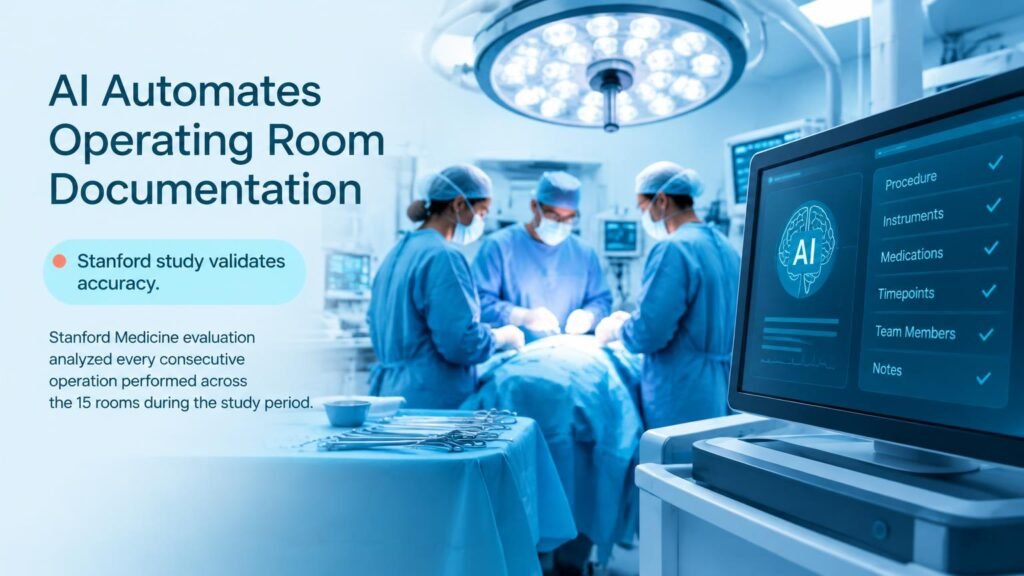
Surgical documentation routinely relies on manual entry, where tired clinical staff log patient arrival and exit times between critical care duties. A study at Stanford Health Care tested an automated alternative, deploying an ambient computer-vision platform across 15 operating rooms for eight months.
Precision Under Strain
The automated platform matched the accuracy of blinded human video reviewers across seven surgical specialties, 24 hours a day. In contrast, manual entries by nursing staff lagged by five to six minutes. This tracking delay degraded further during extended transplant procedures and late-night shifts, precisely when cognitive fatigue peaks.
System Limits and Next Steps
Automating time-tracking eliminates administrative friction and fixes administrative drift without adding cognitive burden to surgical teams. However, diagnostic accuracy in time tracking does not automatically equal improved patient outcomes.
Because this trial occurred at a single academic medical center, health system leaders must demand multi-site validation across diverse workflows before treating automated operating room documentation as a plug-and-play solution.