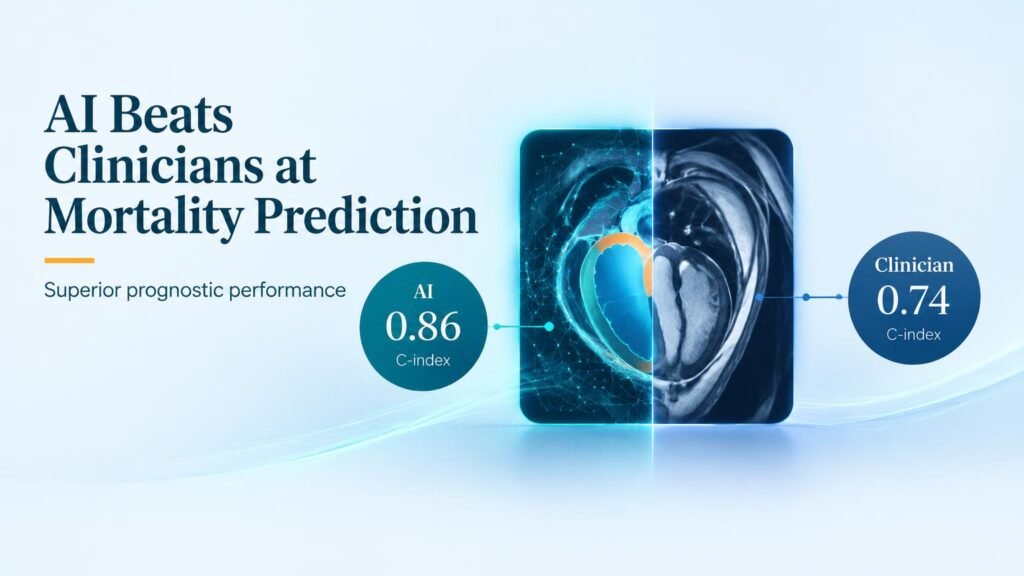

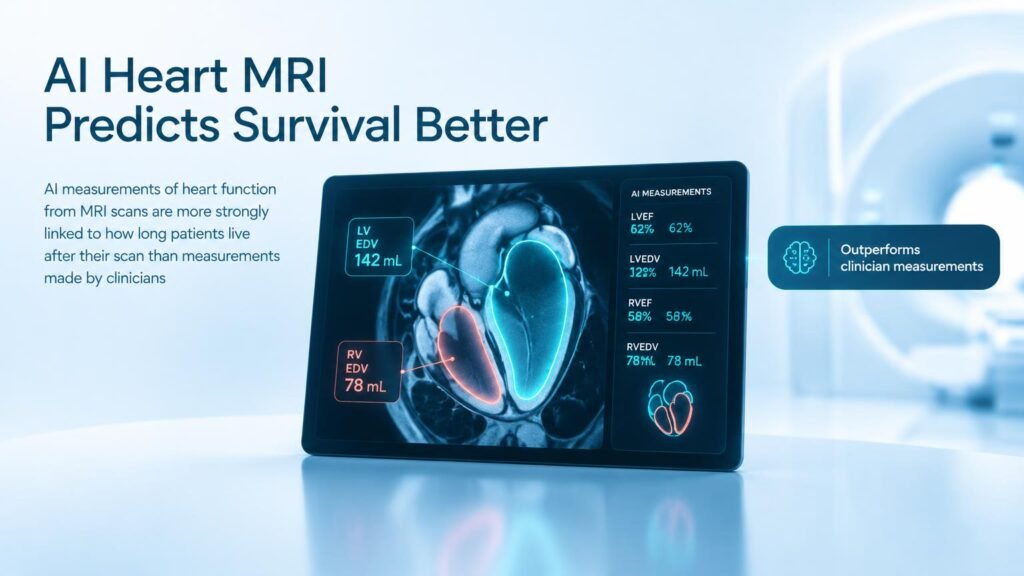
Automated heart MRI measurements predict long-term patient mortality better than human experts while cutting reading times from minutes to seconds.
Better Predictions, Instant Results
Manual evaluation of cardiac MRI scans takes an expert roughly 13 minutes per patient. An AI algorithm can process the exact same image in 2 to 3 seconds while yielding a stronger indicator of patient survival.
A study tracking over 27,000 cardiac MRI scans across five years in the UK and US found that machine-calculated ejection fraction correlated more strongly with long-term mortality than traditional clinician measurements.
Operational Relief
This efficiency shift directly addresses high-volume diagnostic backlogs in cardiology departments. Replacing manual tracing with automated analysis saves critical specialist time without compromising prognostic value.
The Clinical Reality
Superior risk prediction on retrospective data does not automatically improve patient outcomes. An algorithm can spot subtle structural risks faster, but survival ultimately depends on whether care teams act on those automated flags. Retrospective observational data proves diagnostic speed and predictive correlation, not automatic therapeutic success.
Hospitals should position these algorithms as automated first-line triage tools to clear reading queues, while keeping human oversight focused on complex cases and direct treatment strategy.