
Clinicians cannot act on patient safety data if it remains trapped in administrative silos.
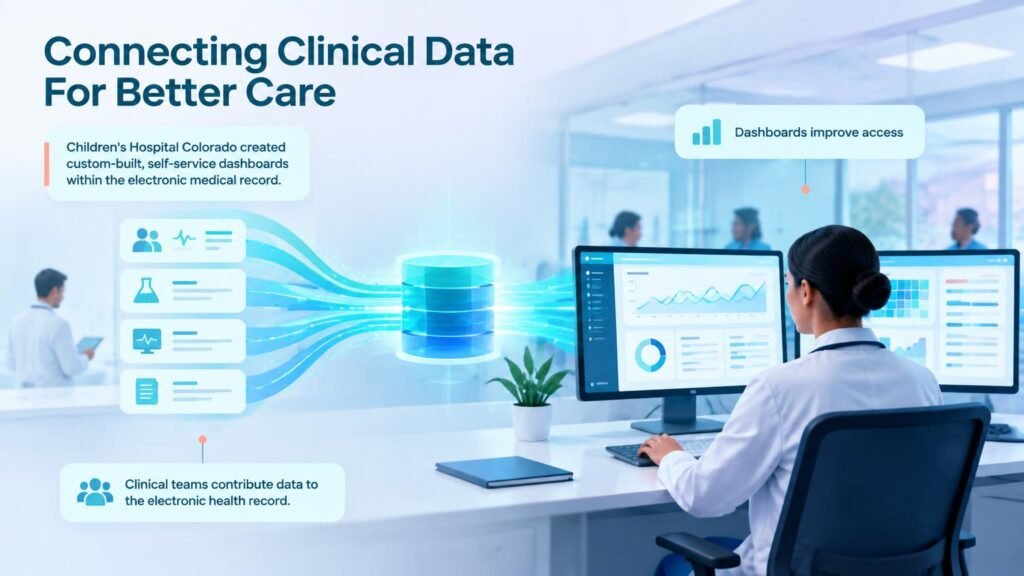
Children’s Hospital Colorado embedded custom, self-service analytics directly into its electronic medical record system to tackle fragmented reporting. Instead of filing transactional data requests and waiting weeks for answers, clinical teams now access real-time dashboards at the point of care.
Point-of-Care Impact
The system uses these integrated workflows to track infection prevention protocols. Staff monitor routine hygiene compliance and evaluate central line necessity in real time, targeting a direct reduction in hospital-acquired conditions.
Technical integration alone was insufficient. Achieving usable data required establishing strict governance and shifting organizational culture away from isolated departmental reporting toward unified cross-departmental standards.
Operational Limits
Dashboards make compliance visible, but they do not automatically guarantee clinical behavior changes. Real-time monitoring exposes process failures, yet improving patient outcomes still depends entirely on frontline staff acting on those metrics.
Health systems evaluating point-of-care analytics must prioritize workflow integration and data governance over complex AI tools. Dashboards only drive safety when embedded directly where decisions happen.