
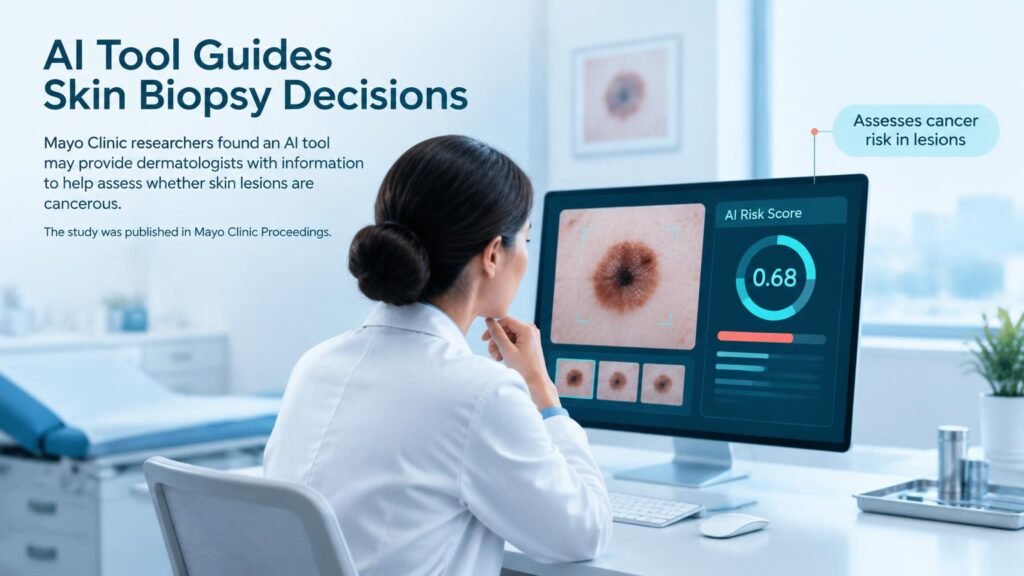
Dermatologists may soon rely on machine vision to reduce unnecessary skin biopsies without missing early cancers.
Precision Over Intuition
Algorithms analyzing visual traits like asymmetry, border, color, and diameter can assign skin lesions a precise risk score from 0.0 to 10.0. In recent evaluations, setting a 3.0 risk threshold allowed an explainable AI tool to flag 93.4% of cancerous lesions while correctly identifying 75% of noncancerous cases.
Biopsies are invasive, cost money, and burden clinical schedules. By providing a quantified risk score alongside visual explanations, algorithms offer clinicians a standardized baseline before they execute a procedure.
The Outpatient Bottleneck
High sensitivity is vital, but false positives remain a challenge. A 75% specificity rate means one in four benign lesions still receives a high-risk score, which could perpetuate over-testing if clinicians treat the software as definitive.
Retrospective validation shows algorithmic promise, but real-world utility hinges on prospective trials. Diagnostic accuracy does not automatically translate to better patient outcomes or reduced healthcare expenditures until workflows adapt to human-AI collaboration.