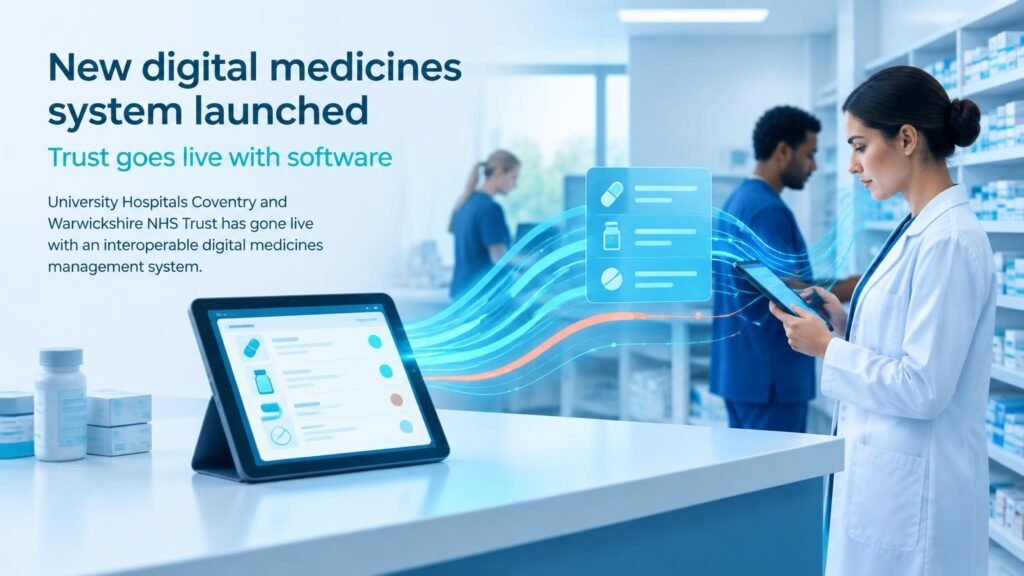
Nurses no longer need to switch between separate software platforms to dispense critical medications.
Bridging the Digital Gap
When automated pharmacy hardware operates in isolation from central patient records, clinical workflow stalls. University Hospitals Coventry and Warwickshire NHS Trust has eliminated this friction by directly connecting Omnicell automated dispensing cabinets and robotics into its Oracle Health electronic patient record platform.
This integration marks a first for England. Clinicians now gain real-time visibility of drug inventory across wards directly within a patient’s file, replacing fragmented standalone tools.
Workflow Over Automation
Automated hardware alone does not prevent medication delays if nurses must log into multiple systems to release a dose. By co-designing this single interface with frontline staff, the trust aims to curb administration workload, reduce waste, and stop drug delivery delays.
Hardware automation only improves patient care when the software layer is fully unified.
While this deployment provides a technical blueprint for the broader NHS, operational success depends on site-specific implementation. A smooth rollout at a single trust does not guarantee identical time savings across different hospital infrastructure.
The Practical Shift
Healthcare IT leaders must stop evaluating dispensing robotics and electronic health records as isolated purchases. Real efficiency gains require deep, native interoperability between ward hardware and patient records at the point of care.