Connecting community care and mental health records in Birmingham removes critical blind spots for 80,000 service users.
Patients navigating both community healthcare and mental health services frequently face fragmented clinical records. This disconnect forces clinicians to hunt for missing care plans and repeat routine assessments across administrative boundaries.
Breaking down clinical siloes
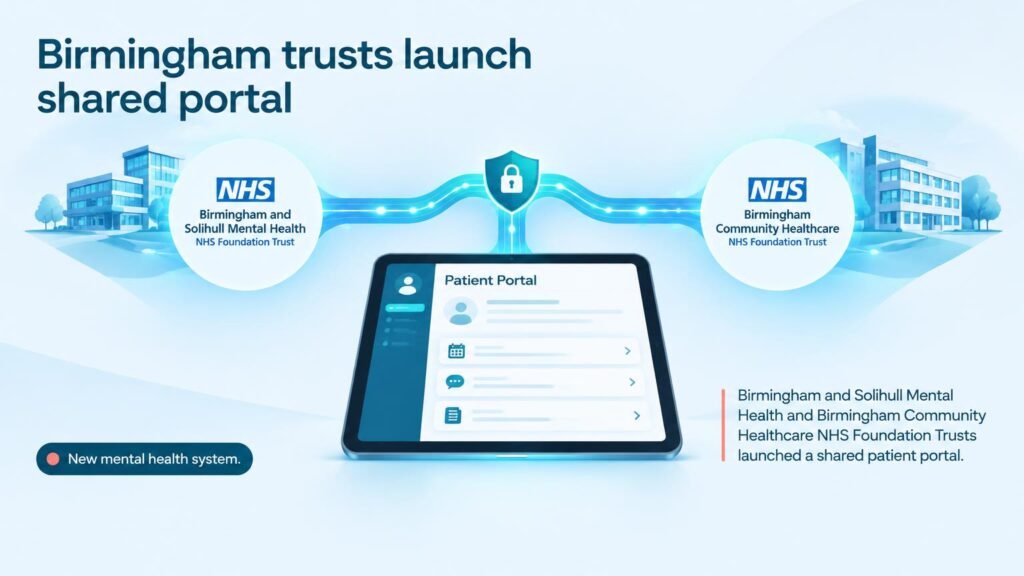
Two major NHS foundation trusts in Birmingham have deployed a shared patient portal powered by InterSystems technology. The unified platform allows more than 80,000 service users to access their appointments, care plans, and clinical letters across both mental health and community care settings using a single NHS login.
This deployment targets a persistent operational friction point in public healthcare. Unifying appointments and records across distinct trusts reduces administrative calls, mitigates missed appointments, and provides patients with a coherent view of their ongoing care management.
Data access versus care quality
Providing a single digital interface is an important step for operational efficiency, but software access alone does not guarantee superior clinical outcomes.
Patient portals rely heavily on digital literacy and active user engagement. If service users struggle to navigate the interface, or if clinical staff fail to upload documentation promptly, the administrative burden simply shifts rather than disappears.
Moreover, single-region portal rollouts serve as a test case rather than proof of systemic efficiency gains. Realizing long-term improvements in care continuity requires standardized workflows across trust boundaries, not merely a shared software layer.
Health system leaders should view shared portals as infrastructure rather than complete solutions. The real test is whether care teams actively align their daily routines around shared records.