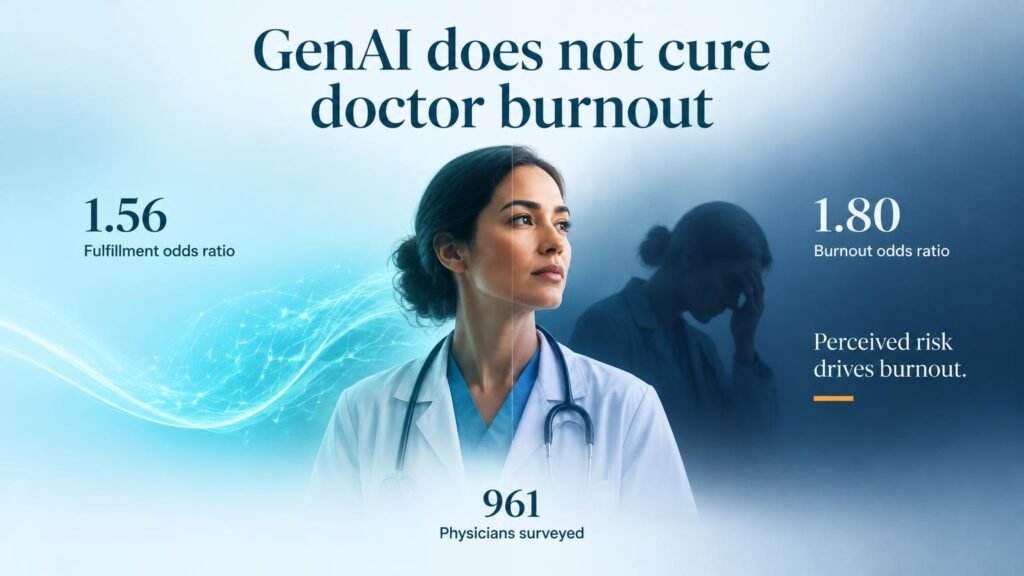


As healthcare systems rush to deploy ambient AI scribes, the real challenge is shifting from pilot-stage novelty to enterprise-wide workflow integration.
Over 62% of U.S. hospitals are now deploying ambient AI tools to capture patient encounters. Early data shows these tools can cut documentation time by up to 72% and lower clinician burnout by over 30%. But the initial honeymoon phase is ending. Health systems now face the messy reality of scaling these tools across diverse medical specialties.
The Proofreading Trap
Simply turning on an AI scribe does not solve the administrative crisis. Clinicians frequently fall into a proofreading trap. They spend saved time meticulously editing AI-generated notes for subtle omissions or inaccuracies. If a doctor spends ten minutes correcting a flawed summary, the efficiency gains vanish.
True scaling requires tailoring the technology to specific clinical roles. A pediatrician needs a different documentation structure than an orthopedic surgeon. Without customized templates and deep integration into electronic health records, adoption stalls. Furthermore, organizations cannot rely on passive adoption. Successful deployments require active change management to analyze both expected time savings and unexpected workflow bottlenecks.
The Path Forward
Organizations must treat ambient AI as a workflow redesign, not a software plug-in. This means training clinicians on how to speak to patients in ways that help the AI capture the right data. The next phase of clinical AI is not about replacing human oversight. It is about building sustainable workflows where clinicians spend less time auditing machines and more time treating patients.