
The Pediatric Gap in Generative AI
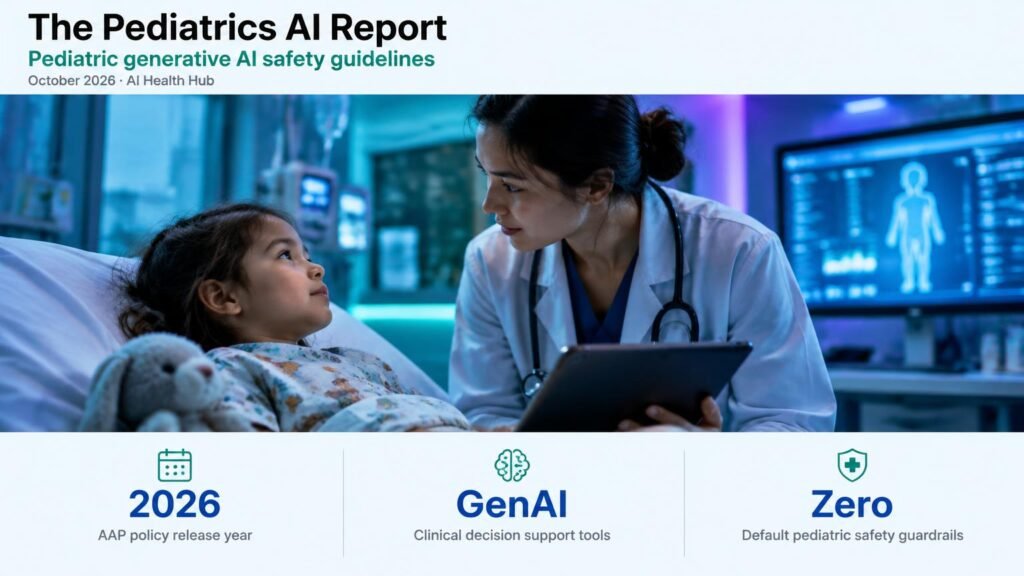
Generative artificial intelligence (GenAI) tools, including large language models (LLMs), are rapidly entering pediatric clinical workflows to assist with clinical decision support, medical documentation, and education. However, applying these tools to pediatric populations introduces distinct clinical risks. The American Academy of Pediatrics (AAP) has published a formal policy statement in Pediatrics outlining critical recommendations for the development and implementation of GenAI in pediatric care (https://doi.org/10.1542/peds.2026-079037). Because most commercial GenAI models are trained predominantly on adult clinical data, they often fail to account for pediatric-specific variables such as weight-based dosing, developmental milestones, and the legal nuances of proxy consent.
Why Adult Models Fail Children
The primary operational challenge is that pediatric medicine is not simply adult medicine scaled down. A model trained on adult datasets may generate inaccurate clinical recommendations when faced with pediatric physiology or rare congenital conditions. Furthermore, pediatric documentation requires capturing complex interactions with parents and guardians, which standard ambient scribes are not yet optimized to parse. Without pediatric-specific training and validation, the routine use of these tools increases the cognitive workload on clinicians, who must meticulously audit AI outputs to prevent medication errors and diagnostic missteps.
Governance and Practical Takeaways
A key limitation of current GenAI applications is the lack of prospective, pediatric-specific clinical trials demonstrating improved patient outcomes or time savings. Most tools remain in early developmental or retrospective validation phases. Consequently, health systems cannot assume that an AI tool cleared or optimized for adult care is safe for pediatric patients.
To mitigate these risks, pediatric healthcare leaders must establish multidisciplinary AI governance committees. These committees should include pediatricians, informatics specialists, and legal experts to evaluate any GenAI tool before clinical deployment. Clinicians must continue to manually verify all AI-generated clinical summaries, drug calculations, and decision-support prompts to ensure pediatric safety.