Deploying real-time AI decision support in nurse-led clinics significantly boosts skin cancer detection rates but triggers a sharp rise in clinical interventions.
Teledermatology relies entirely on the nurse acting as an effective gatekeeper. If a nurse fails to flag a suspicious mole, the specialist never sees it. This creates a dangerous bottleneck where patient safety depends heavily on individual clinical experience.
A massive real-world evaluation challenges the idea that we must accept this variability. By placing AI decision support directly in the hands of screening nurses, clinics saw a dramatic shift in which lesions were escalated. However, this safety net comes with a clear trade-off in clinical workload.
The scale of change
The study analyzed a massive dataset of 1,102,382 lesions from 98,422 patients across 577 MoleMap sites in New Zealand and Australia. Researchers compared clinics using real-time AI support against standard clinics between January 2024 and July 2025. The results show that software can successfully standardize triage behavior across different levels of staff experience.
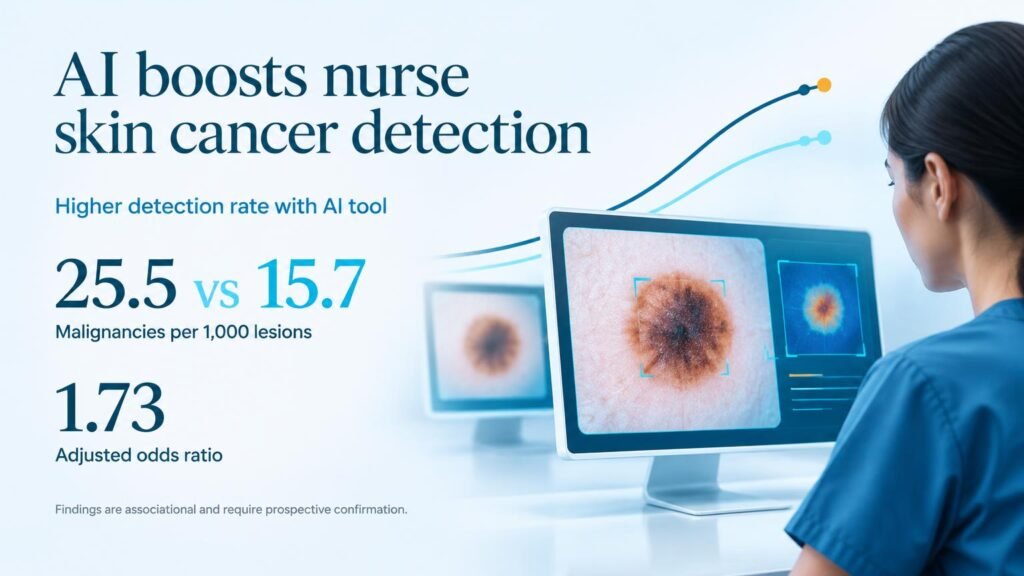
- Malignancy detection rose to 25.5 per 1,000 lesions with AI, compared to 15.7 per 1,000 in standard clinics.
- The adjusted odds ratio for detecting malignancies was 1.73, a benefit that remained consistent across all nurse experience levels.
- AI-assisted clinics recorded 21 more intervention recommendations and 13 more safety-netting recommendations per 1,000 lesions.
- These increases were balanced by 34 fewer “no-action” decisions.
The downstream bottleneck
This shift in clinical behavior is the real story.
AI did not just help nurses find more disease. It fundamentally altered their risk tolerance, pushing them to recommend more biopsies, short-term monitoring, and specialist referrals. This finding suggests that decision-support tools function less like objective diagnostic engines and more like behavioral nudges.
For clinic operators, this is a double-edged sword. While catching more cancers early prevents patient harm, it also floods dermatologists with more cases. The sudden drop in “no-action” decisions means specialists must spend more time reviewing borderline lesions that previously would have been dismissed. This redistribution of labor could easily overwhelm existing specialist networks if not managed carefully.
A critical missing link
We must treat these findings with caution. The study was not randomized, meaning other clinical factors could have influenced the results. More importantly, the reference standard was the teledermatologist’s visual diagnosis, not a physical biopsy.
Without pathological confirmation, we cannot prove how many of these extra referrals were true cancers. Some portion of this spike is likely benign tissue, meaning the AI may increase unnecessary patient anxiety and healthcare costs. Until prospective trials track actual patient outcomes, clinics must prepare for a heavier administrative and diagnostic workload when adopting these tools.
Read the full study in medRxiv.