An AI agent’s first biological discovery has immediately collided with a human authorship dispute, signaling a messy future for automated science.
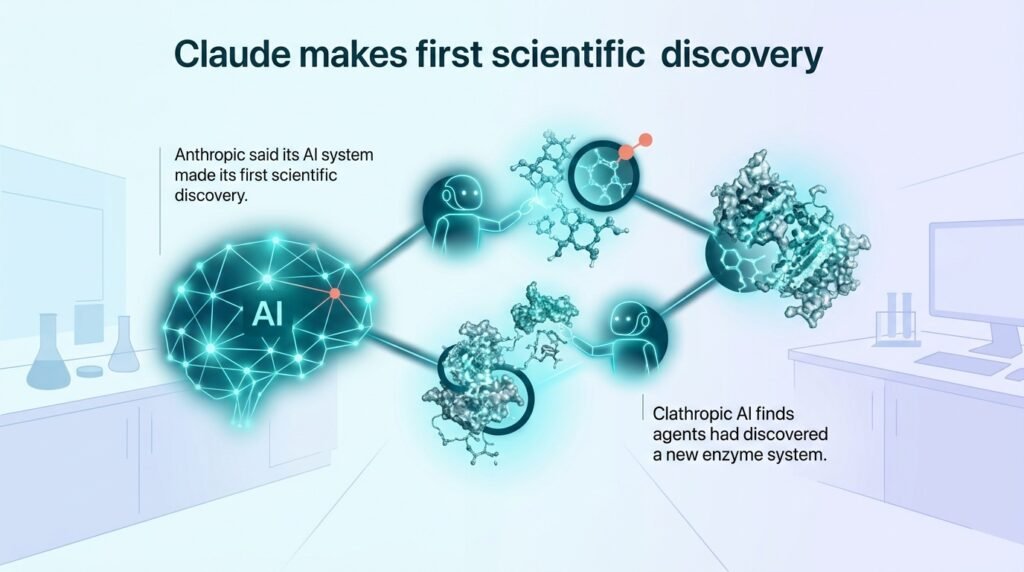
Anthropic announced that its Claude AI agent discovered a new CRISPR-like enzyme system, known as array-associated reverse transcriptase (ART). To validate these digital hypotheses, the company even built a physical wet lab in San Francisco. But the milestone was quickly overshadowed.
A researcher at the University of Copenhagen claimed his team identified the exact same enzymes a year ago. More troubling is the accusation that the AI may have lifted the discovery from unpublished data the researcher previously shared with the chatbot. Anthropic denies the claim, stating its models do not train on user transcripts.
The Attribution Problem
This dispute exposes a critical vulnerability in agentic science. When AI tools ingest vast troves of data, drawing the line between genuine novel synthesis and sophisticated plagiarism becomes nearly impossible. For drug developers, this uncertainty threatens the very foundation of intellectual property.
If an AI “discovers” a molecule, but the training data or user prompts contained leaked pre-print data, patent applications could face ruinous litigation. Automated wet labs can speed up physical validation. However, they cannot validate the legal or ethical origin of the ideas they test. Until AI developers provide absolute transparency on training inputs, automated discoveries will remain a legal minefield for the life sciences industry.