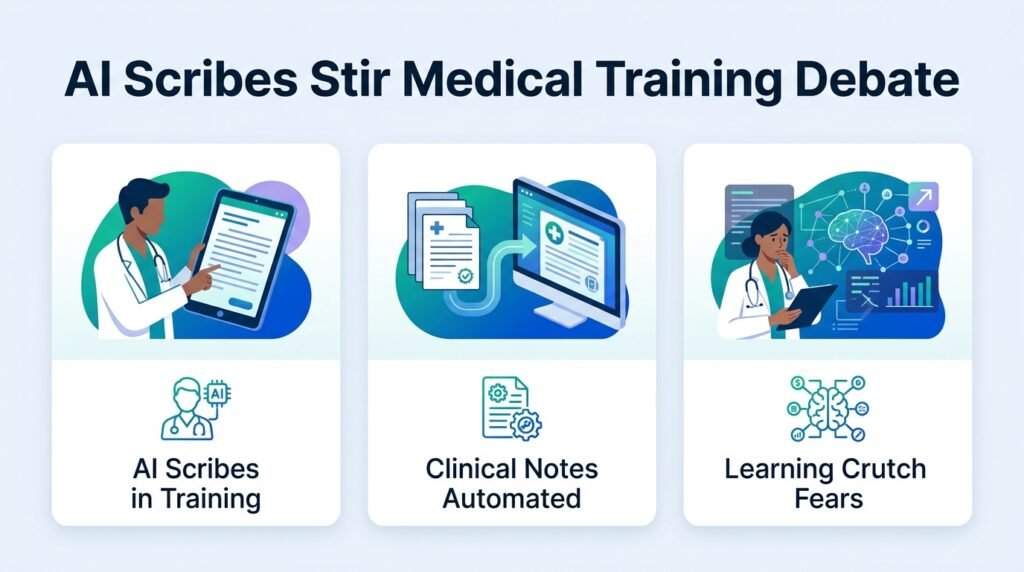
Medical schools are rushing to adopt ambient AI, but outsourcing clinical notes risks eroding the diagnostic thinking of future physicians.
Medical education faces a quiet crisis of competence. Top-tier medical schools are rushing to integrate ambient AI scribes into their clinics. The goal is logical: cut administrative burnout before it even starts.
But writing a clinical note is not just clerical work. It is where a student synthesizes data, weighs competing diagnoses, and learns to think like a doctor.
The Cognitive Cost
When an algorithm drafts the patient story, the student becomes an editor rather than a creator. This shift risks turning active clinical reasoning into passive review.
Early pilots at institutions like Yale, Duke, and Johns Hopkins show these tools successfully slash documentation time. Yet, educators warn that outsourcing this task too early could stunt a trainee’s diagnostic instincts. If you do not struggle to articulate the patient’s case, you may not fully understand it.
Active listening also suffers. A student relying on an automated transcript may tune out during an exam, trusting the software to capture the details. This shifts the focus from the patient to the technology. The physical act of translating a chaotic patient interview into a structured medical record forces critical thinking.
Setting the Guardrails
The challenge is finding the balance. Medical programs must design strict educational guardrails so AI acts as a scaffold, not a cognitive crutch.
Learning requires effort. By removing the struggle of documentation, we might inadvertently produce a generation of clinicians who struggle to think on their feet.