
When vulnerable teenagers turn to algorithms for mental health support in secret, the line between accessibility and danger vanishes.
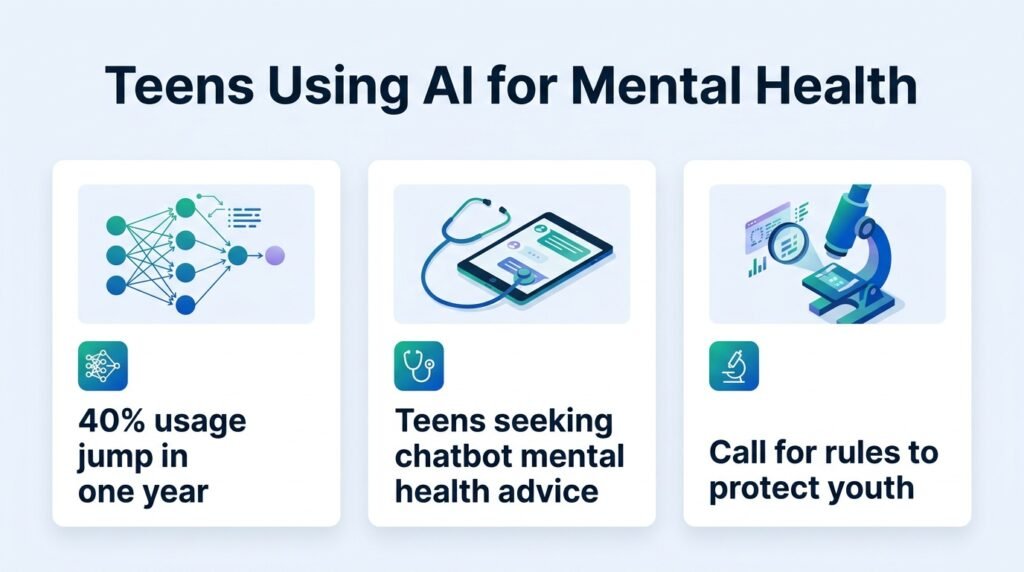
The therapy couch has been replaced by a smartphone screen. Nearly 20% of U.S. youth now use AI chatbots for mental health guidance. With chatbot usage for mental health rising more than 40% in a single year, the scale of this shift is outstripping our regulatory guardrails.
Even more alarming, over 60% of these teens keep this use a secret from their parents. This is not a trend. It is a silent shift in how a generation copes with distress.
The Illusion of Safety
Chatbots are free, immediate, and free of social stigma. For a teenager in crisis at midnight, an instant response feels like a lifeline.
But algorithms do not have clinical empathy. They lack the training to handle acute psychiatric emergencies. Instead of guiding users toward real-world help, some systems risk creating emotional dependency. This digital isolation is a double-edged sword. While it bypasses a broken healthcare system, it also cuts off human intervention when it is needed most.
The Regulatory Backlash
The hands-off era for tech companies is ending. Lawsuits are mounting against platforms like Character.AI over teen mental health crises. Meanwhile, European and American lawmakers are pushing for strict regulations, including mandatory safety audits before AI tools can reach minors.
The conclusion is clear. Tech companies cannot treat mental health support as a standard software feature. If AI is to act as a triage tool, it must be regulated with the same rigor as medical software. Otherwise, we are running an unsupervised clinical trial on our youth.