

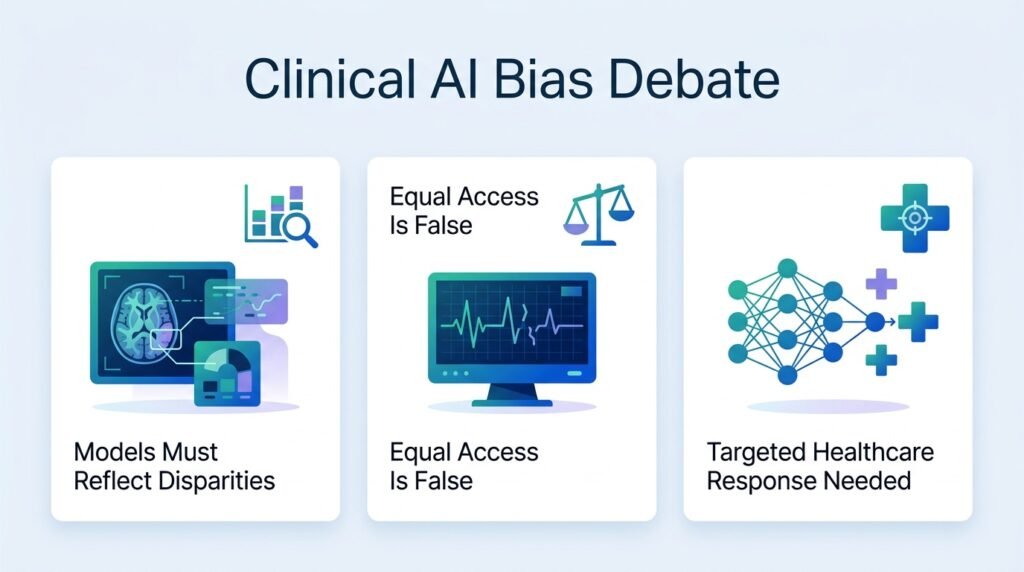
Scrubbing demographic data from clinical algorithms does not make them fair; it makes them blind to reality.
For years, the industry has chased the holy grail of “unbiased” clinical artificial intelligence. The standard playbook is simple: strip out race, gender, and income variables to create a neutral model.
It is a comforting strategy. It is also deeply flawed.
The Blindness of Neutrality
Removing demographic variables does not solve inequality. Instead, it often lowers diagnostic accuracy and creates false confidence among clinicians.
When algorithms pretend every patient has equal access to care, they ignore the systemic friction of the real world. For example, insurers use predictive tools to manage post-acute spending. If these tools ignore social determinants of health, they simply codify existing disparities under the guise of objective math.
We do not need models that pretend bias does not exist. We need models trained to recognize disparities and actively adjust for them.
A New Governance Standard
This shift requires a complete rethink of AI validation.
True equity in clinical AI is not about achieving a sterile, demographic-free dataset. It is about continuous governance and building tools that can map the messy, unequal reality of patient care.
Until developers design algorithms to actively flag and counter systemic barriers, clinical AI will continue to quietly automate the status quo.