
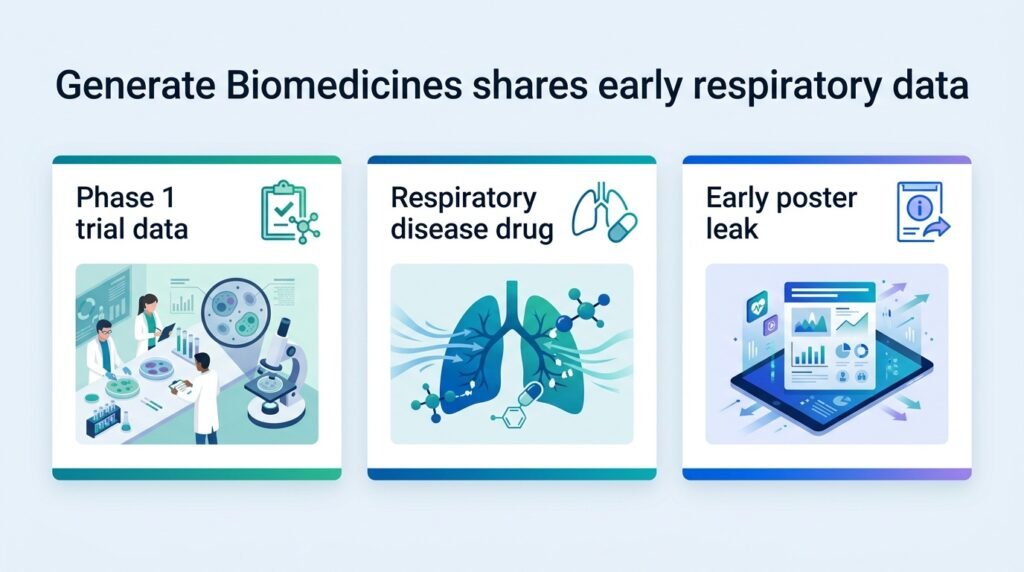
A premature data leak reveals that in AI drug development, information control is just as volatile as clinical efficacy.
When draft presentation slides accidentally went live early, the market did not wait for the official presentation. Shares of the AI-focused biotech plummeted from an all-time high of $20.38 to $16.57 in a matter of days.
The irony of this market panic is that the leaked data was actually highly competitive.
The Biological Signal
The early-stage data evaluated GB-0895, an AI-engineered antibody targeting TSLP. A single dose achieved rapid, sustained biomarker reductions in both asthma and COPD patients. This biological response supports a twice-yearly dosing regimen.
For context, leading biologics in the respiratory space often require monthly injections. A twice-yearly alternative would represent a massive shift in patient convenience and market share. Yet, the chaotic disclosure overshadowed the scientific win.
The Valuation Trap
This incident highlights a growing vulnerability for platform-based biotechs. When valuations are buoyed by high-tech promise, any administrative slip-up triggers disproportionate panic. Investors are hyper-sensitive to transparency and execution.
The transition from AI generation to clinical validation is fraught with execution risks. It is not enough to design a superior molecule. Companies must navigate the highly regulated, highly sensitive environment of clinical trials and public markets. This leak proves that administrative discipline is just as critical as computational power.
The candidate is already in Phase 3 trials for severe uncontrolled asthma. While the asset has clear clinical potential, the company must now rebuild market confidence. Efficacy in code must survive the messy reality of public markets.