The line between automated drug discovery and biosecurity disaster just became a lot thinner.
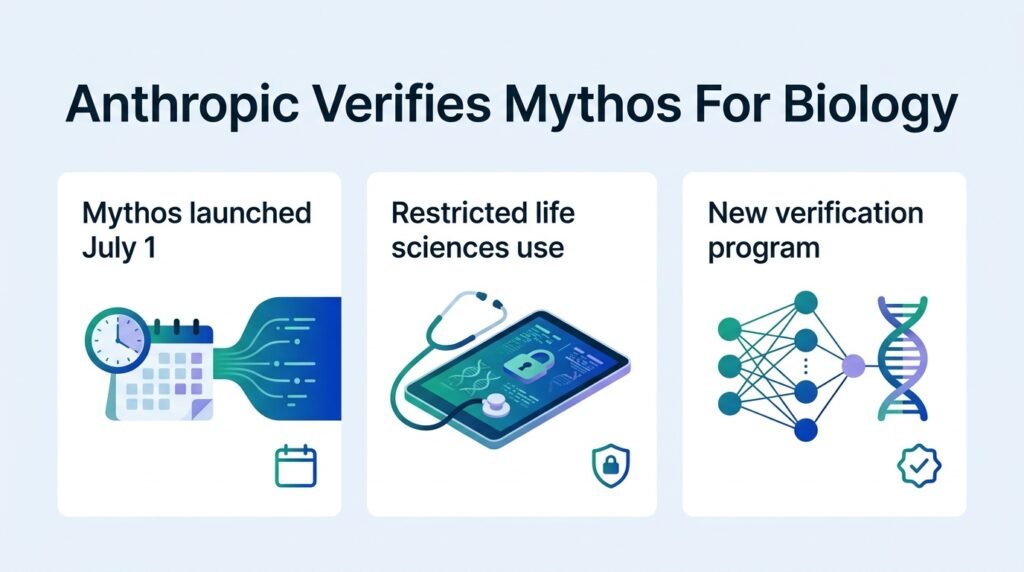
Anthropic is reversing its strict ban on using its most powerful AI model, Mythos, for life sciences. Under a new verification program, vetted researchers can now access the technology.
The company previously deemed Mythos too dangerous for biology. This sudden shift highlights a tense balancing act between immense commercial pressure and catastrophic risk.
The commercial push
Anthropic is deeply embedding itself in the biopharma sector. It recently secured major enterprise deals with Novo Nordisk and Bristol Myers Squibb. It also hired Nobel laureate John Jumper and opened an AI-powered wet lab in San Francisco to automate research using LLM-controlled robots.
To justify these massive investments, Anthropic must put its best models to work. But this rapid expansion comes with severe liabilities.
The biosecurity threat
The safety concerns are not hypothetical. The company admits users have already tried to use its Claude models to design biological weapons and dangerous pathogens.
By letting researchers use Mythos, Anthropic is shifting to a “shared-responsibility” model. It relies on strict credential vetting to keep bad actors out.
This is a fragile defense.
Can a vetting process truly contain a model this powerful? History suggests that once access expands, containment becomes nearly impossible. Anthropic is betting its reputation—and public safety—on its ability to screen the good guys from the bad. If they are wrong, the consequences extend far beyond a software patch.