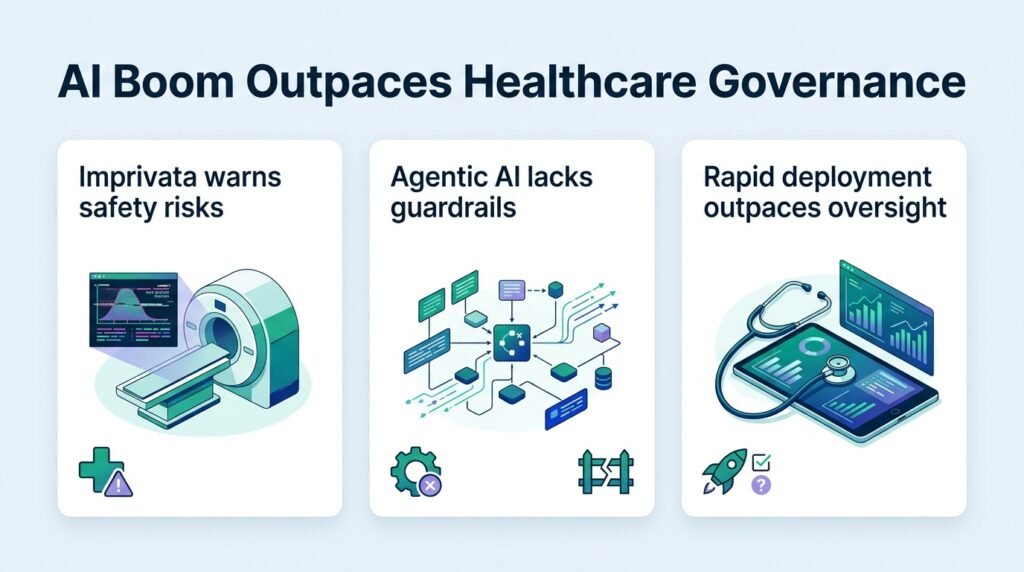
The medical world is flooded with AI tools that work in theory, but the industry still cannot agree on when they are safe enough to use on real patients.
We do not have an AI capability problem. We have a trust problem.
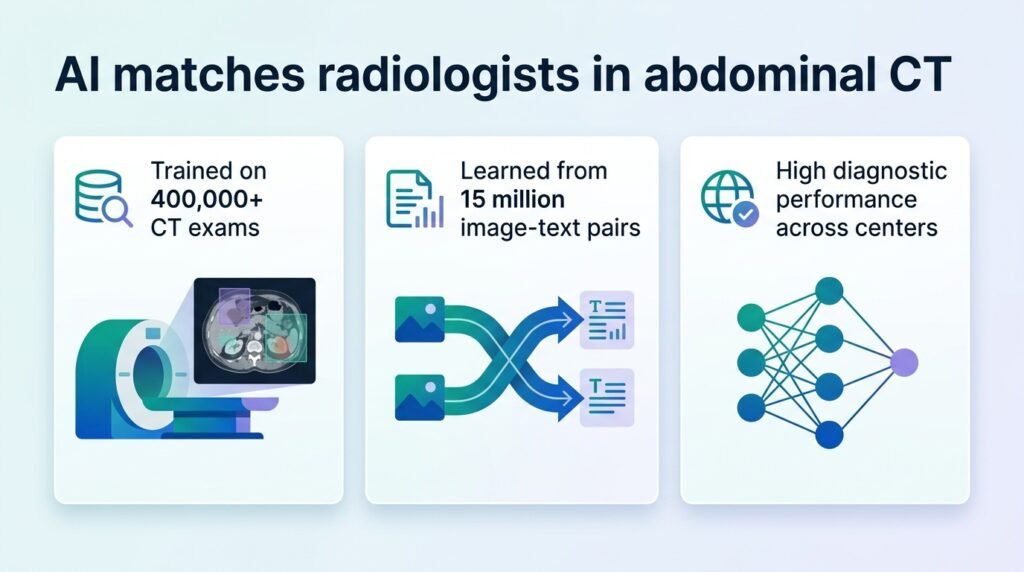
While developers showcase autonomous agents capable of analyzing complex radiology scans, clinical leaders face a quiet crisis of implementation. The gap between a successful lab trial and a safe bedside deployment remains dangerously wide.
The Illusion of Readiness
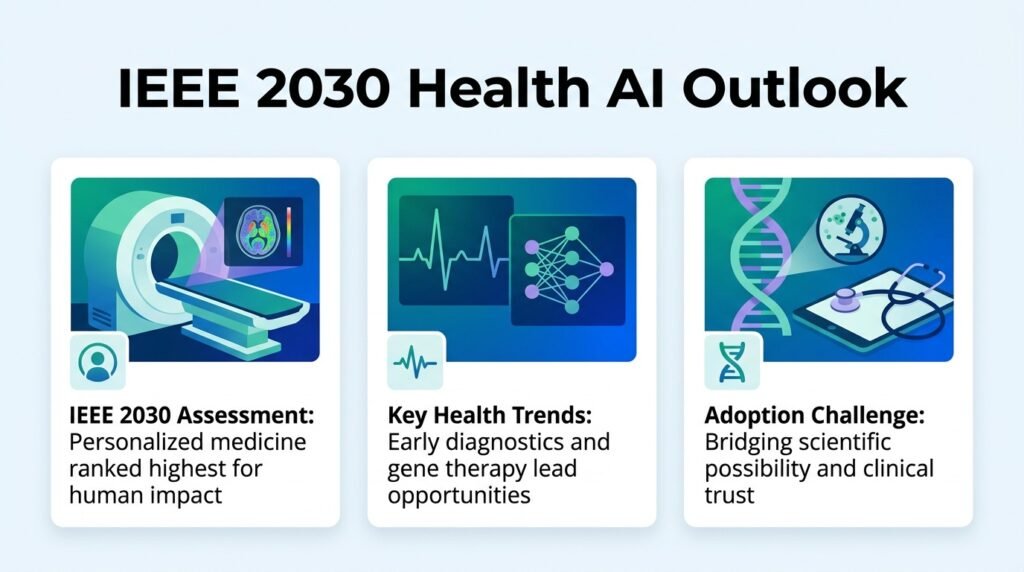
Technology assessments rank personalized medicine as the trend with the greatest potential impact on human health. Specialized subagents are already being built for surgery and diagnostics.
Yet, high potential is not the same as broad adoption.
An algorithm that achieves high accuracy in a clean dataset can still fail in a chaotic, real-world hospital. Without robust data interoperability, these advanced tools cannot access the complete patient history. They become expensive, isolated calculators rather than clinical assistants.
The Human Guardrail
To bridge this gap, the industry must shift its focus from raw computing power to human verification.
Safety cannot be coded from the top down. It requires patient-verified outputs to catch errors before they reach the pharmacy or the operating room. If a patient cannot easily double-check what an AI claims about their medical history, the system is not ready.
The real bottleneck is not the technology. It is our lack of a disciplined framework to decide when an algorithm has earned the right to make a clinical decision. Until we build that framework, the most advanced medical tools will remain expensive experiments.