Silicon Valley has spent years building AI tools for doctors, but the real administrative crisis in hospitals lies with the nurses who actually keep patients alive.
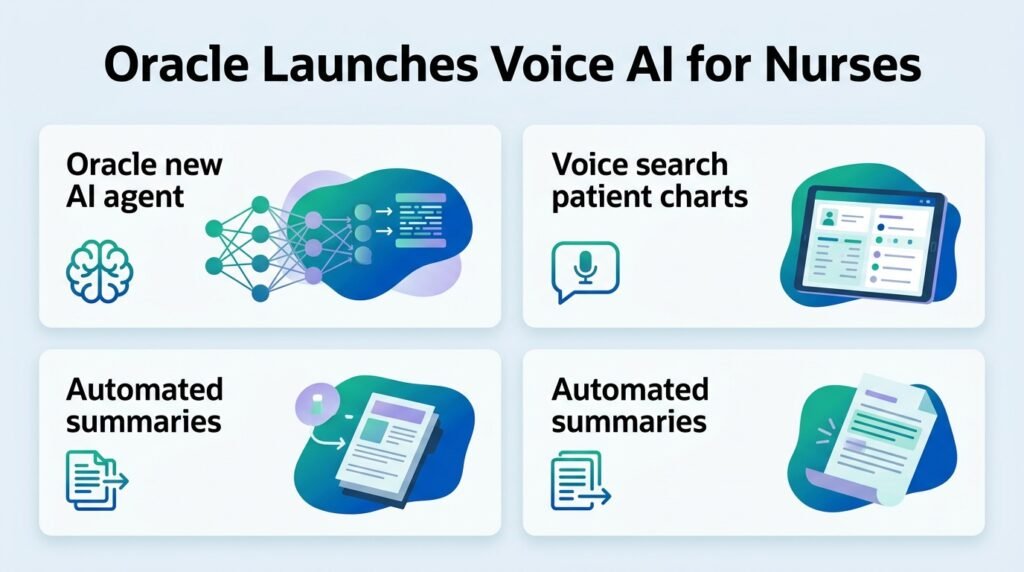
Oracle is expanding its clinical AI agent to target nurses, allowing them to search patient charts via voice commands and generate shift summaries. While previous industry efforts focused on narrative physician notes, this tool tackles the structured, tedious flowsheets that keep nurses glued to screens. It is a calculated pivot toward an underserved segment of the clinical workforce.
The Administrative Trap
Nurses spend hours documenting vitals, medication administration, and daily care flows. This highly structured charting is a primary driver of post-shift overtime and chronic burnout. By focusing on these discrete data points rather than just narrative text, the technology aims to automate the most tedious parts of inpatient care. Early adopters like BayCare Health System suggest the tool could significantly curb after-shift charting.
If successful, this shift could redefine hospital operational efficiency. Doctors have already saved 400,000 documentation hours using Oracle’s physician-focused tool over the last two years. Replicating that success for nurses, who represent the largest cohort of hospital staff, could yield even greater savings.
The Bedside Reality
But voice-controlled charting in a chaotic hospital ward is vastly different from a quiet consultation room. Nurses operate in noisy, fast-paced environments where hands-free must mean flawless. If the AI misinterprets a single vital sign or medication dose in a flowsheet, the clinical risks are immediate.
The true test for Oracle will not be the sophistication of its natural language processing. It will be whether the tool can seamlessly integrate into the frantic, physical reality of bedside care without adding to the cognitive load it promises to lighten.