
A federal experiment to automate Medicare approvals with artificial intelligence is turning into a political and clinical battleground.
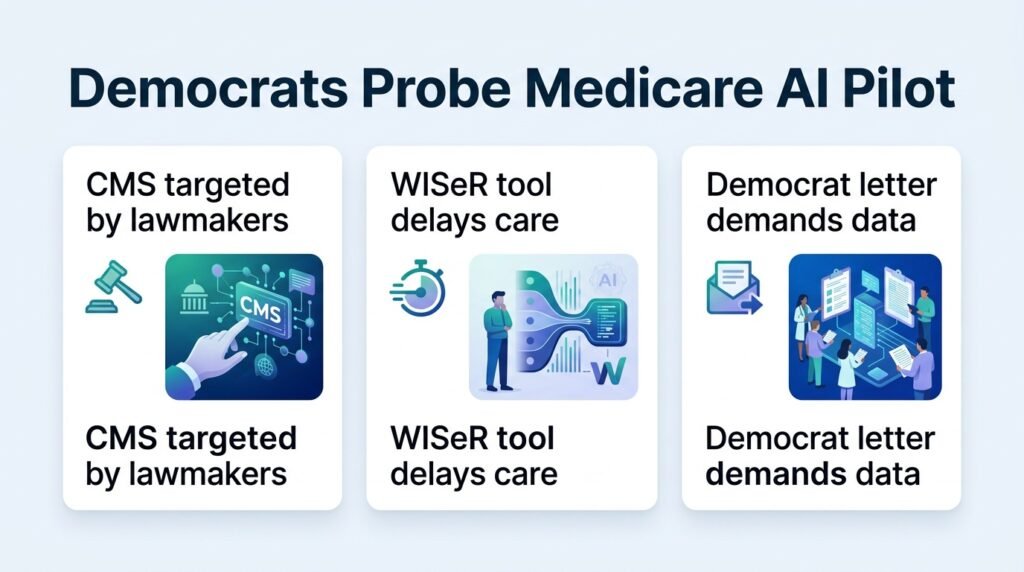
The Wasteful and Inappropriate Service Reduction (WISeR) pilot was supposed to curb healthcare spending. Instead, it has triggered a fierce backlash over automated care denials. Now, lawmakers are demanding data on how many patients are being left in limbo.
The program launched in six states to test AI-driven prior authorization in traditional Medicare. But the reality on the ground has been plagued by delays. Doctors and patient advocates warn that the private software vendors running these systems are financially incentivized to reject claims.
The Friction
A House committee recently voted unanimously to block funding for the program in the 2027 spending bill. This bipartisan pushback signals deep discomfort with outsourcing clinical decisions to black-box algorithms.
Supporters argue the AI targets waste. Yet, the secrecy surrounding the algorithms makes that claim impossible to verify. If the government cannot prove the technology is safe, the political will to sustain it will evaporate.
The Real Stake
This is not just about administrative red tape. It is a battle over the soul of traditional Medicare.
If private vendors control the gates to care, public insurance begins to look exactly like the commercial plans patients try to avoid. The lack of transparency from federal regulators only fuels suspicion.
Without clear data on denial rates and patient outcomes, the line between efficiency and rationing remains dangerously thin. If this pilot dies, it may set back federal AI adoption in healthcare for years.