
Healthcare systems are rushing to deploy clinical AI tools without fixing the fragmented patient data that fuels them.
Hospitals are obsessed with whether clinical AI models are accurate enough for patient care. They are asking the wrong question. The real danger is not the algorithm itself, but the chaotic data pipeline feeding it.
The Identity Crisis
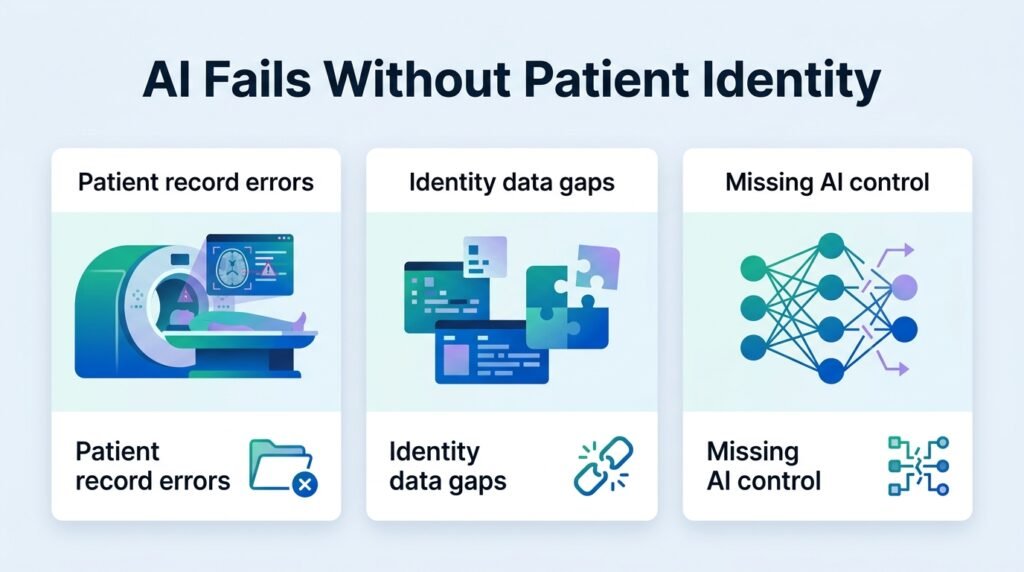
An estimated 8% to 10% of healthcare files are duplicate patient records. When a patient has their medical history split across multiple mismatched profiles, any clinical AI tool is effectively flying blind.
An AI scribe or clinical decision tool cannot make safe recommendations with fragmented history. It might miss a life-threatening drug allergy or a critical past diagnosis simply because the data lived in a duplicate file. This is not an algorithmic failure. It is an infrastructure failure.
Infrastructure Over Algorithms
The industry is treating identity resolution as a back-office administrative chore. In reality, clean data matching is the most critical safety control for clinical AI.
Health systems are rushing to adopt tools like automated scribes to save clinician time. Yet these tools rely on a unified source of truth. When identity matching fails, clinical AI becomes a liability. Before buying the next clinical tool, systems must clean up their data matching.