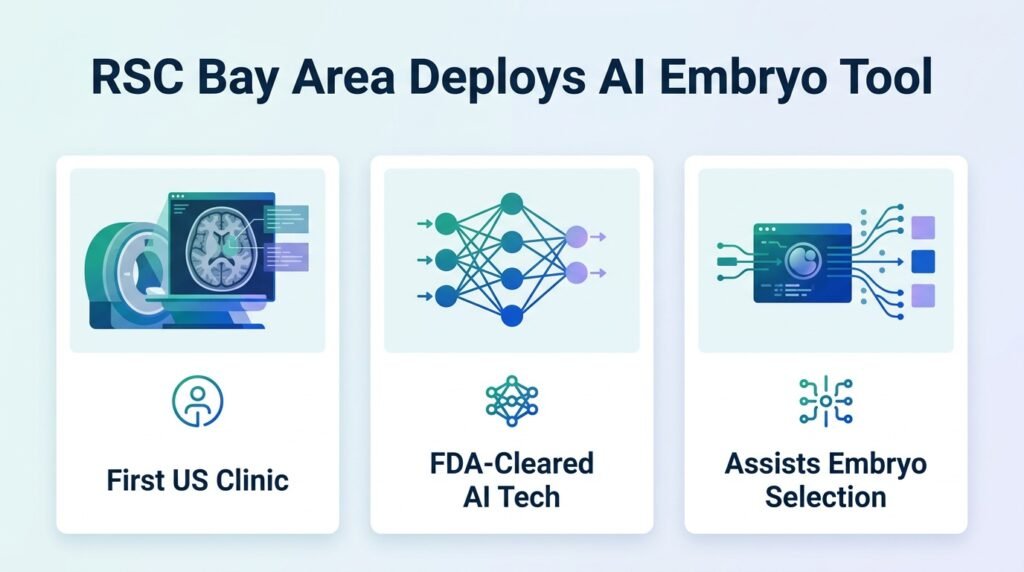
A new clinical deployment in California is putting AI-driven embryo selection to its first real-world test.
For decades, choosing which embryo to implant during IVF has been a highly subjective process. Even experienced embryologists disagree on the best candidate more than 40% of the time. This inconsistency adds immense emotional and financial strain to an already grueling journey for patients.
Standardizing the Guesswork
RSC Bay Area has become the first clinic in the United States to deploy Embryo Predict. The software, developed by Alife Health, analyzes blastocyst images to generate objective, data-driven viability scores. It received FDA clearance following a 440-patient randomized clinical trial.
Other major networks, including First Fertility, are already planning nationwide rollouts. This rapid adoption signals a major shift. Clinics are eager to replace human variation with algorithmic consistency.
The Limits of Algorithms
However, standardization is not a cure-all. An algorithm can identify the embryo most likely to implant based on visual data. It cannot address underlying genetic anomalies or uterine factors that cause IVF cycles to fail.
The real test for this technology is not just clinical adoption. It is whether these objective scores translate into higher live birth rates. Until long-term data proves a statistical bump in successful pregnancies, the software remains a decision-support tool rather than a guarantee.
This deployment also raises questions about equity and access. Will clinics charge a premium for AI-selected embryos, or will this become the baseline standard of care? If the technology successfully reduces the number of expensive, failed IVF cycles, it could eventually lower the overall cost of fertility treatment. For now, patients are paying to be part of a massive real-world experiment in algorithmic medicine.