Doubling scanning capacity is useless if there are no radiologists left to read the scans.
The promise of rapid, dye-free prostate MRI scans is colliding with a harsh clinical reality. While new imaging protocols can double global scanning capacity, the medical workforce is shrinking. A projected 40% shortfall of expert radiologists by 2027 means the diagnostic bottleneck has simply shifted from the machine to the human.
The Interpretation Bottleneck
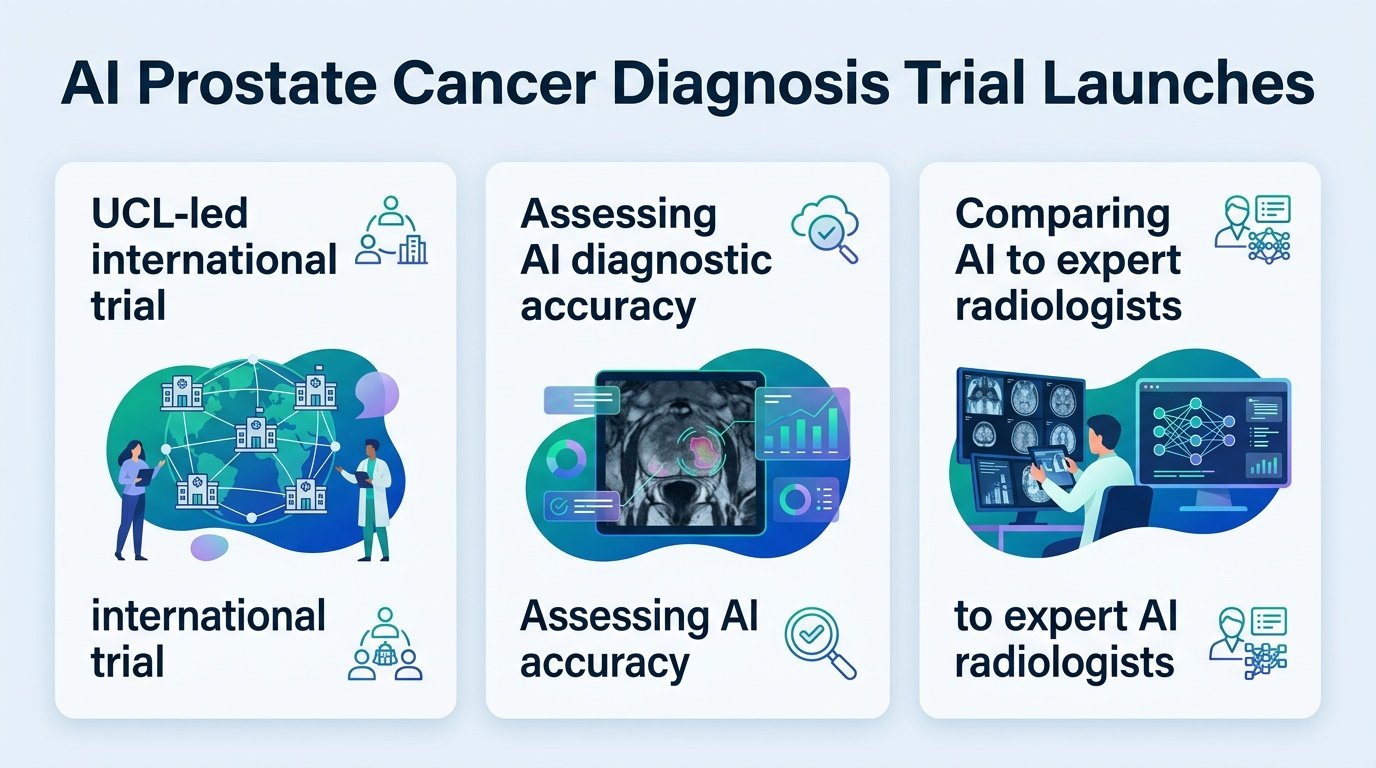
The landmark PRIME trial proved we can scan patients faster without dye. Now, we face the consequences of our own technological success: a mountain of data with too few eyes to read it. The PARADIGM clinical trial is testing whether AI can match expert radiologists in detecting prostate cancer on MRI scans. This is not a futuristic luxury. It is a pragmatic bid to keep pace with a massive influx of imaging data.
If AI can reliably triage these scans, it changes the economics of early detection.
But clinical validation is notoriously difficult. AI models often struggle with real-world variability across different scanner manufacturers and patient populations. A tool that works in a controlled trial might stumble in a busy regional clinic.
The Speed Trap
Simultaneously, NHS England is piloting a “one-day diagnostics” pathway using AI. The goal is to slash patient wait times from weeks to hours.
Yet, speed introduces risk. If the AI misses subtle lesions, patients lose critical treatment windows. If it overdiagnoses benign tissue, it triggers unnecessary, invasive biopsies. The trial must prove that AI is not just fast, but safe.
The true test for AI in oncology is no longer capability. It is integration. If this trial fails, the bottleneck remains unbroken, and the promise of faster cancer detection will stall at the reading desk.