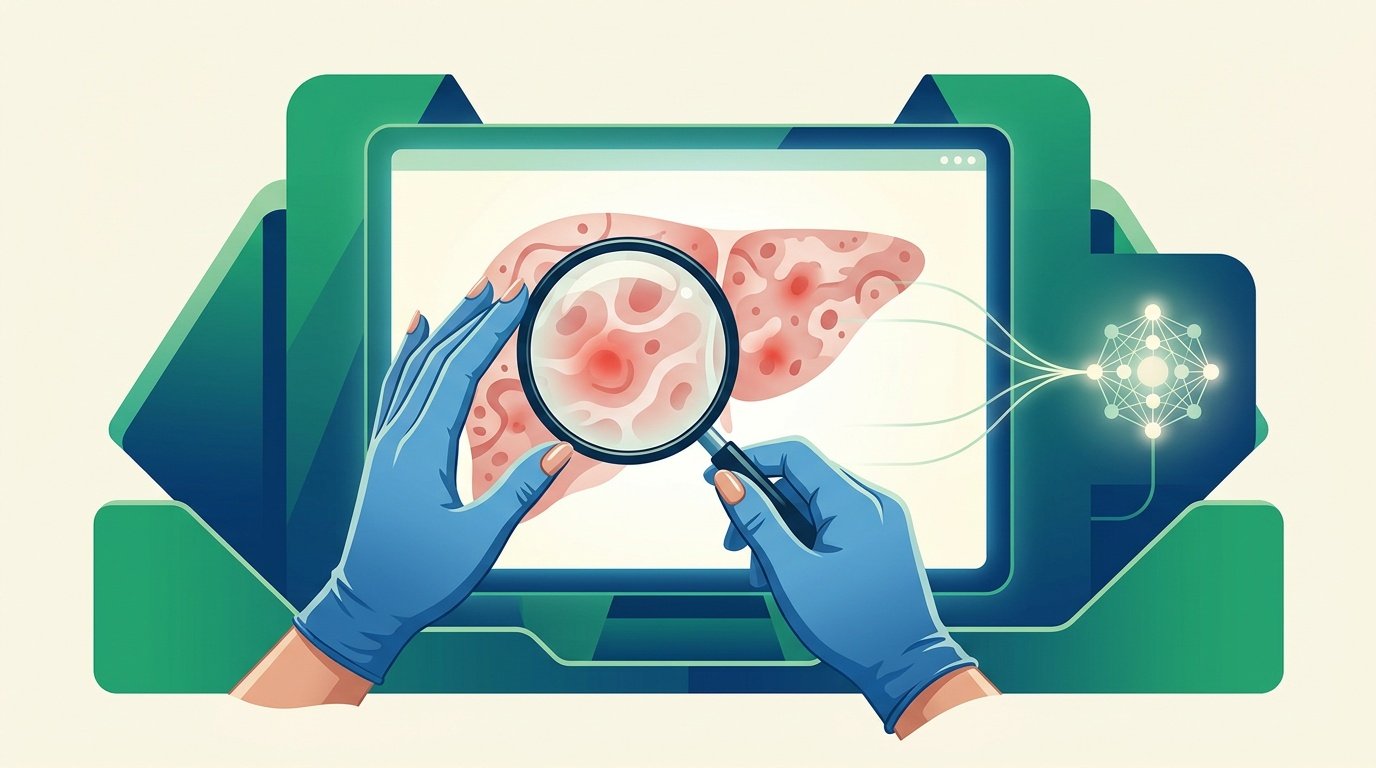
Regulators just crossed a digital rubicon by accepting AI-generated pathology data to evaluate metabolic liver disease treatments.
For decades, clinical trials for metabolic dysfunction-associated steatohepatitis (MASH) have suffered from a glaring vulnerability: human subjectivity. Evaluating liver biopsies traditionally required three independent pathologists to reach a consensus. This slow process was plagued by high variability, often muddying trial results.
The European Medicines Agency just disrupted this paradigm. By qualifying an AI tool that assists a single pathologist in analyzing liver biopsy scans, the regulator has signaled that machine-learning measurements are now robust enough for drug approval pipelines.
The End of Consensus
This shift is not just about speed. It fundamentally alters how we measure drug efficacy.
Instead of relying on the averaged opinions of three experts, a single clinician backed by AI can now deliver standardized, reproducible assessments. This reduces clinical trial noise. When trial data is less noisy, drug developers can potentially run smaller, faster trials with clearer signals of success or failure. This could drastically lower the cost of bringing complex therapies to market.
The Regulatory Reality
The stakes are incredibly high. The race to bring MASH therapies to the European market is intensifying, with major pharmaceutical players pushing late-stage candidates through the pipeline.
Yet, this regulatory nod is not a blank check for automation. The AI tool remains supervised by a pathologist. It is an assistant, not a replacement.
The industry must now watch whether this digital standard actually accelerates approvals, or if it introduces new, unforeseen biases into clinical data. For now, the benchmark for clinical evidence has officially changed. Drug developers who resist digital pathology risk falling behind in a highly competitive market.