⚡ Quick Summary
The evolution of Picture Archiving and Communication Systems (PACS) has reached a pivotal moment with the introduction of PACS 3.0, which integrates workflow intelligence into clinical environments. This advancement aims to enhance efficiency and maintain high-quality care through the incorporation of artificial intelligence in routine clinical tasks.
🔍 Key Details
- 📊 Evolution: Transition from digitization and local management to enterprise distribution and now workflow intelligence.
- ⚙️ Focus: Integration of AI to support radiologists and technologists in their daily tasks.
- 🏥 Objective: Improve efficiency while ensuring high-quality care delivery.
🔑 Key Takeaways
- 📈 PACS 3.0 represents a significant shift in radiology practices.
- 🤖 AI integration is set to enhance workflow and clinical decision-making.
- 🌐 Historical context: PACS has evolved through various phases, each responding to technological advancements.
- 💡 Workflow intelligence is the cornerstone of this new phase, aiming for seamless clinical operations.
- 🏆 Efficiency gains are expected to improve patient care and operational workflows.
- 🔄 Continuous evolution of PACS is crucial for adapting to the changing landscape of healthcare.
- 📅 Future implications include broader applications of AI in various medical fields beyond radiology.
📚 Background
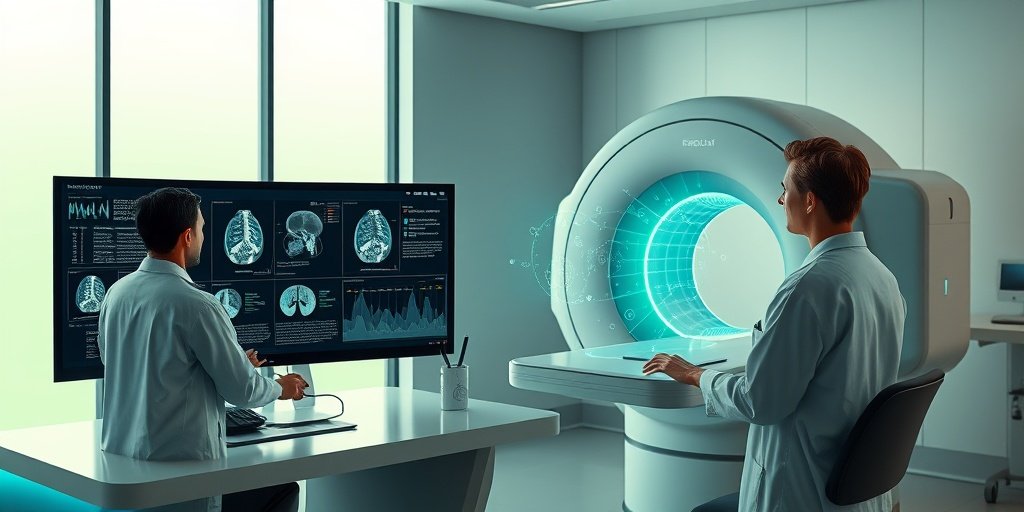
The journey of PACS began with a focus on digitization and local image management, evolving through phases that emphasized enterprise distribution and geographic access. As imaging technology and clinical practices have advanced, the need for a more integrated and intelligent system has become apparent. The introduction of PACS 3.0 marks a new chapter in this evolution, where the emphasis shifts from mere image storage to intelligent workflow management.
🗒️ Study
The manuscript by Towbin AJ outlines the transition to PACS 3.0, highlighting the integration of artificial intelligence into the clinical workflow. This study proposes that the incorporation of AI will not only streamline processes but also enhance the quality of care provided by radiologists and technologists. The focus is on creating a system that supports routine clinical work, ultimately benefiting patient outcomes.
📈 Results
While specific metrics from the study are not detailed, the anticipated outcomes of PACS 3.0 include improved efficiency in clinical workflows and enhanced decision-making capabilities for healthcare professionals. The integration of AI is expected to facilitate better management of imaging data and support radiologists in their diagnostic tasks.
🌍 Impact and Implications
The implications of PACS 3.0 are profound, as it promises to revolutionize the way radiology departments operate. By embedding workflow intelligence into the clinical environment, healthcare providers can expect to see significant improvements in both operational efficiency and patient care quality. This evolution could set a precedent for other medical fields to follow suit, leveraging AI to enhance clinical workflows.
🔮 Conclusion
The dawn of PACS 3.0 signifies a transformative moment in radiology, where artificial intelligence and workflow intelligence converge to create a more efficient and effective clinical environment. As we embrace these advancements, the potential for improved patient outcomes and streamlined operations becomes increasingly tangible. The future of radiology looks promising, and continued research and development in this area will be essential for maximizing the benefits of these technologies.
💬 Your comments
What are your thoughts on the evolution of PACS and the integration of AI in clinical workflows? We would love to hear your insights! 💬 Join the conversation in the comments below or connect with us on social media:
The Dawn of PACS 3.0: The Evolution from Image Access to Workflow Intelligence.
Abstract
Picture Archiving and Communication Systems (PACS) have evolved over decades in response to changes in imaging technology, network and data storage infrastructure, and the scale of clinical practice. Early PACS emphasized digitization and local image management, while later generations focused on enterprise distribution and broad geographic access. Radiology is now entering a new phase of PACS evolution, referred to as PACS 3.0. In contrast to prior phases centered on image storage and delivery, PACS 3.0 will be defined by the integration of workflow-centered intelligence into the clinical environment. In this next phase, artificial intelligence will be incorporated to support routine clinical work performed by radiologists and technologists. This manuscript proposes and defines PACS 3.0 as an evolution of PACS that could allow its users to work efficiently while maintaining the high quality of care delivery.
Author: [‘Towbin AJ’]
Journal: J Imaging Inform Med
Citation: Towbin AJ. The Dawn of PACS 3.0: The Evolution from Image Access to Workflow Intelligence. The Dawn of PACS 3.0: The Evolution from Image Access to Workflow Intelligence. 2026; (unknown volume):(unknown pages). doi: 10.1007/s10278-026-01930-2