⚡ Quick Summary
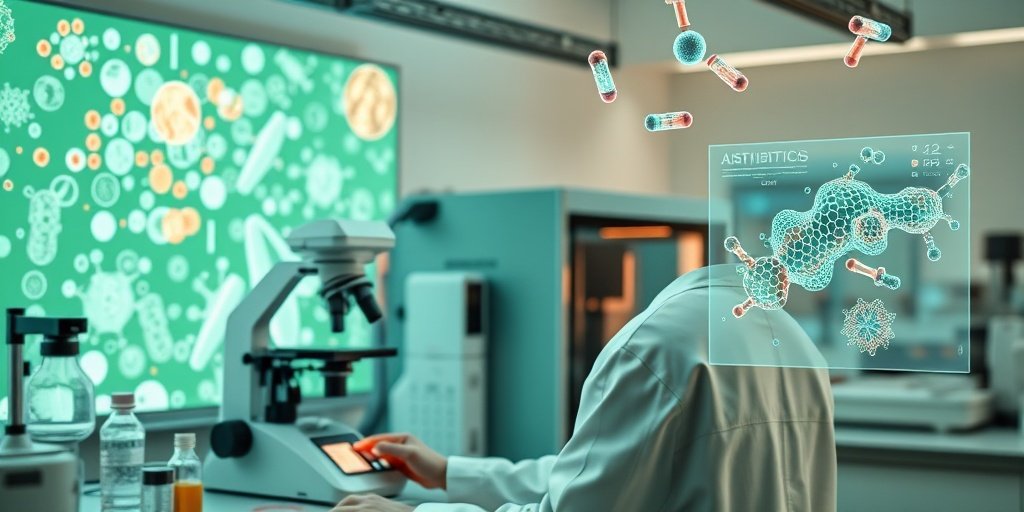
The study highlights innovative strategies for antimicrobial discovery from underexplored environments, addressing the urgent need for new antibiotics amid the global antimicrobial resistance (AMR) crisis. Techniques such as multi-omics, synthetic biology, and artificial intelligence (AI) are paving the way for a new era in antibiotic research.
🔍 Key Details
- 📊 Focus: Antimicrobial discovery from underexplored environments
- 🧬 Techniques: Co-culture, iChip, multi-omics, synthetic biology, AI
- 🌱 Novel Compounds: Teixobactin and other novel scaffolds
- 🌍 Ecological Frontiers: Exploration of neglected taxa and cryptic biosynthetic gene clusters
🔑 Key Takeaways
- 🌟 The golden era of antibiotic discovery has declined, necessitating new strategies.
- 🔬 Refined cultivation techniques have reactivated rare microbial taxa.
- 🧬 Multi-omics and synthetic biology allow access to previously uncultivated microbes.
- 🤖 AI technologies are expanding the search for antibiotics into neglected taxa.
- 📈 Innovations signal a shift towards data-driven antibiotic discovery.
- 🌱 Integration of ecology and technology provides a sustainable framework for antibiotic development.
- ⚠️ Addressing AMR is critical for future public health.
📚 Background
The discovery of antibiotics has been a cornerstone of modern medicine, significantly extending human lifespan. However, the initial surge in antibiotic discovery has diminished, primarily due to the rapid evolution of drug resistance among pathogens. This decline has led to a pressing global crisis in antimicrobial resistance (AMR), highlighting the need for innovative approaches to discover new antibiotics.
🗒️ Study
The authors review emerging directions in antibiotic discovery, focusing on methods that tap into underexplored environments. They discuss refined cultivation techniques, such as co-culture and iChip, which have successfully reactivated rare microbial taxa, leading to the discovery of novel compounds like teixobactin. The study emphasizes the importance of integrating various scientific disciplines to address the innovation gap in antibiotic research.
📈 Results
The integration of multi-omics and synthetic biology has enabled researchers to access cryptic biosynthetic gene clusters from the vast majority of uncultivated microbes. Furthermore, the application of artificial intelligence has broadened the search for antibiotics to include neglected taxa, such as archaea, and even historical data through paleoproteome mining. These advancements represent a significant leap forward in the quest for new antimicrobial agents.
🌍 Impact and Implications
The findings from this study could have profound implications for public health by replenishing the dwindling antibiotic pipeline. By leveraging ecological insights and cutting-edge technologies, researchers can develop a sustainable framework to combat the growing threat of AMR. This innovative approach not only addresses immediate needs but also sets the stage for future discoveries in antimicrobial research.
🔮 Conclusion
This study underscores the transformative potential of combining ecology, omics, synthetic biology, and AI in the field of antibiotic discovery. As we face the escalating challenge of antimicrobial resistance, these innovations offer hope for developing new antibiotics and ensuring the sustainability of our healthcare systems. Continued research in this area is essential for safeguarding public health in the future.
💬 Your comments
What are your thoughts on these exciting advancements in antimicrobial discovery? Let’s engage in a conversation! 💬 Share your insights in the comments below or connect with us on social media:
Antimicrobial discovery from underexplored environments: unlocking specialized metabolism.
Abstract
The discovery of antibiotics transformed modern medicine and extended the average human lifespan by decades. However, the initial golden era of antibiotic discovery has significantly waned, a decline aggravated by the relentless evolution of drug resistance among human pathogens, ultimately driving the current global antimicrobial resistance (AMR) crisis. The repeated rediscovery of known compounds from conventional soil-derived microbes underscores the urgent need for new strategies and ecological frontiers.Here, we review emerging directions in antibiotic discovery that collectively address this innovation gap. Refined cultivation techniques such as co-culture and iChip have reactivated rare taxa and yielded novel scaffolds like teixobactin. Multi-omics and synthetic biology approaches now enable culture-independent access to cryptic biosynthetic gene clusters from the vast uncultivated microbial majority. Most recently, artificial intelligence (AI) has expanded the search frontier to neglected taxa such as archaea and even evolutionary timeframes through paleoproteome mining. Overall, these innovations signal a new era of intelligent, data-driven antibiotic discovery. The integration of ecology, omics, synthetic biology, and AI provides a sustainable framework to replenish the antibiotic pipeline and mitigate the growing threat of AMR.
Author: [‘Han T’, ‘He Q’, ‘Zhai G’, ‘Cai X’]
Journal: Curr Opin Microbiol
Citation: Han T, et al. Antimicrobial discovery from underexplored environments: unlocking specialized metabolism. Antimicrobial discovery from underexplored environments: unlocking specialized metabolism. 2026; 91:102745. doi: 10.1016/j.mib.2026.102745