
⚡ Quick Summary
The article discusses the advancements in superficial organ reconstruction, emphasizing the shift from mere structural restoration to functional rehabilitation. With the integration of technologies like gene editing and 3D printing, this field is set to achieve unprecedented levels of precision and functionality.
🔍 Key Details
- 🧬 Focus: Superficial organ reconstruction
- ⚙️ Techniques: Surgical methods, tissue engineering, regenerative medicine
- 🔬 Future Technologies: Gene editing, artificial intelligence, 3D printing, brain-computer interfaces
- 📈 Goals: High intelligence, precision, comprehensive functional restoration
🔑 Key Takeaways
- 🔍 Superficial organ reconstruction aims to restore both structure and function.
- 💡 Significant progress has been made in blood supply assurance and morphological reconstruction.
- 🤖 Future integration of cutting-edge technologies promises to enhance reconstruction outcomes.
- 🌟 The field is evolving towards high intelligence and precision in functional restoration.
- 🧩 Challenges remain in achieving comprehensive functional rehabilitation.
- 📅 Published in: Zhonghua Shao Shang Yu Chuang Mian Xiu Fu Za Zhi, 2026.
- 👩🔬 Authors: Zan T and Gao YS.
- 🔗 DOI: 10.3760/cma.j.cn501225-20251110-00467.
📚 Background
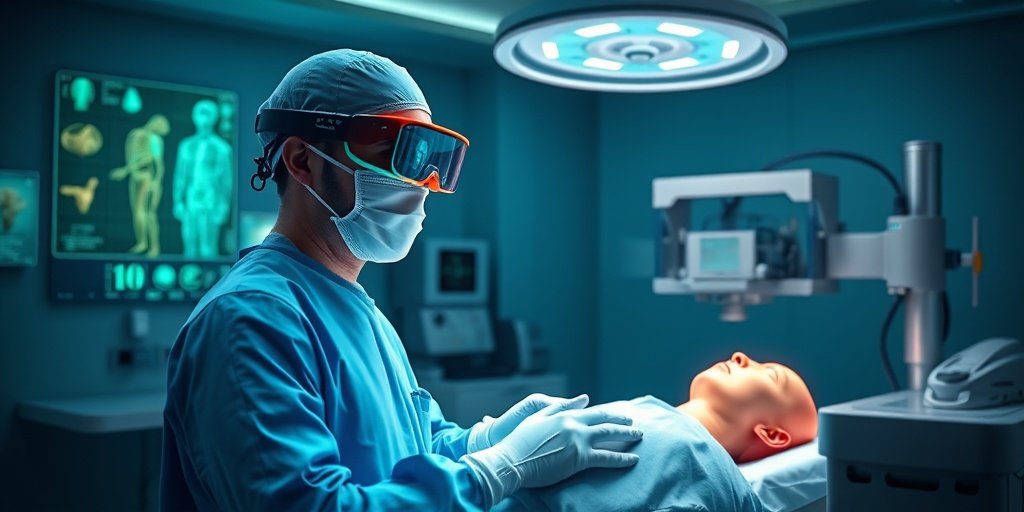
The reconstruction of superficial organs is a critical area in medical science, focusing on restoring not just the physical appearance but also the biological function of these organs. Traditional methods have primarily concentrated on structural restoration, but recent advancements are paving the way for a more holistic approach that includes functional rehabilitation.
🗒️ Study
This article systematically outlines the current state of superficial organ reconstruction, detailing the various techniques employed, such as surgical interventions and tissue engineering. It also highlights the challenges faced in achieving optimal outcomes and the potential for future advancements in this field.
📈 Results
The authors emphasize that significant progress has been made in ensuring blood supply and reconstructing the morphology of superficial organs. However, the transition to functional rehabilitation remains a challenge that requires innovative solutions and the application of new technologies.
🌍 Impact and Implications
The implications of this research are profound. As we integrate technologies like gene editing and brain-computer interfaces, the potential for achieving comprehensive functional restoration of superficial organs could revolutionize patient care. This could lead to improved quality of life for individuals requiring such reconstructions.
🔮 Conclusion
The future of superficial organ reconstruction is bright, with the promise of high intelligence and precision in functional rehabilitation. As we continue to explore and integrate advanced technologies, we can expect significant improvements in the outcomes of these procedures. Ongoing research and collaboration will be essential to fully realize this potential.
💬 Your comments
What are your thoughts on the advancements in superficial organ reconstruction? We would love to hear your insights! 💬 Share your comments below or connect with us on social media:
[Reconstruction of superficial organs: a leap from structural restoration to functional rehabilitation].
Abstract
The core objective of superficial organ reconstruction is to perfectly restore the organ’s morphological structure and biological function. Currently, significant progress has been achieved in structural construction, blood supply assurance, and morphological and functional reconstruction of superficial organ reconstruction, primarily relying on approaches including surgical techniques, tissue engineering, and regenerative medicine. In the future, with the integration and application of cutting-edge technologies such as gene editing, artificial intelligence, three-dimensional printing, and brain-computer interfaces, superficial organ reconstruction is poised to enter a new historical stage characterized by high intelligence, precision, and comprehensive functional restoration. This article focuses on superficial organ reconstruction, systematically outlines its concept, challenges, and current development status, and proposes future perspectives for this field.
Author: [‘Zan T’, ‘Gao YS’]
Journal: Zhonghua Shao Shang Yu Chuang Mian Xiu Fu Za Zhi
Citation: Zan T and Gao YS. [Reconstruction of superficial organs: a leap from structural restoration to functional rehabilitation]. [Reconstruction of superficial organs: a leap from structural restoration to functional rehabilitation]. 2026; 42:26-33. doi: 10.3760/cma.j.cn501225-20251110-00467