⚡ Quick Summary
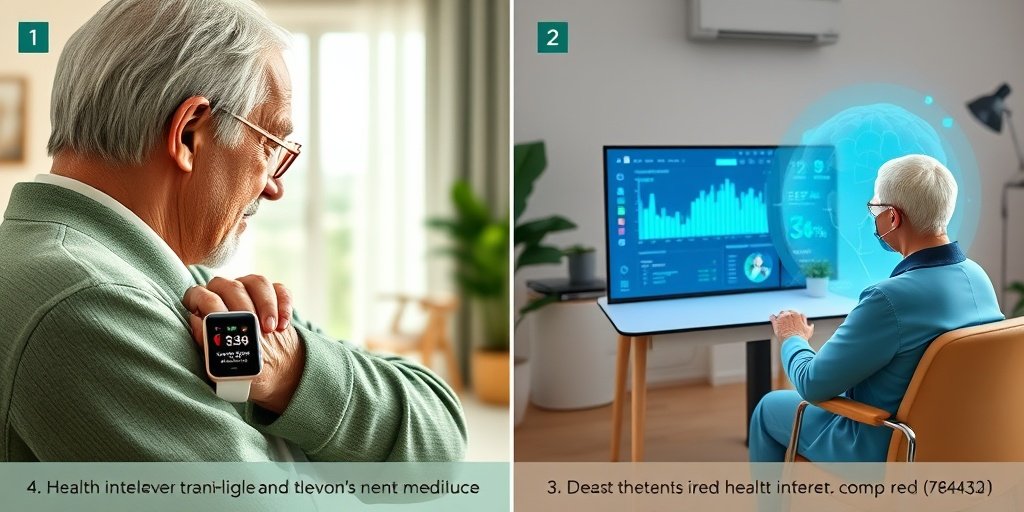
This review highlights the significant role of wearable devices and artificial intelligence in promoting healthy aging, emphasizing their potential to enhance the physical and mental well-being of older adults. Technologies like Fitbit® and ActiGraph™ are showcased for their effectiveness in monitoring health metrics among the elderly.
🔍 Key Details
- 📊 Focus: Wearable devices and telemedicine for older adults
- 🧩 Technologies explored: Brain-computer interfaces (BCIs), smart wearables
- ⚙️ Key devices: Fitbit®, ActiGraph™
- 🏆 Findings: Reliable monitoring of physical activity and engagement levels
🔑 Key Takeaways
- 📈 Wearable technology is transforming healthcare for the aging population.
- 💡 BCIs enhance communication between healthcare providers and older patients.
- 🏃♂️ Fitbit® and ActiGraph™ provide accurate physical activity tracking.
- 🔍 Limitations include sample size and technological adaptation challenges.
- 🌐 Future research is needed to address the needs of individuals with mobility impairments.
- 🤖 Machine learning improves signal processing in BCIs for better health monitoring.
- 🏥 Integration of wearables into geriatric care can maximize health benefits.
📚 Background
Healthy aging is a multifaceted concept that involves maintaining and enhancing both physical and mental well-being. As the population ages, the need for innovative solutions to support independence and quality of life becomes increasingly critical. Recent advancements in technology, particularly in the realm of wearable devices and telemedicine, offer promising avenues to address these challenges.
🗒️ Study
This review synthesized relevant literature to explore the impact of wearable technologies and artificial intelligence on the health of older adults. The study focused on how these innovations can facilitate better health monitoring and communication between patients and healthcare providers, ultimately aiming to enhance the quality of life for the aging population.
📈 Results
The findings indicate that devices like Fitbit® are effective in accurately counting steps, making them suitable for monitoring physical activity among older adults. Additionally, ActiGraph™ demonstrated reliable performance in tracking physical activity levels, aligning closely with Fitbit® results. However, the study also identified limitations, such as small sample sizes and the need for ongoing research to adapt these technologies for individuals with significant mobility impairments.
🌍 Impact and Implications
The integration of wearable technologies into healthcare for older adults holds substantial promise. By leveraging devices like Fitbit® and ActiGraph™, healthcare providers can gain valuable insights into the physical activity and overall health of their patients. This could lead to more personalized care strategies and improved health outcomes, ultimately fostering a healthier aging process.
🔮 Conclusion
The evolving landscape of wearable technologies and artificial intelligence presents exciting opportunities for enhancing geriatric care. As research continues to address existing limitations, the potential for these innovations to reshape healthcare approaches for the aging population is immense. Embracing these technologies could significantly improve the quality of life for older adults, making healthy aging more attainable.
💬 Your comments
What are your thoughts on the role of technology in promoting healthy aging? We would love to hear your insights! 💬 Share your comments below or connect with us on social media:
The Contribution of Wearable Devices and Artificial Intelligence to Promoting Healthy Aging.
Abstract
INTRODUCTION: Healthy aging involves consistently maximizing opportunities to maintain and enhance physical and mental well-being, fostering independence, and sustaining a high quality of life. This review examines recent technological innovations aimed at promoting the well-being of older adults. The scope encompasses wearable devices and telemedicine, showcasing their potential to enhance the health and overall well-being of older individuals. The review highlights the crucial role of assistive technologies, including mobility aids, hearing aids, and adaptive home devices, in addressing the specific challenges associated with aging.
METHODS: The relevant literature was collected and selected based on the objective of the study and reviewed.
RESULTS: Digital technologies, including brain-computer interfaces (BCIs), are explored as potential solutions to enhance communication between healthcare providers and aging patients, considering engagement levels and active interaction. Sophisticated BCIs, such as electroencephalograms, electrocorticography, and signal modeling for real-time identification, play a crucial role in event detection, with machine learning algorithms enhancing signal processing for accurate decoding. The exploration of smart wearable systems for health monitoring emerges as a dynamic and promising field in the context of aging.
DISCUSSION: Fitbit® showcases accurate step counting, making it suitable for monitoring physical activity in older adults engaged in slow walking. ActiGraph™ is evaluated for accuracy in monitoring physical activity in older adults, with results indicating reliable concurrence with Fitbit® devices. The study identifies several limitations, including sample size constraints, challenges in keeping pace with technological advancements, and the need for further investigation into the suitability of fitness trackers for individuals with significant mobility impairments.
CONCLUSION: The evolving landscape of wearable technologies, exemplified by Fitbit®, Acti- Graph™, and other interventions, holds substantial promise for reshaping healthcare approaches for the aging population. Addressing the limitations will be crucial as research progresses to ensure the effective and ethical integration of wearables into geriatric care, maximizing their potential benefits.
Author: [‘Sisubalan N’, ‘Vijay N’, ‘Kesika P’, ‘Newbegin M’, ‘Shalini R’, ‘Sivamaruthi BS’, ‘Chaiysut C’]
Journal: Curr Pharm Biotechnol
Citation: Sisubalan N, et al. The Contribution of Wearable Devices and Artificial Intelligence to Promoting Healthy Aging. The Contribution of Wearable Devices and Artificial Intelligence to Promoting Healthy Aging. 2025; (unknown volume):(unknown pages). doi: 10.2174/0113892010390500250911104231