⚡ Quick Summary
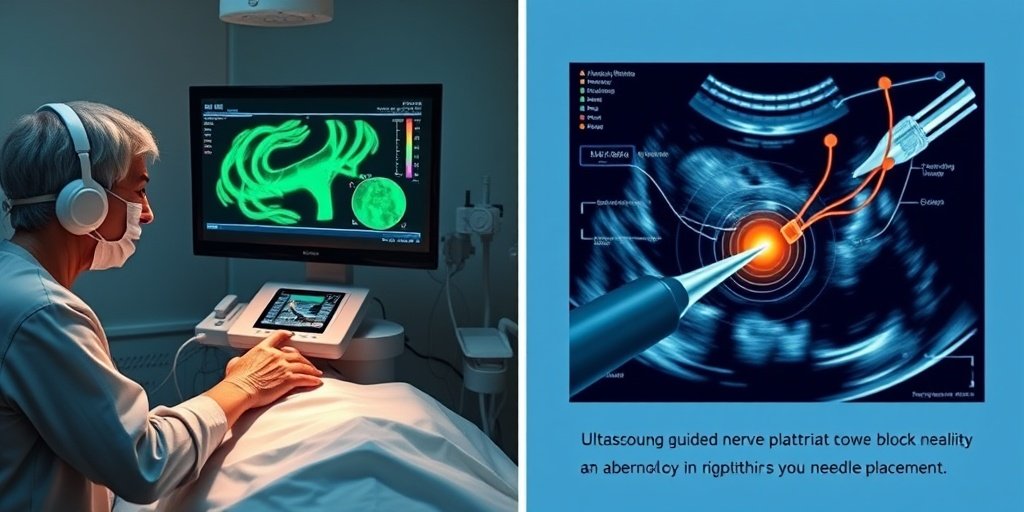
This article discusses the significant advancements of ultrasound-guided regional anesthesia (UGRA) in geriatric anesthesia, highlighting its ability to enhance procedural precision and patient safety. The technology not only improves block success rates but also minimizes opioid use, thereby reducing the risk of adverse events in elderly patients.
🔍 Key Details
- 📊 Focus: Ultrasound-guided nerve blocks in geriatric anesthesia
- ⚙️ Technology: Real-time sonographic visualization
- 🏆 Benefits: Improved block success rates, reduced systemic exposure
- 🧠 Patient Safety: Minimizes opioid use and lowers incidence of delirium
- 📈 Alignment: Supports enhanced recovery after surgery (ERAS) protocols
🔑 Key Takeaways
- 🔍 UGRA represents a major advancement in geriatric anesthesia practices.
- 💡 Real-time imaging allows for precise needle navigation and localized anesthetic delivery.
- 📉 Reduced volume requirements lead to lower systemic exposure to anesthetics.
- 🛡️ Enhanced patient safety through minimized opioid use and reduced neuroinflammatory responses.
- 🧠 Lower incidence of cognitive dysfunction and delirium in elderly patients.
- 🚀 Future innovations include imaging AI and personalized protocols.
- 📚 Need for standardized training and multicenter clinical trials to validate UGRA’s efficacy.
📚 Background
The field of geriatric anesthesia faces unique challenges due to the increased vulnerability of elderly patients to pharmacological adverse events and perioperative complications. Traditional landmark-based techniques often fall short in providing the precision required for safe and effective anesthesia in this population. The introduction of ultrasound-guided regional anesthesia (UGRA) marks a transformative shift, offering a solution that enhances both safety and efficacy.
🗒️ Study
The article reviews the current status and future prospects of UGRA in geriatric anesthesia, emphasizing its role in improving patient outcomes. The authors discuss the technology’s ability to provide dynamic, real-time visualization, which is crucial for accurate needle placement and effective anesthetic delivery. This study highlights the importance of ongoing innovations and the need for comprehensive training in UGRA techniques.
📈 Results
The findings indicate that UGRA significantly improves block success rates while reducing the volume of anesthetics required. This is particularly beneficial for elderly patients, who are at a higher risk of experiencing adverse effects from systemic exposure. Additionally, UGRA has been shown to facilitate opioid-minimized analgesia, which is essential in reducing the risk of delirium and cognitive dysfunction in this vulnerable population.
🌍 Impact and Implications
The implications of UGRA in geriatric anesthesia are profound. By aligning with enhanced recovery after surgery (ERAS) protocols, UGRA promotes early mobilization and functional recovery, which are critical for the elderly. As the healthcare landscape continues to evolve, the integration of UGRA into routine perioperative care could lead to improved outcomes and a higher quality of life for aging patients.
🔮 Conclusion
The advancements in ultrasound-guided regional anesthesia present a promising future for geriatric anesthesia. With its ability to enhance precision and safety, UGRA stands to revolutionize the way anesthesia is administered to elderly patients. Continued research and innovation in this field are essential to fully realize its potential and ensure that the aging population receives the best possible care.
💬 Your comments
What are your thoughts on the integration of UGRA in geriatric anesthesia? We would love to hear your insights! 💬 Share your comments below or connect with us on social media:
Precision and safety advantages of ultrasound-guided nerve blocks in geriatric anesthesia: current status and future prospects.
Abstract
Ultrasound-guided regional anesthesia (UGRA) has emerged as a pivotal advancement in geriatric anesthesia, significantly enhancing procedural precision and patient safety through dynamic, real-time sonographic visualization. This technology overcomes critical limitations of conventional landmark-based techniques by enabling accurate needle navigation and localized anesthetic delivery, thereby improving block success rates while reducing volume requirements and systemic exposure. In elderly populations, characterized by heightened vulnerability to pharmacological adverse events and perioperative complications, UGRA facilitates opioid-minimized analgesia, attenuates neuroinflammatory responses, and lowers the incidence of delirium and cognitive dysfunction. Its alignment with enhanced recovery after surgery (ERAS) protocols further promotes early mobilization and functional recovery. Despite existing challenges in technical training and resource allocation, ongoing innovations in imaging artificial intelligence, sustained-release local anesthetics, and personalized protocols hold substantial potential to broaden its applications. Future integration of UGRA into perioperative care necessitates standardized competency-based training and rigorously designed multicenter clinical trials to consolidate its role in improving outcomes for the aging surgical population.
Author: [‘Lin XY’, ‘Yang YM’, ‘Liu Y’, ‘Dang QQ’, ‘Zhang K’]
Journal: Front Med (Lausanne)
Citation: Lin XY, et al. Precision and safety advantages of ultrasound-guided nerve blocks in geriatric anesthesia: current status and future prospects. Precision and safety advantages of ultrasound-guided nerve blocks in geriatric anesthesia: current status and future prospects. 2025; 12:1709406. doi: 10.3389/fmed.2025.1709406