⚡ Quick Summary
This study introduces a Multi-Scale Temporal Attention-Transformer Network (MS-TATNet) designed for real-time monitoring of Parkinson’s Disease (PD) motor symptoms using 2D skeleton pose data. The framework achieved impressive metrics, including 99.63% accuracy in medication state classification, highlighting its potential for scalable and privacy-preserving remote monitoring.
🔍 Key Details
- 📊 Dataset: REal-world Mobility Activities in Parkinson’s disease (REMAP) dataset
- 🧩 Features used: Coarsened 2D skeleton pose data
- ⚙️ Technology: Multi-Scale Temporal Attention-Transformer Network (MS-TATNet)
- 🏆 Performance: 99.63% accuracy, 99.50% recall, 99.33% specificity, 99.67% F1-score
- 📈 Correlation: Pearson correlation coefficient of 0.97 with clinical assessments for severity estimation
🔑 Key Takeaways
- 🧠 Parkinson’s Disease is characterized by fluctuating motor symptoms that require continuous monitoring.
- 🔍 MS-TATNet offers a novel approach to classify medication states (ON or OFF) and estimate symptom severity.
- 📈 High accuracy of 99.63% demonstrates the effectiveness of the proposed framework.
- 🔒 Privacy-preserving methods are crucial in the development of wearable health technologies.
- 🌐 Real-time monitoring can significantly enhance patient care and management of PD.
- 🤖 Deep learning techniques are paving the way for advancements in neurological disorder monitoring.
- 📊 Clinical relevance is supported by a strong correlation with traditional assessment methods.
- 💡 Future research could expand the application of this technology to other neurological conditions.
📚 Background
Parkinson’s Disease (PD) is a progressive neurological disorder that affects movement and can lead to significant disability. One of the challenges in managing PD is the fluctuation of motor symptoms throughout the day, which can vary based on medication timing and dosage. Traditional clinical assessments are often episodic and subjective, making continuous and objective monitoring essential for effective management. The integration of technology, particularly deep learning, offers promising solutions to enhance monitoring while addressing privacy concerns.
🗒️ Study
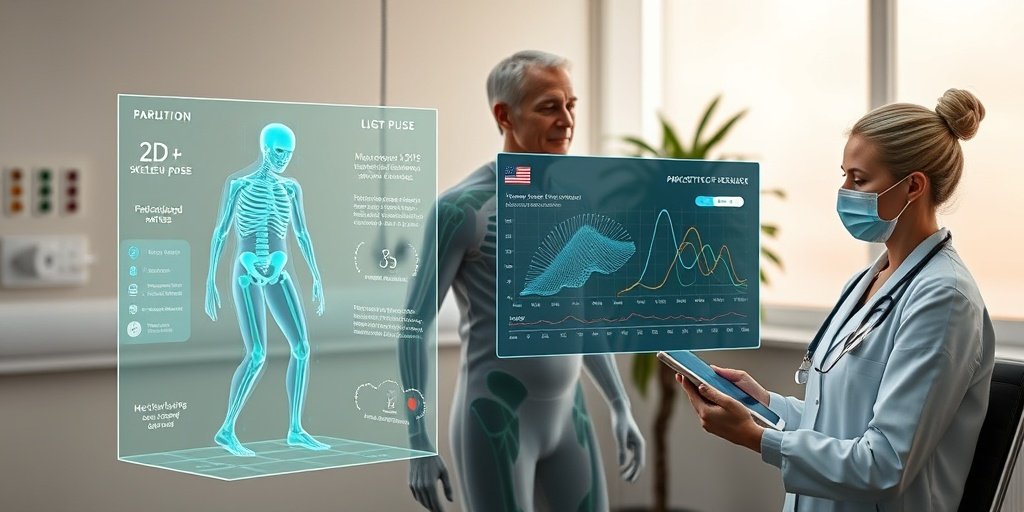
The study aimed to develop a real-time monitoring framework for PD using the REMAP dataset, which includes coarsened 2D skeleton pose data. The researchers designed the MS-TATNet to capture the complex dynamics of PD motor symptoms through a sophisticated architecture that includes multi-scale temporal convolutional networks and attention mechanisms. This innovative approach allows for simultaneous classification of medication states and continuous estimation of symptom severity.
📈 Results
The performance of the MS-TATNet was remarkable, achieving 99.63% accuracy in classifying medication states, along with a 99.67% F1-score. The model also demonstrated a strong correlation with clinical assessments, indicated by a Pearson correlation coefficient of 0.97 for continuous severity estimation. These results underscore the framework’s potential to provide reliable and objective monitoring of PD symptoms.
🌍 Impact and Implications
The implications of this study are significant for the field of neurology and patient care. By utilizing a privacy-preserving deep learning framework, healthcare providers can offer real-time monitoring of Parkinson’s motor symptoms, leading to improved patient outcomes. This technology not only enhances the quality of care but also addresses the growing need for privacy in health monitoring solutions. The potential for scalability could pave the way for similar applications in other neurological disorders, transforming how we approach chronic disease management.
🔮 Conclusion
This study highlights the transformative potential of deep learning in the monitoring of Parkinson’s Disease. The development of the MS-TATNet represents a significant step forward in providing continuous, objective assessments of motor symptoms while ensuring patient privacy. As technology continues to evolve, we can anticipate further advancements that will enhance the management of neurological conditions, ultimately leading to better patient care and quality of life.
💬 Your comments
What are your thoughts on this innovative approach to monitoring Parkinson’s motor symptoms? We would love to hear your insights! 💬 Share your comments below or connect with us on social media:
Multi-Scale Adaptive Temporal Network for Parkinson’s Motor Symptom Fluctuation Detection Using Coarsened 2D Skeleton Pose Data.
Abstract
BACKGROUND: Parkinson’s Disease (PD) is a neurological condition characterized by motor symptoms that fluctuate throughout the day depending on medication. Continuous and objective monitoring is essential, but conventional clinical assessments are episodic and subjective, while wearable and video-based solutions may raise privacy concerns. This study aims to develop a real-time, privacy-preserving deep learning framework that utilizes 2D skeleton pose data to simultaneously classify medication states (ON or OFF) and continuously estimate motor symptom severity.
METHODS: To enable privacy-preserving and real-time monitoring of Parkinson’s motor fluctuations, a Multi-Scale Temporal Attention-Transformer Network (MS-TATNet) was developed based on 2D skeleton pose data collected from the REal-world Mobility Activities in Parkinson’s disease dataset (REMAP) dataset. The MS-TATNet captures complex, variable, and multi-scale temporal dynamics of PD motor symptoms through a multi-scale temporal convolutional network, scaled dot-product attention mechanism, stacked transformer encoder blocks with a multi-head self-attention mechanism, temporal pooling layer, softmax classifier, and regression layer.
RESULTS: The experimental results demonstrate that the MS-TATNet achieved 99.63% accuracy, 99.50% recall, 99.33% specificity, and 99.67% F1-score for medication state classification. For continuous severity estimation, the predicted scores showed a Pearson correlation coefficient of 0.97 with clinical assessments.
CONCLUSION: Thus, this work highlights the MS-TATNet’s potential for scalable, privacy-preserving remote monitoring of PD.
Author: [‘Velumani B’, ‘Krishnakumar S’]
Journal: J Integr Neurosci
Citation: Velumani B and Krishnakumar S. Multi-Scale Adaptive Temporal Network for Parkinson’s Motor Symptom Fluctuation Detection Using Coarsened 2D Skeleton Pose Data. Multi-Scale Adaptive Temporal Network for Parkinson’s Motor Symptom Fluctuation Detection Using Coarsened 2D Skeleton Pose Data. 2026; 25:47677. doi: 10.31083/JIN47677