⚡ Quick Summary
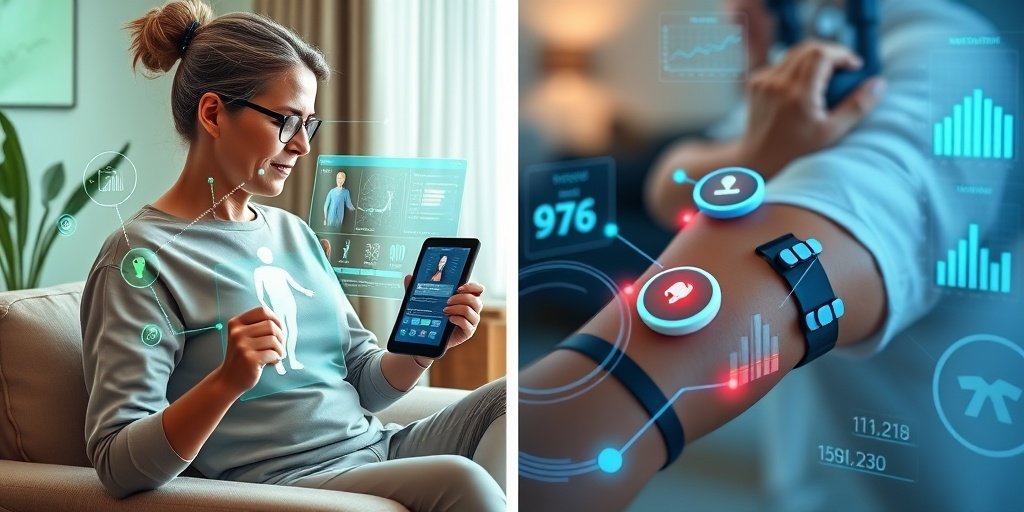
This narrative review highlights the transformative potential of AI-driven virtual physiotherapy assistants (VPAs) in home rehabilitation, demonstrating their ability to enhance treatment adherence and improve rehabilitation outcomes. Despite challenges such as sensor accuracy and patient engagement, these technologies offer a promising solution for personalized care. 🤖
🔍 Key Details
- 📊 Study Scope: Review of 31 peer-reviewed publications from 2018-2024.
- 🧩 Focus Areas: Sensor accuracy, AI-based monitoring algorithms, patient engagement strategies.
- ⚙️ Technology: AI-driven VPAs integrated with wearable sensors.
- 🏆 Key Findings: Enhanced adherence and reduced in-person visits.
🔑 Key Takeaways
- 🏡 Home Rehabilitation: AI-driven VPAs provide real-time feedback and personalized guidance.
- 📉 Reduced Clinic Visits: These systems minimize the need for in-person consultations.
- ⚠️ Limitations: Challenges include sensor accuracy, user motivation, and cost barriers.
- 🎮 Gamification: Novel findings suggest gamification strategies can enhance patient engagement.
- 📈 Predictive Analytics: Potential for predictive analytics to improve rehabilitation outcomes.
- 🌐 Telehealth Integration: AI-driven VPAs can be integrated into telehealth platforms for broader access.
- 💰 Affordability: Technological improvements and cost reductions are essential for wider adoption.
📚 Background
The rise of artificial intelligence in healthcare has opened new avenues for enhancing patient care, particularly in rehabilitation settings. Traditional rehabilitation often requires frequent clinic visits, which can be burdensome for patients. AI-driven VPAs aim to bridge this gap by providing personalized support and real-time feedback, making rehabilitation more accessible and effective.
🗒️ Study
This comprehensive narrative review analyzed literature from multiple databases, including PubMed and IEEE Xplore, focusing on the integration of AI and wearable sensors in home rehabilitation. Out of 847 articles, 31 peer-reviewed studies were included, providing a robust overview of the current landscape and future directions for AI-driven VPAs.
📈 Results
The analysis revealed that AI-driven VPAs significantly enhance patient adherence to rehabilitation protocols and reduce the necessity for in-person visits. However, critical limitations were identified, including issues with sensor accuracy and variability in patient engagement. Addressing these challenges is crucial for the successful implementation of these technologies in everyday practice.
🌍 Impact and Implications
The findings from this review underscore the potential of AI-driven VPAs to revolutionize home rehabilitation. By offering a more accessible and personalized approach to care, these technologies can improve patient outcomes and reduce healthcare costs. As we move forward, addressing the barriers to implementation will be essential for maximizing their impact on rehabilitation delivery.
🔮 Conclusion
AI-driven virtual physiotherapy assistants represent a significant advancement in home rehabilitation, with the potential to enhance patient engagement and treatment adherence. While challenges remain, the evidence suggests that with continued technological improvements and a focus on accessibility, these systems could transform the landscape of rehabilitation care. The future of rehabilitation is bright, and we encourage ongoing research and development in this exciting field! 🌟
💬 Your comments
What are your thoughts on the integration of AI in home rehabilitation? We would love to hear your insights! 💬 Leave your comments below or connect with us on social media:
Enhancing home rehabilitation through AI-driven virtual assistants: a narrative review.
Abstract
BACKGROUND AND OBJECTIVE: Artificial intelligence (AI)-driven virtual physiotherapy assistants (VPAs) are increasingly adopted in home-based rehabilitation, offering real-time feedback and personalised guidance through wearable sensors. These systems enhance treatment adherence, minimise clinic visits, and improve rehabilitation outcomes. However, challenges such as sensor accuracy, patient engagement, and affordability hinder widespread implementation. This review explores current applications, benefits, and limitations of AI-driven VPAs.
METHODS: A comprehensive narrative review was conducted across PubMed, IEEE Xplore, Scopus, Google Scholar, and Web of Science databases. Search terms such as: “artificial intelligence”, “virtual physiotherapy assistants”, “home rehabilitation”, and “wearable sensors”. From 847 initially identified articles, 31 peer-reviewed publications (2018-2024) met inclusion criteria. Exclusion criteria eliminated non-English publications, conference abstracts, and studies without AI components. The review synthesised literature on sensor accuracy, AI-based monitoring algorithms, and patient engagement strategies.
KEY CONTENT AND FINDINGS: Analysis of 31 studies revealed that AI-driven VPAs enhance adherence and reduce in-person visits. Integrating wearable sensors and AI facilitates real-time feedback and personalised support, improving exercise accuracy. Critical limitations include inertial measurement unit drift, electromyography sensor placement variability, and optical system environmental dependencies. Challenges remain in sensor precision, user motivation, cost barriers, and technology accessibility. Novel findings highlight potential for predictive analytics, gamification strategies, and telehealth integration.
CONCLUSIONS: AI-driven VPAs offer a promising accessible, personalised home-based rehabilitation solution. Evidence demonstrates therapeutic potential, though systematic addressing of sensor accuracy, engagement strategies, and accessibility barriers is essential for implementation. Technological improvements and increased affordability are crucial for broader adoption and long-term impact on rehabilitation delivery.
Author: [‘Olawade DB’, ‘Adeleye KK’, ‘Egbon E’, ‘Nwabuoku US’, ‘Clement David-Olawade A’, ‘Boussios S’, ‘Vanderbloemen L’]
Journal: Ann Transl Med
Citation: Olawade DB, et al. Enhancing home rehabilitation through AI-driven virtual assistants: a narrative review. Enhancing home rehabilitation through AI-driven virtual assistants: a narrative review. 2025; 13:61. doi: 10.21037/atm-25-61