⚡ Quick Summary
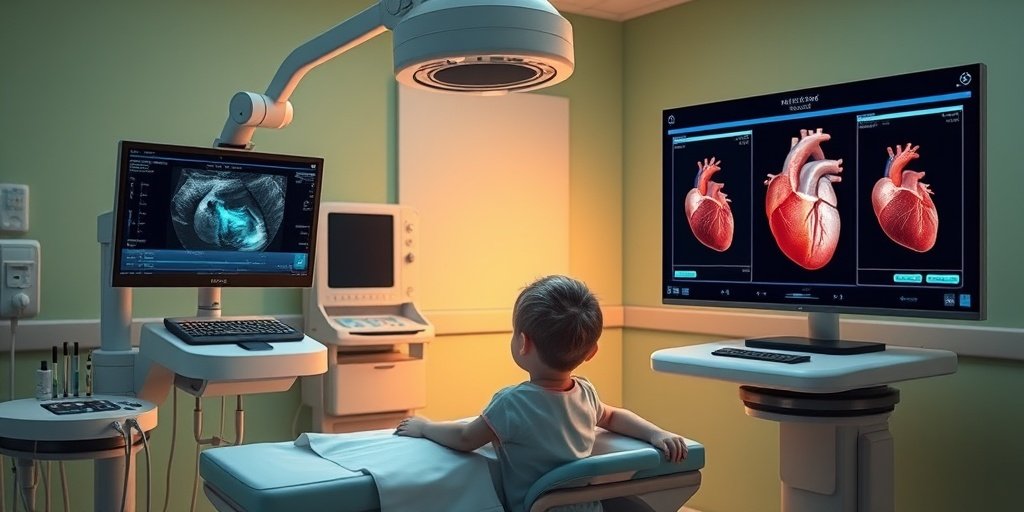
This study utilized deep learning to enhance the detection of cardiac abnormalities in children suffering from post-acute sequelae of SARS-CoV-2 infection (PASC). The deep learning model achieved an impressive accuracy of 96.6%, indicating its potential for improving echocardiographic evaluations in pediatric patients.
🔍 Key Details
- 📊 Dataset: 270 children with PASC and 400 age-matched controls
- 🧩 Features used: Echocardiographic images analyzed with a ResNet-50-based model
- ⚙️ Technology: Deep learning for cardiac abnormality detection
- 🏆 Performance: Accuracy 96.6%, Sensitivity 96.7%, Specificity 96.2%
🔑 Key Takeaways
- 🫀 Echocardiography is crucial for identifying cardiac complications in children with PASC.
- 🤖 Deep learning significantly enhances the detection of subtle cardiac changes.
- 📅 Study period: July 1, 2022, to July 31, 2023, during the Omicron variant surge.
- 🚫 Exclusions: Children with congenital heart disease, inflammatory conditions, or arrhythmias were not included.
- 🔍 Clinical significance of detected abnormalities remains uncertain and requires further research.
- 🌍 Conducted at: A pediatric tertiary center in central Taiwan.
- 📈 Future research is needed for long-term follow-up and larger-scale studies.
📚 Background
The post-acute sequelae of SARS-CoV-2 infection (PASC) has emerged as a significant concern, particularly in children who may experience persistent symptoms and complications following COVID-19. Among these complications, cardiac issues have been highlighted, necessitating thorough evaluations to ensure timely and effective management.
🗒️ Study
This study was conducted at a pediatric tertiary center in Taiwan, focusing on children under 18 years who tested positive for SARS-CoV-2 and exhibited symptoms for over four weeks. The researchers aimed to leverage deep learning techniques to analyze echocardiographic data, comparing children with PASC to a control group from 2018 with similar symptoms.
📈 Results
The deep learning model demonstrated remarkable performance, achieving an accuracy of 96.6%, with a sensitivity of 96.7% and specificity of 96.2%. Despite these impressive metrics, standard echocardiographic parameters did not reveal significant abnormalities in the PASC group, highlighting the model’s ability to detect subtle changes that may not be evident through traditional methods.
🌍 Impact and Implications
The findings of this study underscore the potential of AI-assisted echocardiographic analysis in pediatric cardiology. By improving the detection of cardiac abnormalities in children with PASC, healthcare providers can enhance patient care and outcomes. However, the clinical relevance of the subtle differences identified by the deep learning model needs further exploration through larger studies and long-term follow-up.
🔮 Conclusion
This research highlights the transformative potential of deep learning in the field of pediatric cardiology, particularly for children affected by PASC. While the model shows promise in identifying cardiac changes, ongoing research is essential to ascertain the clinical significance of these findings. The integration of advanced technologies like AI in healthcare could pave the way for improved diagnostic capabilities and patient management strategies.
💬 Your comments
What are your thoughts on the use of deep learning in echocardiographic evaluations? We invite you to share your insights and engage in a discussion! 💬 Leave your comments below or connect with us on social media:
Echocardiographic Evaluation in Children with Post-Acute Sequelae of SARS-CoV-2 Infection Using Deep Learning.
Abstract
Post-acute sequelae of SARS-CoV-2 infection (PASC) is characterized by persistent symptoms following SARS-CoV-2 infection. Children with PASC are at risk of developing cardiac complications. Echocardiography has been instrumental in identifying cardiac abnormalities. This study applies deep learning to enhance the detection and understanding of echocardiographic changes in children with PASC. A case-control study was conducted at a pediatric tertiary center in central Taiwan. Children under 18 years who tested positive for SARS-CoV-2 and experienced symptoms for longer than 4 weeks were recruited between July 1, 2022, and July 31, 2023, during the Omicron variant surge. Echocardiographic data were also collected from a control group, consisting of children who presented with similar symptoms and received medical care in the same pediatric tertiary center in 2018. Children with congenital or structural heart disease, inflammatory conditions, or arrhythmias were excluded. Echocardiographic images were analyzed using a ResNet-50-based deep learning model to identify cardiac abnormalities. A total of 270 children with PASC and 400 age-matched control children were included. Standard echocardiographic parameters, including EF, FS, chamber dimensions, and valvular assessment, did not reveal abnormalities in the PASC group. The deep learning model achieved an accuracy of 96.6%, sensitivity of 96.7%, specificity of 96.2%, and balanced accuracy of 96.4%. AI-assisted echocardiographic analysis demonstrated high performance in distinguishing cardiac function between PASC and controls. Deep learning models enhance the detection of subtle cardiac changes in children with PASC. Although the deep learning model demonstrated high performance in distinguishing PASC from controls, the clinical significance of these subtle image-based differences remains uncertain and requires further evaluation in large-scale studies with long-term follow-up.
Author: [‘Peng YC’, ‘Huang YJ’, ‘Liu XL’, ‘Wu JC’, ‘Liu PY’, ‘Hsu YL’, ‘Chen PC’, ‘Wu LS’, ‘Tsai HJ’, ‘Chen WW’, ‘Hsieh KS’, ‘Lu HH’, ‘Wang JY’]
Journal: J Imaging Inform Med
Citation: Peng YC, et al. Echocardiographic Evaluation in Children with Post-Acute Sequelae of SARS-CoV-2 Infection Using Deep Learning. Echocardiographic Evaluation in Children with Post-Acute Sequelae of SARS-CoV-2 Infection Using Deep Learning. 2026; (unknown volume):(unknown pages). doi: 10.1007/s10278-025-01739-5