⚡ Quick Summary
A recent study has identified octenidine dihydrochloride (OCT) as a promising antiviral compound against Bombyx mori nucleopolyhedrovirus (BmNPV) through innovative virtual screening techniques. This breakthrough could significantly enhance the survival rates of B. mori larvae and mitigate economic losses in the sericulture industry. 🦋
🔍 Key Details
- 🦠 Virus Targeted: Bombyx mori nucleopolyhedrovirus (BmNPV)
- 💊 Compound Identified: Octenidine dihydrochloride (OCT)
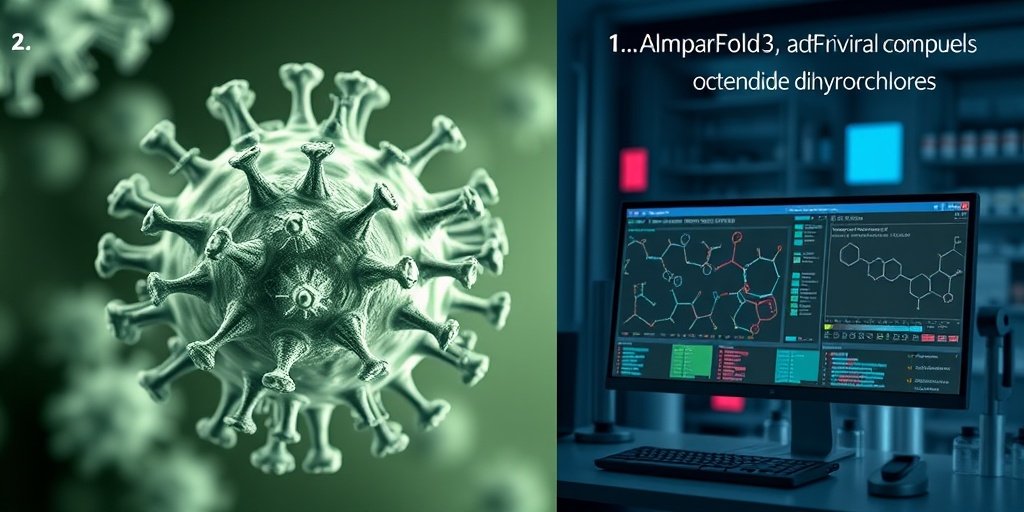
- 🔍 Methodology: Virtual screening using AlphaFold3-modelled viral proteins
- 📈 Key Findings: OCT significantly inhibited BmNPV replication and improved larval survival rates
🔑 Key Takeaways
- 💡 Virtual screening and artificial intelligence are pivotal in discovering antiviral drugs.
- 🧬 OCT was shown to bind effectively with the BmNPV GP64 protein.
- 🌱 In vivo studies demonstrated promising therapeutic effects against BmNPV infection.
- 📊 Survival rates of B. mori larvae improved significantly with OCT treatment.
- 🌍 This research opens new avenues for developing antiviral drugs for veterinary use.
- 🔬 Techniques used included microscale thermophoresis and transmission electron microscopy.
- 📅 Published in: Pestic Biochem Physiol, 2026.
📚 Background
The sericulture industry has faced substantial challenges due to the lack of effective antiviral treatments for BmNPV, a virus that severely impacts silkworm populations. Traditional methods of managing viral infections have proven inadequate, leading to significant economic losses. The integration of virtual screening and artificial intelligence into drug discovery presents a promising solution to this pressing issue.
🗒️ Study
This study utilized AlphaFold3 to model the protein structures of BmNPV, allowing researchers to conduct virtual screenings of various compounds. The objective was to identify potential antiviral agents that could effectively inhibit the virus’s replication and improve the health of infected larvae. The focus on OCT emerged from its promising interactions with viral proteins.
📈 Results
The results indicated that octenidine dihydrochloride (OCT) not only inhibited BmNPV replication but also enhanced the survival rates of B. mori larvae in both laboratory and field trials. The binding affinity of OCT to the BmNPV GP64 protein was confirmed through advanced techniques, showcasing its potential as a therapeutic agent against this viral infection.
🌍 Impact and Implications
The findings from this study could have a transformative impact on the sericulture industry by providing a viable antiviral treatment for BmNPV. The successful application of virtual screening and AI in drug discovery highlights the potential for similar approaches in other veterinary and medical fields. This research not only addresses an urgent need but also sets a precedent for future antiviral drug development.
🔮 Conclusion
The discovery of OCT as a potential inhibitor of BmNPV marks a significant advancement in the fight against viral infections in sericulture. By leveraging artificial intelligence and virtual screening, researchers have opened new pathways for developing effective antiviral therapies. Continued exploration in this area is essential for enhancing the resilience of the sericulture industry and improving animal health outcomes.
💬 Your comments
What are your thoughts on the use of AI and virtual screening in drug discovery? We would love to hear your insights! 💬 Please share your comments below or connect with us on social media:
Discovery of a novel compound against BmNPV using virtual screening based on the protein structure of the viral whole genome.
Abstract
Currently, effective antiviral drugs against Bombyx mori nucleopolyhedrovirus (BmNPV) are still lacking, which has caused significant economic damage to the sericulture industry. Virtual screening and artificial intelligence provide opportunities for the discovery of antiviral drugs. To identify potential antiviral compounds against BmNPV through virtual screens, AlphaFold3-modelled viral proteins served as the targets. Among the tested compounds, octenidine dihydrochloride (OCT) was found to be a potential inhibitor that significantly inhibited BmNPV replication. Microscale thermophoresis and transmission electron microscopy revealed that OCT could bind with the BmNPV GP64 protein and inhibit the virus invasion. OCT could significantly improve the survival rate of B. mori larvae and exhibit promising therapeutic effects against BmNPV infection in vivo and field trials. Our findings have demonstrated the capacity to obtain antiviral drugs targeting the BmNPV genome through artificial intelligence-based prediction of protein structure and virtual screening. This serves as an important avenue for the development of effective antiviral drugs for veterinary use.
Author: [‘Zhang L’, ‘Ma Y’, ‘Hu J’, ‘Liu F’, ‘Jia Y’, ‘Chen P’, ‘Oo A’, ‘Dong Z’, ‘Pan M’]
Journal: Pestic Biochem Physiol
Citation: Zhang L, et al. Discovery of a novel compound against BmNPV using virtual screening based on the protein structure of the viral whole genome. Discovery of a novel compound against BmNPV using virtual screening based on the protein structure of the viral whole genome. 2026; 219:107031. doi: 10.1016/j.pestbp.2026.107031