⚡ Quick Summary
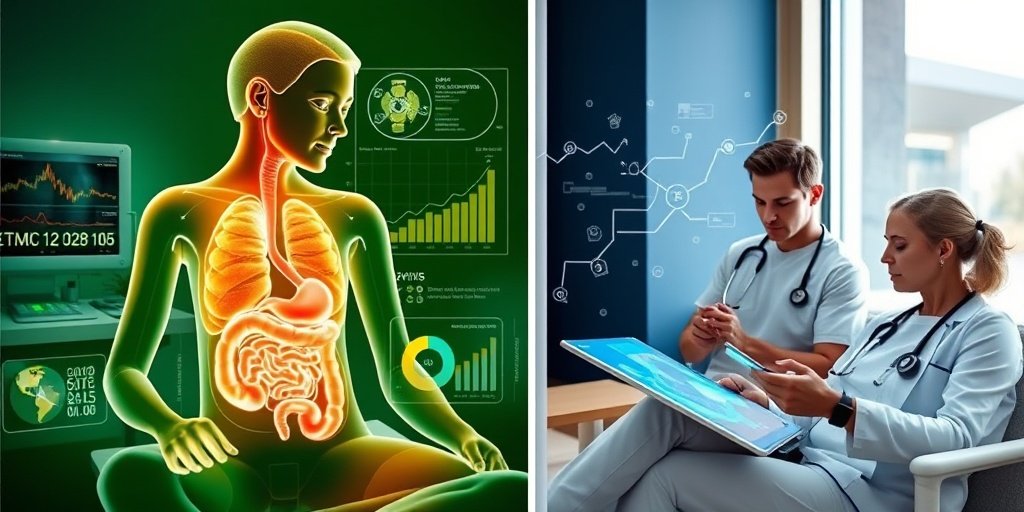
This review highlights the transformative role of artificial intelligence (AI) in assessing gastrointestinal (GI) functional disorders through multimodal imaging, digital biomarkers, and real-time monitoring. By integrating these technologies, we can shift from episodic testing to longitudinal, personalized interventions in GI care.
🔍 Key Details
- 📊 Focus Areas: AI-assisted multimodal GI imaging, digital biomarkers, real-time monitoring
- 🧩 Applications: Functional GI disorders, inflammatory bowel disease (IBD), GI oncology
- ⚙️ Methodologies: Multimodal fusion, temporal modeling, uncertainty estimation, explainable AI
- 🏆 Challenges: Standardization, interoperability, privacy, and workflow integration
🔑 Key Takeaways
- 🤖 AI is reshaping GI functional medicine by enabling scalable and quantitative data interpretation.
- 📈 Multimodal imaging allows for better phenotyping and integrated diagnosis of GI disorders.
- 💡 Digital biomarkers capture dynamic GI functions in real-world settings, enhancing assessment accuracy.
- ⏱️ Real-time monitoring platforms support early warning systems and adaptive management strategies.
- 🌐 The study emphasizes the need for external validation and addressing dataset shifts for AI applications.
- 🔄 A physiology-centered approach can transform episodic testing into continuous, mechanism-aware monitoring.
- 🛠️ Practical directions are outlined for building clinically trustworthy AI systems in GI assessment.
📚 Background
Gastrointestinal functional disorders and chronic inflammatory diseases pose significant health challenges, often characterized by complex interactions among motility, visceral sensation, immune-microbiome regulation, and brain-gut signaling. Traditional assessment methods can be inadequate, leading to a pressing need for innovative solutions that can provide more accurate and timely evaluations.
🗒️ Study
This review synthesizes recent advances in AI-driven gastrointestinal functional assessment, focusing on three interconnected pillars: AI-assisted multimodal imaging, the discovery of digital biomarkers, and real-time monitoring platforms. These elements work together to create a comprehensive “assessment-to-action” loop that enhances patient care.
📈 Results
The integration of AI in GI assessment has shown promising results, particularly in functional GI disorders, IBD, and GI oncology. The methodologies discussed, including multimodal fusion and explainable AI, highlight the potential for improved diagnostic accuracy and personalized treatment strategies.
🌍 Impact and Implications
The implications of this research are profound, as AI-driven approaches could revolutionize GI care by transitioning from episodic testing to continuous, personalized monitoring. This shift not only enhances patient outcomes but also paves the way for more effective management of GI disorders, ultimately improving the quality of life for patients.
🔮 Conclusion
The advancements in AI for gastrointestinal functional assessment represent a significant leap forward in healthcare. By leveraging multimodal imaging, digital biomarkers, and real-time monitoring, we can achieve a more nuanced understanding of GI disorders, leading to better patient care. Continued research and development in this field are essential for realizing the full potential of these technologies.
💬 Your comments
What are your thoughts on the integration of AI in gastrointestinal care? We would love to hear your insights! 💬 Share your comments below or connect with us on social media:
Artificial intelligence-driven gastrointestinal functional assessment: multimodal imaging, digital biomarkers, and real-time monitoring.
Abstract
Gastrointestinal (GI) functional disorders and chronic inflammatory diseases impose a substantial health burden, yet their assessment remains challenging because symptoms reflect dynamic interactions among motility, visceral sensation, immune-microbiome regulation, and brain-gut signaling. Artificial intelligence (AI) is rapidly reshaping GI functional medicine by enabling scalable, quantitative interpretation of complex data generated from multimodal imaging, physiological sensing, and real-world patient monitoring. This review synthesizes advances across three tightly connected pillars that map onto a physiology-informed “assessment-to-action” loop: (i) AI-assisted multimodal GI imaging for quantitative phenotyping and integrated diagnosis; (ii) AI-enabled discovery and validation of digital biomarkers that capture dynamic GI function in naturalistic settings; and (iii) real-time monitoring platforms that support early warning, longitudinal assessment, and adaptive management. We summarize representative applications in functional GI disorders, inflammatory bowel disease (IBD), and GI oncology, highlighting methodological themes including multimodal fusion, temporal modeling, uncertainty estimation, and explainable AI. We then discuss barriers to translation-standardization and interoperability, external validation under dataset shift, privacy and governance, and workflow integration-and outline practical directions for building clinically trustworthy AI systems for GI functional assessment. Collectively, physiology-centered AI approaches have the potential to transform GI care from episodic testing to longitudinal, mechanism-aware monitoring and personalized intervention.
Author: [‘Li L’, ‘Lv F’, ‘Du C’, ‘Yang L’, ‘Pa C’, ‘Dai Y’]
Journal: Front Physiol
Citation: Li L, et al. Artificial intelligence-driven gastrointestinal functional assessment: multimodal imaging, digital biomarkers, and real-time monitoring. Artificial intelligence-driven gastrointestinal functional assessment: multimodal imaging, digital biomarkers, and real-time monitoring. 2026; 17:1778235. doi: 10.3389/fphys.2026.1778235