⚡ Quick Summary
This study explores the integration of artificial intelligence (AI) and wearable technologies in upper limb neurorehabilitation, highlighting the potential of non-invasive neural interfaces (NIs) to decode motor intentions. A systematic review of 51 studies reveals significant challenges and opportunities for enhancing rehabilitation through these innovative technologies.
🔍 Key Details
- 📊 Studies Reviewed: 51 studies on upper limb neurorehabilitation
- 🧩 Key Concepts: Biosignals, wearables, AI-driven methods, clinical applications
- ⚙️ Technologies Explored: Electroencephalography (EEG), electromyography (EMG)
- 🏆 Challenges Identified: Methodological heterogeneity, accuracy, robustness, clinical validation
🔑 Key Takeaways
- 🤖 AI and wearables are transforming neurorehabilitation for upper limb recovery.
- 📈 Systematic review highlights the need for improved methodologies in current research.
- 🔍 Explainable AI (XAI) and generative AI (GenAI) could enhance system interpretability and personalization.
- 🛠️ Wearable devices offer comfort and long-term monitoring capabilities.
- ⚠️ Open challenges include adapting AI methods to wearable device constraints.
- 🌐 Clinical applications are essential for validating the effectiveness of these technologies.
- 📊 Variety of sensor configurations were noted across the studies reviewed.
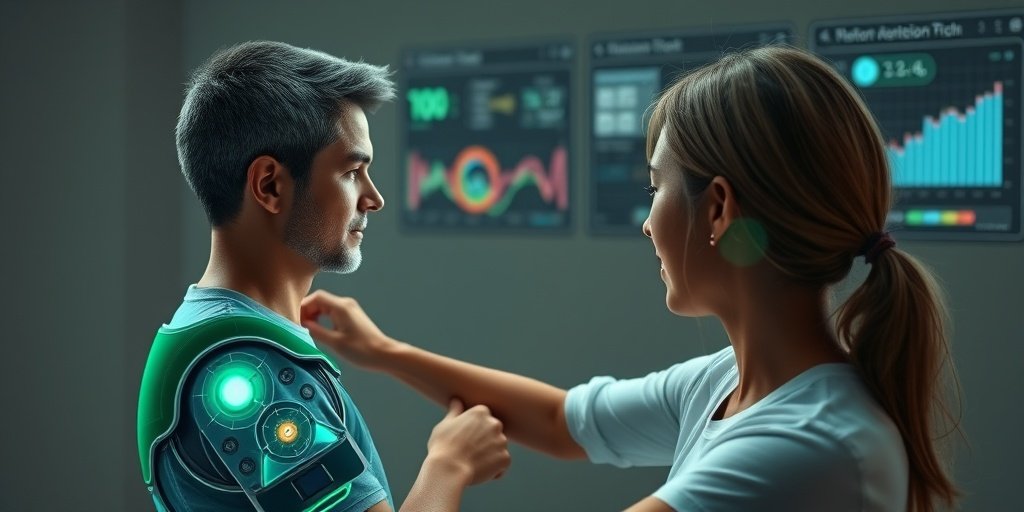
📚 Background
Neurorehabilitation is a critical area of research, particularly for individuals recovering from upper limb impairments. Traditional rehabilitation methods often lack the flexibility and accessibility needed for effective long-term recovery. The advent of non-invasive neural interfaces and wearable technologies presents a promising avenue for enhancing rehabilitation outcomes by leveraging biosignals to decode motor intentions.
🗒️ Study
The systematic literature review conducted in this study analyzed 51 relevant studies, focusing on five key concepts: biosignals, wearables, AI-driven methods, upper limb rehabilitation, and clinical applications. This comprehensive analysis aimed to summarize the current state of research and identify gaps that need to be addressed for future advancements.
📈 Results
The review revealed a significant degree of methodological heterogeneity among the studies, with various wearable sensor configurations employed. Additionally, challenges related to accuracy, robustness, and clinical validation were highlighted, indicating that while progress has been made, further work is necessary to ensure these technologies can be effectively utilized in clinical settings.
🌍 Impact and Implications
The findings from this study underscore the transformative potential of integrating AI and wearable technologies in neurorehabilitation. By addressing the identified challenges, future systems could offer more personalized and effective rehabilitation solutions, ultimately improving patient outcomes and enhancing the quality of care in rehabilitation settings.
🔮 Conclusion
This study illustrates the exciting possibilities that lie at the intersection of artificial intelligence and wearable technologies in upper limb neurorehabilitation. As research continues to evolve, the integration of explainable AI and generative AI may pave the way for more intuitive and effective rehabilitation systems. The future of neurorehabilitation looks promising, and ongoing research is essential to unlock its full potential.
💬 Your comments
What are your thoughts on the integration of AI and wearable technologies in neurorehabilitation? We would love to hear your insights! 💬 Share your comments below or connect with us on social media:
Artificial intelligence and wearable technologies for upper limb neurorehabilitation.
Abstract
Non-invasive neural interfaces (NIs) are increasingly investigated in upper limb neurorehabilitation, where they exploit biosignals, such as electroencephalography (EEG) and electromyography (EMG), to decode motor intentions using artificial intelligence (AI). Yet, traditional systems are complex and difficult to use outside the clinic. Wearable devices have the potential for innovative neurorehabilitation solutions thanks to their comfort, easy-to-use and long-term monitoring. However, current AI approaches require adaptation to the technical constraints of wearable devices, and the related state-of-the-art is not clearly explained and summarized. In this work, a systematic literature review on 51 studies was conducted analyzing them according to five important concepts: biosignals, wearables, AI-driven methods, upper limb rehabilitation, and clinical applications. The review highlights methodological heterogeneity, a variety of wearable sensor configurations, and open challenges related to accuracy, robustness, and clinical validation. Finally, we discuss how explainable AI (XAI) and generative AI (GenAI) may contribute to improve the interpretability and personalization of future neurorehabilitation systems.
Author: [‘Siviero I’, ‘Vale N’, ‘Menegaz G’, ‘Ramos-Murguialday A’, ‘Storti SF’]
Journal: IEEE Trans Neural Syst Rehabil Eng
Citation: Siviero I, et al. Artificial intelligence and wearable technologies for upper limb neurorehabilitation. Artificial intelligence and wearable technologies for upper limb neurorehabilitation. 2026; PP:(unknown pages). doi: 10.1109/TNSRE.2026.3651949