⚡ Quick Summary
This mixed-methods study explored the integration of Artificial Intelligence (AI) and telemedicine in elderly healthcare in India, revealing that 52% of older adults utilized AI-enabled tools. However, significant barriers such as digital literacy and cost hinder broader adoption.
🔍 Key Details
- 📊 Participants: 200 older adults (≥ 60 years) and 30 healthcare professionals
- 🌍 Location: Aligarh, India (urban and semi-urban)
- 🧩 Methodology: Mixed-methods approach with quantitative surveys and qualitative interviews
- 📅 Study Period: January to June 2025
🔑 Key Takeaways
- 📈 Adoption Rate: 52% of participants reported using at least one AI-enabled healthcare tool.
- 🏙️ Urban vs. Rural: Higher adoption in urban areas (p < 0.01).
- 💡 Key Predictors: Digital literacy (β = 0.41, p = 0.002) and family support (β = 0.36, p = 0.004) significantly influenced perceived empowerment.
- 👍 Reported Benefits: Convenient access (61%), improved chronic disease monitoring (54%), and better medication adherence (42%).
- 🚧 Barriers: Low digital literacy (49%), cost (45%), and lack of trust (37%) were major obstacles.
- 🔒 Ethical Concerns: Healthcare professionals raised issues regarding data privacy and reduced human contact.
- 📜 Policy Recommendations: Emphasis on elder-centered digital literacy, subsidized access, and regulatory safeguards.
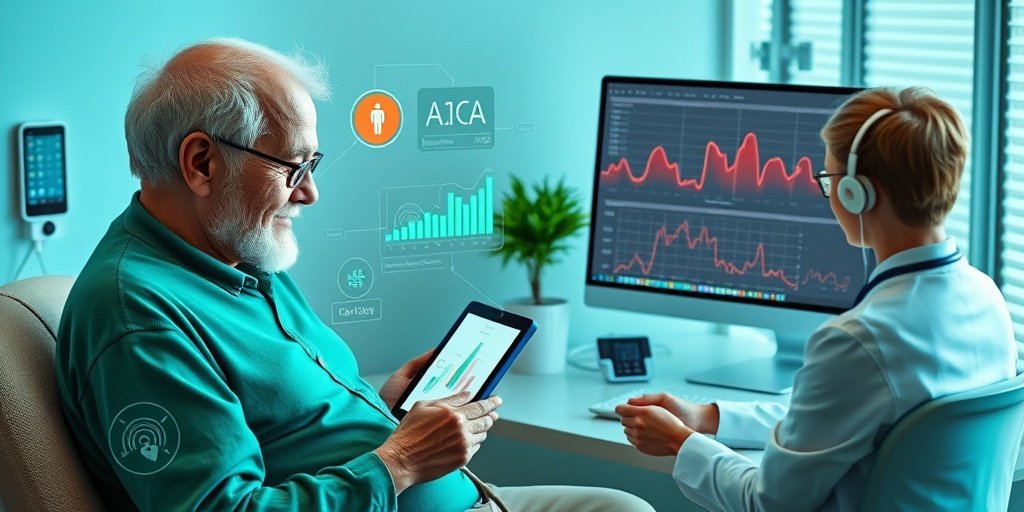
📚 Background
The integration of AI and telemedicine into geriatric healthcare presents a transformative opportunity for enhancing care delivery. However, the adoption of these technologies among older adults, particularly in developing countries like India, faces numerous challenges. Understanding these barriers is crucial for developing effective strategies to improve healthcare access and quality for the elderly population.
🗒️ Study
This study was conducted in Aligarh, India, from January to June 2025, utilizing a mixed-methods approach. Researchers administered quantitative surveys to 200 older adults and conducted in-depth interviews with 20 elderly participants and 10 healthcare professionals. The aim was to assess the current state of AI and telemedicine adoption and identify factors influencing their use in geriatric care.
📈 Results
The findings revealed that 52% of older adults reported using at least one AI-enabled healthcare tool, with wearable monitors (32%) and teleconsultations (28%) being the most common. The analysis indicated that digital literacy and family support were significant predictors of perceived empowerment, highlighting the importance of these factors in facilitating technology adoption among the elderly.
🌍 Impact and Implications
The study underscores the potential of AI-enabled telemedicine to enhance geriatric care in India. However, it also highlights the pressing need to address inequities in access, digital literacy gaps, and ethical concerns. Policymakers must prioritize initiatives that promote digital literacy among older adults and ensure that technological advancements complement rather than replace human interaction in healthcare settings.
🔮 Conclusion
This research illustrates the promising role of AI and telemedicine in improving elderly healthcare in India. While the adoption rates are encouraging, significant barriers remain. By focusing on enhancing digital literacy and addressing ethical concerns, we can pave the way for a more inclusive and effective healthcare system for older adults. Continued research and policy action are essential to realize the full potential of these technologies in geriatric care.
💬 Your comments
What are your thoughts on the integration of AI and telemedicine in elderly healthcare? We would love to hear your insights! 💬 Share your comments below or connect with us on social media:
Artificial intelligence and telemedicine in elderly healthcare: A mixed-methods study.
Abstract
BACKGROUND: Artificial Intelligence (AI) and telemedicine are increasingly integrated into geriatric healthcare, offering opportunities for early detection, monitoring, and improved access. Adoption among older adults in India remains limited because of accessibility, digital literacy, cost, and ethical concerns.
METHODS: A cross-sectional mixed-methods study was conducted in Aligarh (urban, semi-urban), India, between January and June 2025. Quantitative surveys were administered to 200 older adults (≥ 60 years) and in-depth interviews were conducted with 20 elderly participants and 10 healthcare professionals. Quantitative data were analyzed using descriptive statistics, correlation, and multiple regression; qualitative data underwent thematic analysis.
RESULTS: Fifty-two percent of participants reported using at least one AI-enabled healthcare tool (wearable monitors 32%; teleconsultations 28%). Adoption was higher in urban than rural participants (p < 0.01). Regression analysis showed digital literacy (β = 0.41, p = 0.002) and family support (β = 0.36, p = 0.004) were significant predictors of perceived empowerment, independent of age and education. Reported benefits included convenient access (61%), improved chronic-disease monitoring (54%), and better medication adherence (42%); primary barriers were low digital literacy (49%), cost (45%), and lack of trust (37%). Healthcare professionals highlighted data-privacy and ethical concerns and the risk of reduced human contact.
CONCLUSIONS: AI-enabled telemedicine holds promise for improving aspects of geriatric care in India but is constrained by inequities, literacy gaps, affordability, and ethical challenges. Policy actions to promote elder-centered digital literacy, subsidized access, and regulatory safeguards are needed to ensure technologies complement rather than replace human care. Findings may inform national digital-inclusion and elder-care initiatives.
Author: [‘Rafi S’]
Journal: BMC Geriatr
Citation: Rafi S. Artificial intelligence and telemedicine in elderly healthcare: A mixed-methods study. Artificial intelligence and telemedicine in elderly healthcare: A mixed-methods study. 2025; (unknown volume):(unknown pages). doi: 10.1186/s12877-025-06872-y