⚡ Quick Summary
This article explores the integration of telehealth and artificial intelligence (AI) in military health care, highlighting their potential to enhance medical capabilities in challenging environments. The combination promises to improve efficiency, access, and quality of care for military personnel.
🔍 Key Details
- 🌍 Context: Military operations often occur in remote and high-risk environments.
- 🧩 Technologies: Telehealth and AI are utilized to overcome challenges in medical care delivery.
- 📊 Key Performance Indicators: Evaluated to assess the effectiveness of the technologies.
- 🏥 Applications: AI aids in decision support, automation, and predictive analytics, particularly in medical imaging.
🔑 Key Takeaways
- 📞 Telehealth increases access to medical care without requiring patient relocation.
- 🤖 AI enhances decision-making through data analysis and predictive capabilities.
- 🏆 Improved Triage: AI can lead to faster and more accurate patient assessments.
- 🔗 Continuity of Care: Telehealth ensures ongoing medical support during missions.
- 📈 Enhanced Readiness: The combination of these technologies boosts military readiness and resilience.
- 💡 Future Potential: Both telehealth and AI are expected to evolve, further optimizing military health care.
📚 Background
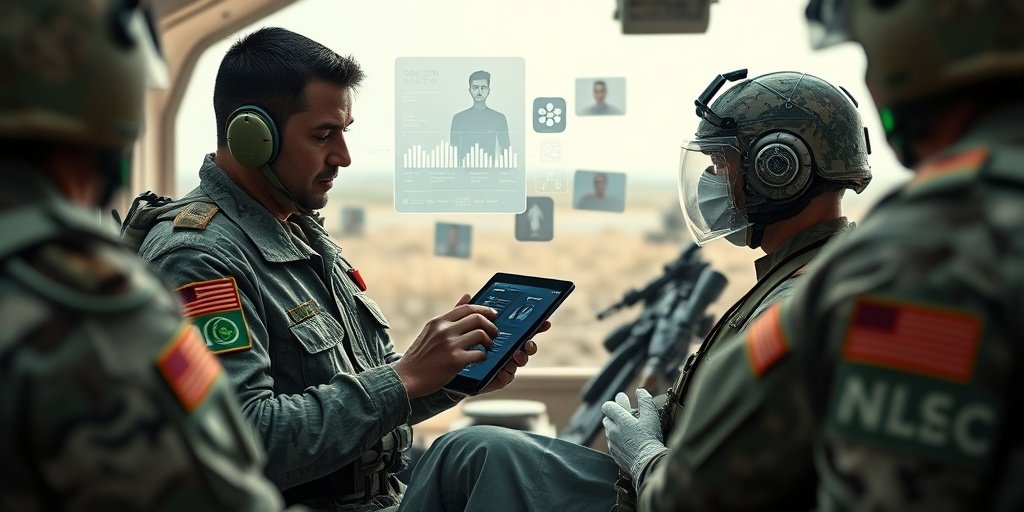
Military and peace-support operations face unique challenges in delivering medical care, often under conditions of limited resources and connectivity. The need for rapid and scalable medical solutions is critical, especially in remote bases, naval platforms, and active combat zones. The integration of telehealth and AI presents a promising avenue to address these challenges effectively.
🗒️ Study
The study reviewed existing literature and various military health care programs that utilize telehealth and AI. By analyzing key performance indicators, the researchers aimed to evaluate how these technologies can synergistically improve medical care delivery in military contexts.
📈 Results
The findings indicate that telehealth significantly enhances access to specialized medical care, while AI serves as a powerful tool for decision support and predictive analytics. Notably, AI’s role in medical imaging can lead to faster triage and better prioritization of specialist time, ultimately improving patient outcomes.
🌍 Impact and Implications
The convergence of telehealth and AI in military health care is set to revolutionize how medical services are delivered in challenging environments. This integration not only enhances efficiency and quality of care but also ensures that military personnel receive timely and accurate medical attention, which is crucial for their overall well-being and operational effectiveness.
🔮 Conclusion
The study underscores the transformative potential of combining telehealth and AI in military health care. As these technologies continue to advance, they will play an increasingly vital role in optimizing health care delivery, ensuring that military personnel have access to the best possible medical support, even in the most challenging circumstances. The future of military health care looks promising with these innovations!
💬 Your comments
What are your thoughts on the integration of telehealth and AI in military health care? We would love to hear your insights! 💬 Share your comments below or connect with us on social media:
Application of Telehealth and Artificial Intelligence in Military Health Care: A Promising Combination for the Future.
Abstract
BACKGROUND: Military and peace-support operations increasingly depend on medical capability delivered under difficult circumstances: distance, limited number of specialists, disrupted connectivity, and mass-casualty risk. Consequently, military health care systems operate during missions in uniquely constrained and high-risk environments, ranging from remote bases and naval platforms to active combat zones and humanitarian missions. These mission contexts demand rapid, reliable, and scalable medical solutions that can function despite limited personnel, infrastructure, and connectivity.
METHOD: By reviewing existing literature and considering several different programs for military health care using telehealth and artificial intelligence (AI), the key performance indicators are explored to evaluate the synergy of telehealth and AI, following its implementation.
RESULTS: Telehealth has become an increasingly important component of modern health care and holds the promise of increasing access to (special) health care without moving the patient but the information. Telehealth also enables continuity of care on missions and has already demonstrated its value in extending medical expertise across distance, while AI is evolving rapidly as a powerful enabler of decision support, automation, and predictive analytics in the medical field. As AI capabilities mature, several medical specialties may benefit, particularly in medical imaging, through faster triage, more consistent interpretation, and better prioritization of scarce specialist time. It also contributes to “decision support “while making proposals based on big data, machine learning and AI (e.g., in a Trauma registry). Telehealth provides the communication backbone that preserves these interactions and enables safe use of AI-enabled support in dispersed operations.
CONCLUSIONS: The convergence of telehealth and AI in military health care will lead to a strategic capability with increased efficiency and enhance readiness, resilience, access to medical care, and quality of care for military personnel, including faster and more accurate diagnoses and better patient monitoring. Both technologies (AI and telehealth) are expected to continue to advance and play an even larger role in optimizing health care in the military.
Author: [‘Scheid PL’, ‘Schvach H’, ‘Scheid SE’]
Journal: Telemed J E Health
Citation: Scheid PL, et al. Application of Telehealth and Artificial Intelligence in Military Health Care: A Promising Combination for the Future. Application of Telehealth and Artificial Intelligence in Military Health Care: A Promising Combination for the Future. 2026; (unknown volume):15305627261440761. doi: 10.1177/15305627261440761