⚡ Quick Summary
The study introduces Akshar Mitra, a Multimodal Integrated Framework (MMF) designed for early dyslexia detection, utilizing low-cost digital biomarkers from eye-tracking, speech, and handwriting analysis. This innovative approach aims to bridge the diagnostic gap for dyslexia, affecting 10%-15% of children globally, particularly in resource-limited settings.
🔍 Key Details
- 📊 Target Population: Children with suspected dyslexia
- 🧩 Features used: Eye-tracking, speech fluency metrics, handwriting error detection
- ⚙️ Technology: Webcam-based eye-tracking, automated speech assessment, optical character recognition
- 🏆 Performance: 4-6 interpretable features extracted from each module
🔑 Key Takeaways
- 🌍 Global Prevalence: Dyslexia affects 10%-15% of children worldwide.
- 💡 Innovative Framework: Akshar Mitra integrates multiple data streams for comprehensive assessment.
- 🖥️ Cost-Effective: Utilizes low-cost digital biomarkers for accessibility.
- 📈 Holistic Risk Profile: Combines objective measures with behavioral questionnaires.
- 📚 Support Tools: Includes a dyslexia-friendly reading interface to enhance user engagement.
- 🔄 Scalable and Language-Agnostic: Designed to be applicable across different languages and settings.
- 🚀 Early Intervention: Aims to facilitate timely support for children at risk of dyslexia.
📚 Background
Developmental dyslexia is a significant neurobiological disorder that often goes undiagnosed, particularly in resource-limited settings. Traditional screening methods are limited by their reliance on unimodal data and the need for extensive, clinically-labeled datasets. This creates a pressing need for innovative solutions that can provide early and accessible dyslexia detection.
🗒️ Study
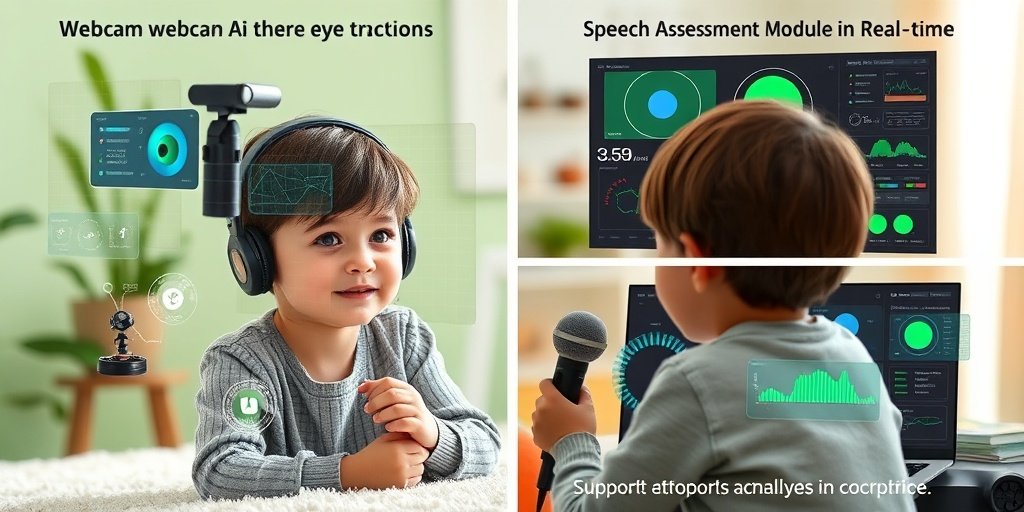
The study presents Akshar Mitra, a novel computational methodology that integrates three distinct modules: webcam-based eye-tracking for analyzing fixation and saccadic movements, automated speech assessment for evaluating fluency metrics, and optical character recognition for detecting handwriting errors. Each module extracts key features that contribute to a comprehensive risk profile for dyslexia.
📈 Results
The framework successfully extracts 4-6 interpretable features from each module, such as fixation regressions, word-error rates, and character reversals. These objective measures, combined with a behavioral questionnaire, create a robust risk profile that can aid in early detection and intervention strategies for dyslexia.
🌍 Impact and Implications
The introduction of Akshar Mitra represents a significant advancement in the field of dyslexia screening. By providing a scalable and explainable system, this framework has the potential to transform how dyslexia is diagnosed and managed, particularly in underserved populations. Early detection can lead to timely interventions, ultimately improving educational outcomes for affected children.
🔮 Conclusion
The Akshar Mitra framework showcases the potential of integrating multiple data streams for early dyslexia detection. By leveraging technology to create an accessible and effective screening tool, we can address the global dyslexia diagnostic gap and enhance support for children at risk. Continued research and development in this area are essential for fostering better educational outcomes and empowering children with dyslexia.
💬 Your comments
What are your thoughts on this innovative approach to dyslexia detection? We would love to hear your insights! 💬 Leave your comments below or connect with us on social media:
Akshar Mitra: a multimodal integrated framework for early dyslexia detection.
Abstract
Developmental dyslexia is a prevalent neurobiological disorder affecting 10%-15% of children globally, yet it remains largely undiagnosed due to the inaccessibility of conventional assessments in resource-limited settings. Existing screening methods are further constrained by their reliance on unimodal data streams and the need for large, clinically-labeled datasets. This paper presents Akshar Mitra, a Multimodal Integrated Framework (MMF), a novel computational methodology designed for accessible and early dyslexia screening. The framework pioneers the integration of three low-cost, high-yield digital biomarkers derived from eye-tracking, speech, and handwriting analysis.The MMF is implemented through three modules: webcam-based eye-tracking for fixation and saccadic analysis, automated speech assessment for fluency metrics, and optical character recognition for handwriting error detection. Each module extracts 4-6 interpretable features (e.g., fixation regressions, word-error rate, character reversals) that are standardized via a shared data schema. These objective measures are augmented by a concise behavioral questionnaire to generate a holistic risk profile. Beyond screening, the system incorporates support tools, including a dyslexia-friendly reading interface with syllable-level highlighting, to foster user engagement and confidence.By creating a scalable, language-agnostic, and explainable system, this work offers a viable pathway to bridge the global dyslexia diagnostic gap. The MMF provides a transformative tool for proactive screening, facilitating early intervention and improving educational outcomes.
Author: [‘Tiwari V’, ‘Agarwal O’, ‘Sharma M’, ‘Sahu R’, ‘Babar R’, ‘Geddam R’, ‘Awais M’, ‘Ghayvat H’]
Journal: Front Digit Health
Citation: Tiwari V, et al. Akshar Mitra: a multimodal integrated framework for early dyslexia detection. Akshar Mitra: a multimodal integrated framework for early dyslexia detection. 2025; 7:1726307. doi: 10.3389/fdgth.2025.1726307