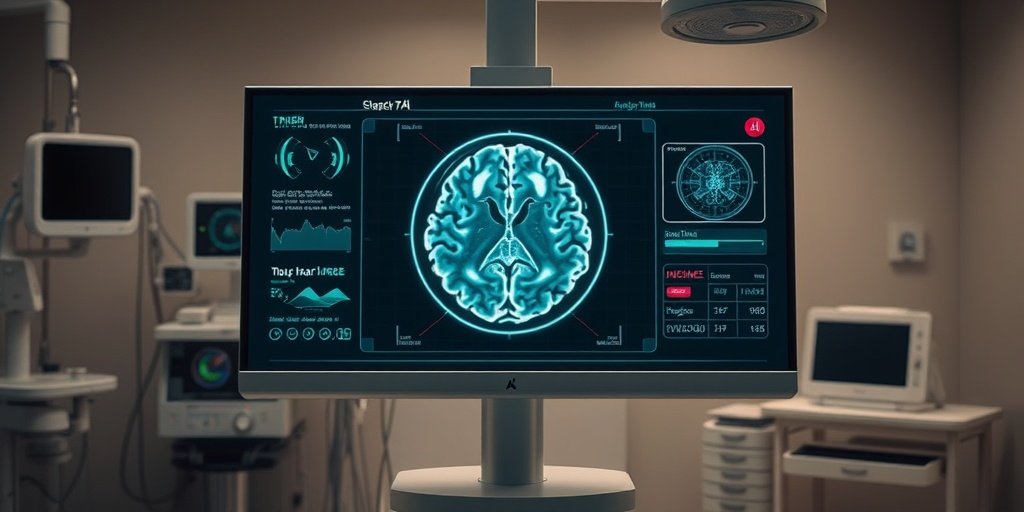
Researchers at the University of Michigan have developed an innovative AI model capable of analyzing brain MRI scans and providing diagnoses in mere seconds, according to a recent study.
Key Findings:
- The AI model achieved an impressive accuracy rate of up to 97.5% in detecting various neurological conditions.
- It can also assess the urgency of treatment required for patients.
This groundbreaking technology, named Prima, has the potential to significantly enhance the efficiency of brain imaging processes within healthcare systems across the United States. The findings were published in Nature Biomedical Engineering.
Details of the AI Model:
Over a year-long evaluation, the research team tested Prima using more than 30,000 MRI studies. The model demonstrated superior diagnostic capabilities compared to other advanced AI systems, particularly in identifying critical conditions such as strokes and brain hemorrhages that require immediate medical attention.
How Prima Works:
Prima is classified as a vision language model (VLM), which allows it to process images, video, and text simultaneously. Unlike previous models that focused on narrow tasks, Prima was trained on a comprehensive dataset, including:
- Over 200,000 MRI studies
- 5.6 million imaging sequences
- Patient clinical histories and reasons for imaging
This extensive training enables Prima to function similarly to a radiologist, integrating patient history with imaging data for a holistic understanding of health.
Addressing Healthcare Challenges:
The demand for MRI scans is increasing, leading to staffing shortages and diagnostic delays. Researchers believe that AI technologies like Prima can help alleviate these issues by:
- Improving access to radiology services
- Reducing the burden on healthcare providers
- Enhancing the speed and accuracy of diagnoses
Future Directions:
While Prima has shown promising results, researchers are focused on further enhancing its capabilities by incorporating more detailed patient information and electronic medical records. This approach aims to mirror the real-world practices of radiologists and physicians.
As AI continues to evolve in the medical field, Prima represents a significant step towards integrating advanced technology into healthcare, potentially transforming how medical imaging is conducted.