⚡ Quick Summary
The article discusses the transformative role of Fragment-based Drug Design (FBDD) in modern medicinal chemistry, particularly highlighted during the COVID-19 pandemic. FBDD’s integration with artificial intelligence (AI) and cloud-based platforms has accelerated drug discovery, making it a vital strategy for addressing both infectious diseases and other therapeutic areas.
🔍 Key Details
- 📊 Strategy: Fragment-based drug discovery (FBDD)
- 🌍 Context: Post-COVID drug discovery landscape
- ⚙️ Technologies: AI, cloud-based platforms, high-resolution cryo-electron microscopy
- 🏆 Applications: Infectious diseases, oncology, antibacterial therapy, neurodegenerative disorders
🔑 Key Takeaways
- 💡 FBDD offers a rational and efficient alternative to traditional high-throughput screening (HTS).
- 🚀 COVID-19 accelerated the adoption of FBDD, showcasing its adaptability in urgent scenarios.
- 🤖 AI integration has enhanced the speed and accessibility of fragment campaigns.
- 🔬 Technological advances like cryo-electron microscopy allow exploration of dynamic protein targets.
- 🌱 Emerging modalities such as PROTACs and RNA-targeted therapeutics are expanding FBDD’s potential.
- 🔗 Collaboration and open-access initiatives are becoming essential in drug discovery.
- ⚠️ Challenges remain, including the need for sensitive biophysical methods and infrastructure.
- 🔮 Future outlook suggests FBDD will be a cornerstone in both academic and industrial research pipelines.
📚 Background
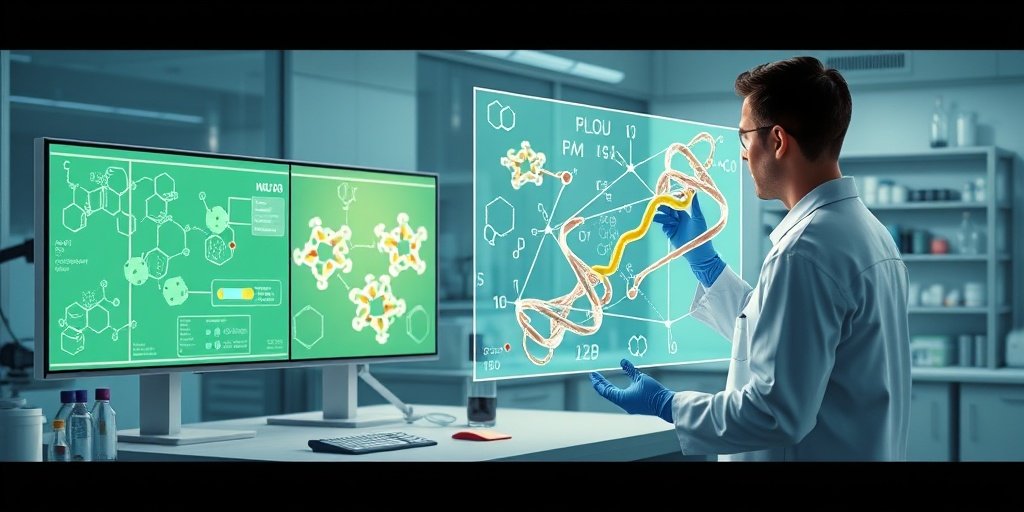
Fragment-based drug discovery (FBDD) has emerged as a significant strategy in medicinal chemistry, providing a systematic approach to drug design. By focusing on small, low-molecular-weight fragments, researchers can optimize these into potent lead compounds. The COVID-19 pandemic underscored the importance of rapid drug discovery methods, and FBDD proved to be a flexible and effective approach during this critical time.
🗒️ Study
The study highlights the lessons learned from the post-COVID drug discovery landscape, emphasizing the adaptability of FBDD. Researchers utilized fragment screening and computational modeling to identify inhibitors of the SARS-CoV-2 main protease (Mpro), showcasing the method’s efficiency in urgent situations.
📈 Results
The integration of AI and cloud-based platforms significantly enhanced the speed of fragment campaigns, allowing for global collaboration and accessibility. The study also notes that FBDD has shown promise in various therapeutic areas, including oncology and neurodegenerative disorders, reflecting its versatility and potential for addressing complex diseases.
🌍 Impact and Implications
The advancements in FBDD could revolutionize drug discovery, particularly in response to future health threats. By leveraging AI and collaborative research, FBDD is positioned to remain a vital component of both academic and industrial research pipelines, paving the way for innovative therapies and improved patient outcomes.
🔮 Conclusion
The article illustrates the remarkable potential of FBDD in modern drug discovery, especially in light of recent global health challenges. As the field continues to evolve, the integration of advanced technologies and collaborative efforts will be crucial in addressing the ever-changing landscape of medicinal chemistry. The future of drug discovery looks promising with FBDD at the forefront!
💬 Your comments
What are your thoughts on the advancements in fragment-based drug design? We would love to hear your insights! 💬 Share your comments below or connect with us on social media:
Advances in Fragment-based Drug Design: Lessons and Innovations from the Post-COVID Drug Discovery Landscape.
Abstract
Fragment-based drug discovery (FBDD) has emerged as a transformative strategy in modern medicinal chemistry, offering a rational and efficient alternative to traditional highthroughput screening (HTS). By utilizing small, low-molecular-weight fragments with moderate binding affinity, FBDD enables systematic optimization into potent lead compounds with improved physicochemical properties. Its modular and ligand-centric nature has proven particularly advantageous in accelerating early-stage drug discovery. The COVID-19 pandemic highlighted the adaptability of FBDD, as fragment screening and computational modeling rapidly identified inhibitors of the SARS-CoV-2 main protease (Mpro). Integration with artificial intelligence (AI) and cloud-based platforms further enhanced the speed and global accessibility of fragment campaigns, setting a precedent for collaborative, open-science initiatives. Beyond infectious diseases, FBDD has demonstrated significant promise in oncology, antibacterial therapy, and neurodegenerative disorders, reflecting its versatility across diverse therapeutic landscapes. Recent technological advances have expanded the scope of FBDD. High-resolution cryo-electron microscopy and AI-driven structural prediction now enable the exploration of previously inaccessible or dynamic protein targets. Emerging modalities, such as PROTACs and RNA-targeted therapeutics, also intersect with fragment-based strategies, opening avenues for addressing so-called “undruggable” proteins. Despite persistent challenges, including the need for sensitive biophysical methods and sophisticated infrastructure, the approach continues to evolve. Looking ahead, the convergence of FBDD with machine learning, open-access fragment libraries, and global research collaboration positions it as a scalable, adaptive platform for drug discovery. As future health threats demand rapid innovation, FBDD is poised to remain a cornerstone of both academic and industrial research pipelines.
Author: [‘Chaudhary V’, ‘Singh AP’, ‘Sharma H’, ‘Taumar D’]
Journal: Mini Rev Med Chem
Citation: Chaudhary V, et al. Advances in Fragment-based Drug Design: Lessons and Innovations from the Post-COVID Drug Discovery Landscape. Advances in Fragment-based Drug Design: Lessons and Innovations from the Post-COVID Drug Discovery Landscape. 2026; (unknown volume):(unknown pages). doi: 10.2174/0113895575417219251205111700