 Yusuf Yesil, MD, MIS
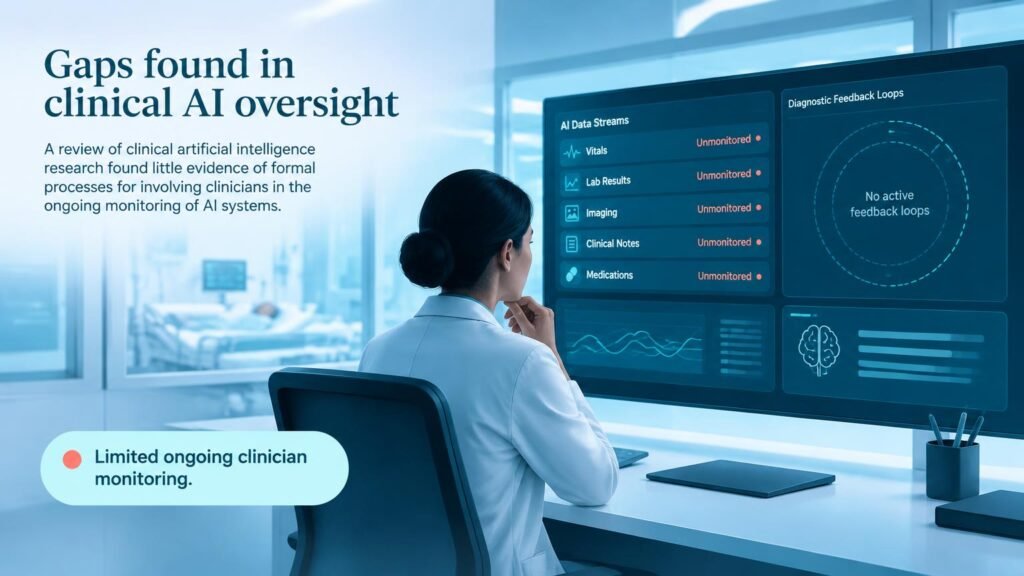
Hospitals deploy algorithms to assist with patient care, but the human oversight vanishes the moment the software goes live. A review of clinical AI deployments across 12 studies revealed that zero reported formal mechanisms for ongoing clinician oversight post-deployment. While nearly all projects engaged doctors during initial development and testing, post-launch monitoring was entirely absent.
The Regulatory Blind Spot
This missing link creates immediate operational risk. AI models degrade over time as patient demographics, hospital workflows, and clinical protocols shift. Without structured feedback from working clinicians, algorithmic drift goes undetected until a patient suffers harm.
Regulators like the Therapeutic Goods Administration increasingly mandate continuous real-world performance tracking. Yet healthcare providers currently lack standard protocols to feed frontline clinical observations back into algorithm updates. To address this gap, researchers published a six-point checklist standardizing governance from initial design through post-deployment maintenance.
Operational Reality
Deploying a clinical model is not a one-time IT project. Retrospective validation before launch does not guarantee safety six months later. Healthcare systems must build structured, funded clinical monitoring workflows, or risk bearing full legal liability when unmonitored tools fail.