 Yusuf Yesil, MD, MIS
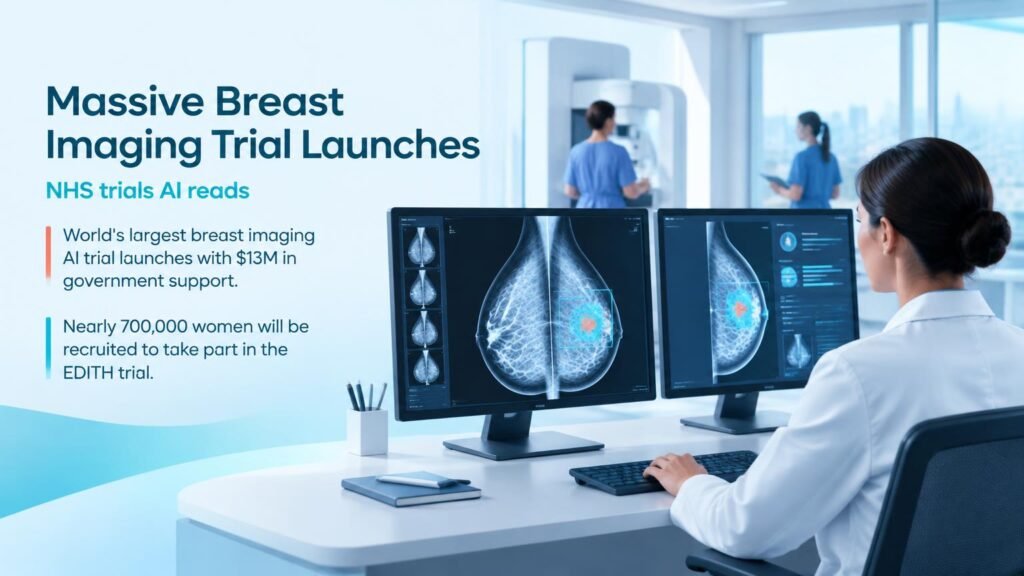
A prospective trial enrolling 700,000 women across 30 screening sites in the United Kingdom is testing whether software can replace human second readers on mammograms. Currently, two radiologists independently review every image. Under the trial, an algorithm acts as the second reader, flagging low-risk scans to reduce workforce burden.
Clinical Strain Meets Scale
The operational stakes are immediate. Over 20% of UK radiologists are set to retire by 2030, creating severe backlogs in routine screening. If software reliably filters out normal mammograms, clinical staff can focus on suspicious cases.
Retrospective performance does not equal real-world safety. While algorithms previously matched human accuracy in controlled studies, deployed AI faces variable image quality and diverse patient populations. Substituting a human reader risks missing subtle malignancies if the software fails to match clinician sensitivity in live screening environments.
What Changes Now
This trial tests operational workflow, not total autonomy. Humans retain final decision-making power over suspicious scans. However, healthcare systems must not treat trial enrollment as a green light for unchecked deployment. Validation across 30 sites will determine if AI can safely ease labor shortages without compromising early detection rates.