Yusuf Yesil, MD, MIS
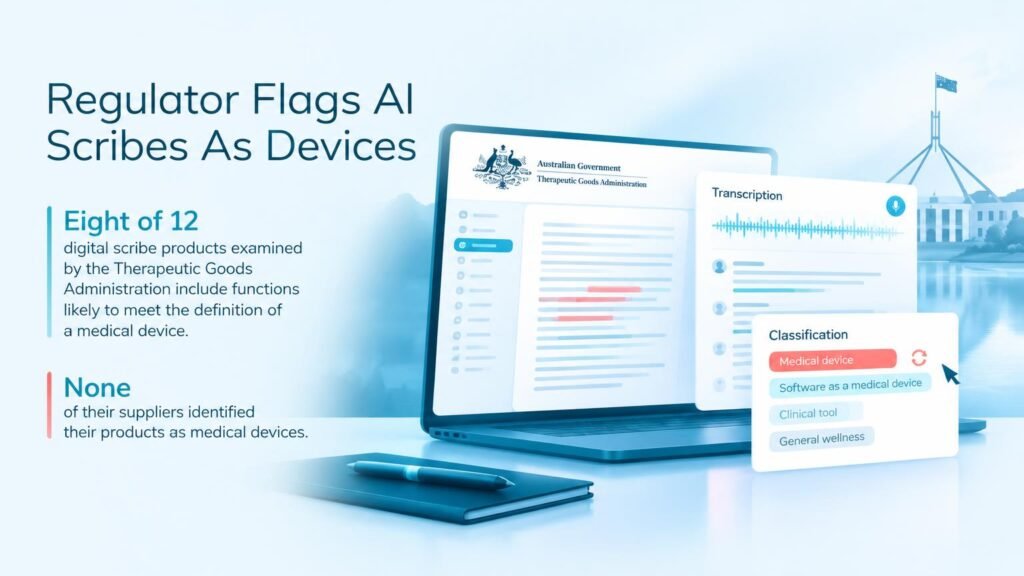
Australia’s Therapeutic Goods Administration evaluated 12 digital scribe products and found that eight contained functions meeting the definition of a medical device. Not a single supplier had registered their software as one. Instead, vendors relied on standard disclaimers to bypass strict regulatory oversight.
Bypassing Regulatory Oversight
The gap between software capabilities and regulatory classification is closing fast. Scribes are no longer just transcribing notes. Modern generative AI features routinely draft treatment plans and suggest diagnoses.
Regulators are making it clear that liability disclaimers do not excuse software from medical device laws. If a tool acts like clinical decision support software, it requires formal clearance regardless of its marketing labels.
The Operational Fallout
Adoption is outpacing oversight. Usage of these tools among surveyed general practitioners jumped from 22% in 2024 to 40% by late 2025. Clinics using unapproved software now face significant regulatory liability.
Health systems must immediately audit their digital scribe vendors. If a vendor cannot provide proof of medical device compliance for its analytical features, clinics must restrict the software to basic speech-to-text functionality.