
Physicians are adopting artificial intelligence faster than their health systems can write the rules.
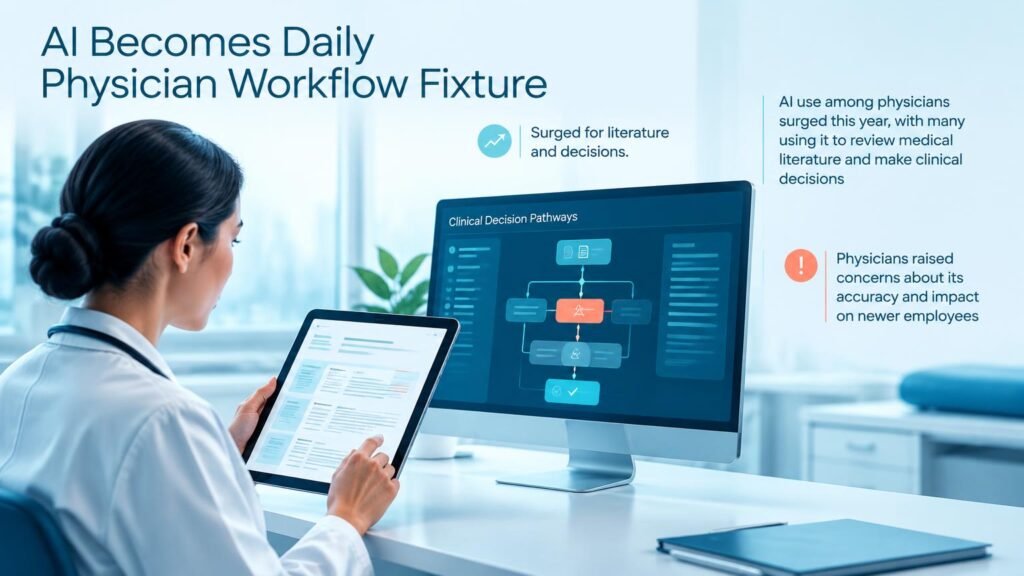
Over half of U.S. physicians now use artificial intelligence tools daily to review medical literature and support clinical decisions. Yet only 28% of doctors report clear institutional policies governing the technology in their workplaces.
Clinical Speed vs Accuracy
This rapid shift is creating a dangerous operational rift. While 81% of doctors say AI helps them learn new clinical information, three in four physicians have caught errors in AI-generated outputs.
Doctors are actively absorbing AI into their daily routines to keep up with administrative burdens. But without formal governance, individual clinicians are forced to act as the sole safety net against hallucinations and bad data.
The Operational Stakes
The problem isn’t just internal documentation. Patients are increasingly bringing self-generated AI diagnoses to appointments, compounding the review workload for already stretched care teams.
Retrospective surveys on workflow adoption do not prove that AI improves patient outcomes. Until health systems establish strict validation frameworks, unguided daily use transfers all liability and fact-checking labor directly onto front-line staff.