
Preventing surgical complications requires accurate risk prediction before a patient ever reaches the operating room.
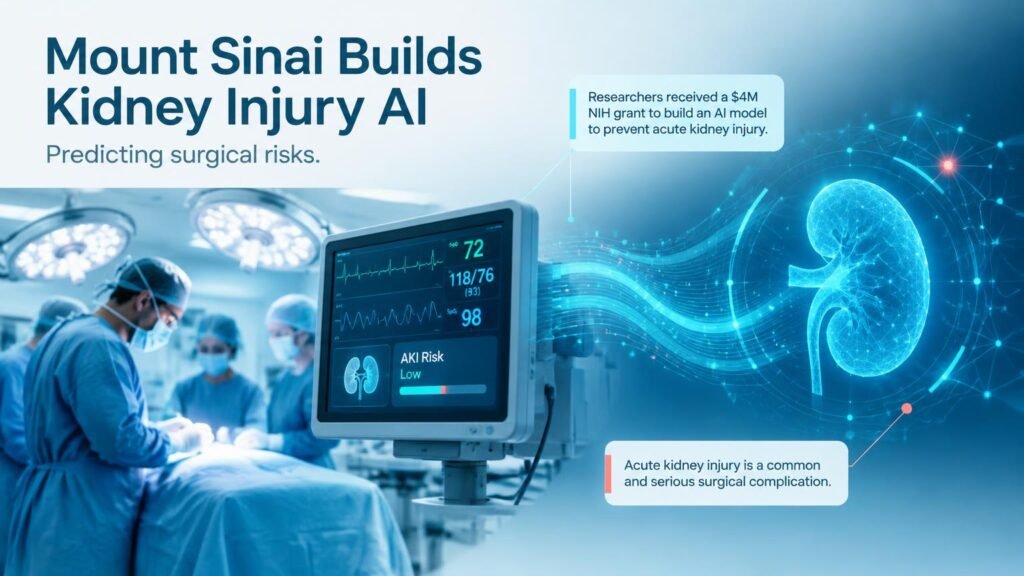
Roughly 12% of the 50 million noncardiac surgeries performed in the U.S. every year lead to acute kidney injury. Because no direct medical cure exists for this sudden damage, clinicians are forced to rely entirely on early prevention.
Scale without sharing raw data
Researchers across 15 hospitals are leveraging a $4 million NIH grant to train predictive models on records from over 320,000 patients. By using federated learning, the algorithm analyzes patterns across distinct health systems—including Mount Sinai, Vanderbilt University, and UCLA—without moving sensitive patient files from local servers.
The goal is simple: identify high-risk surgical candidates in time to adjust intraoperative fluid management, modify blood pressure targets, and avoid nephrotoxic drugs.
The clinical catch
Predictive accuracy is not the same as improved patient outcomes. Algorithmic alerts only reduce organ damage if surgical teams consistently act on the warnings in real time. Retrospective training across multi-site data proves model stability, but prospective clinical trials are still required to demonstrate that these alerts actually lower complication rates, reduce long-term dialysis risk, or shorten hospital stays.