
Primary care clinicians now have an FDA-cleared tool that combines traditional listening with algorithm-driven murmur detection.
Detecting structural heart disease during a routine physical exam often relies on subtle acoustic cues. In busy emergency departments or rural clinics, early cardiac warning signs are easily missed without immediate access to echo labs or specialists.
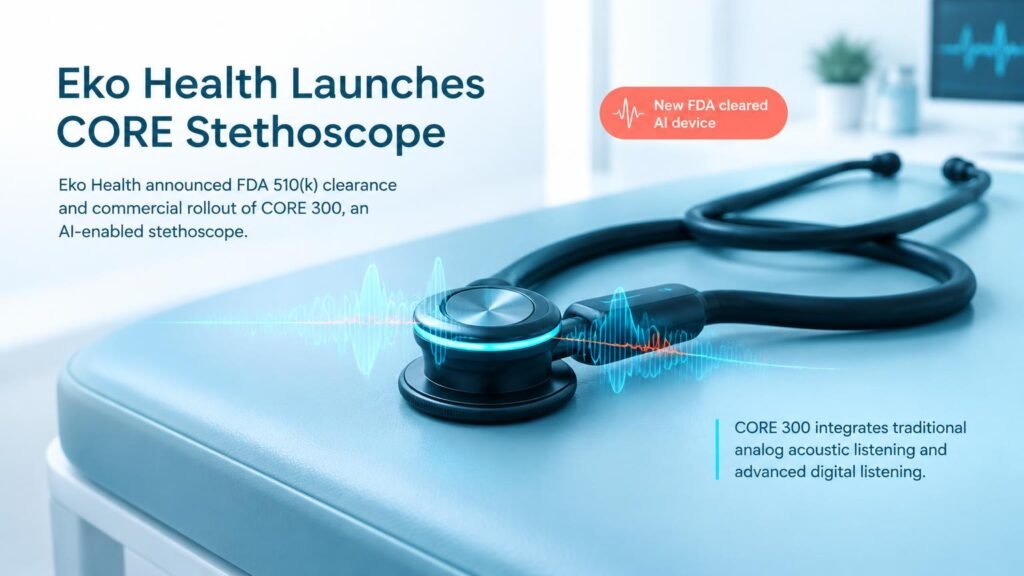
The newly cleared CORE 300 stethoscope attempts to solve this by embedding point-of-care artificial intelligence directly into a traditional analog acoustic form factor. At a $199 hardware price point paired with a recurring software subscription, the device analyzes audio recordings to flag structural heart murmurs in both adult and pediatric patients.
Shift in Point-of-Care Triage
By retaining traditional physical acoustics alongside digital signal processing, the tool avoids forcing clinicians to abandon established examination habits. The goal is rapid bedside screening rather than replacing formal echocardiography.
This design decision directly targets frontline clinicians who need instant decision support without disrupting patient interaction. Bringing algorithmic screening into primary care could streamline cardiology referrals and reduce unnecessary imaging costs.
Implementation Limits
Regulatory clearance confirms safety and technical accuracy, but real-world performance depends heavily on clinical execution. An algorithm detecting a potential murmur does not eliminate the need for downstream diagnostic confirmation.
Health systems must establish clear clinical pathways for AI flags. Without structured follow-up protocols, automated detection risks increasing false-positive referrals and overburdening regional cardiology departments.