
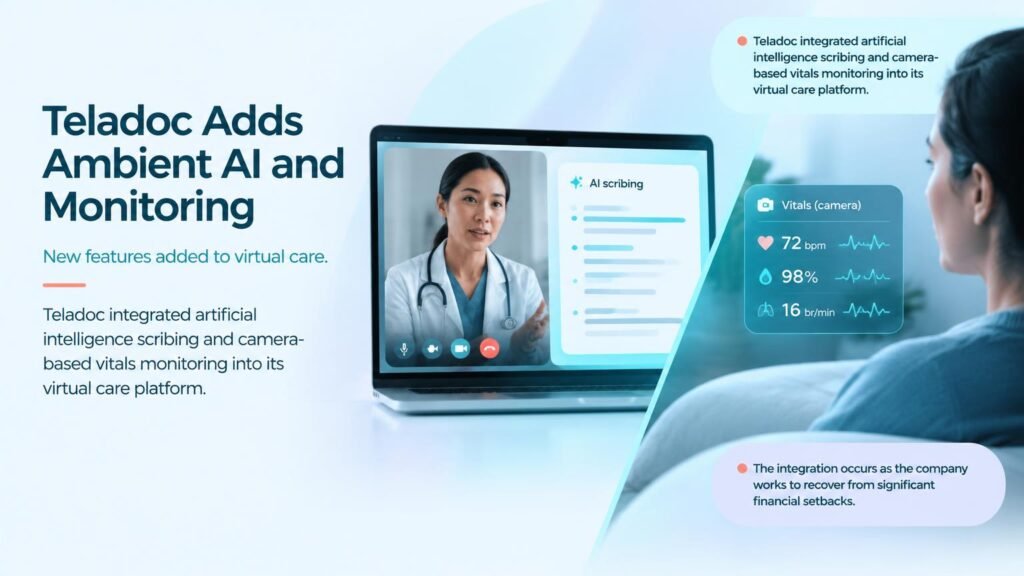
Adding ambient scribing and camera-based vitals to virtual care tools highlights a desperate industry shift toward automated clinical software.
Telehealth platforms can no longer survive on video calls alone. Facing multi-billion-dollar impairment losses, Teladoc Health is integrating artificial intelligence into its enterprise platform to justify its market value and reduce clinician burnout.
Automation Meets Diagnostics
The update introduces two core features. SoloScribe automatically drafts clinical notes during patient visits to curb administrative work. Meanwhile, SoloVitals uses remote photoplethysmography via standard device cameras to estimate patient vital signs without physical hardware.
While ambient scribing is already available, camera-based vitals monitoring will not see wide release until late 2026. This gap highlights a crucial distinction in health tech adoption.
Accuracy vs Adoption
Software that automates paperwork presents minimal clinical risk. Tools that measure vitals through a smartphone camera require rigorous validation across diverse lighting, skin tones, and hardware before clinicians can trust them for triage.
Automated scribing offers immediate relief for paperwork, but optical vital tracking must prove its diagnostic reliability outside controlled settings before it can meaningfully alter patient care.