
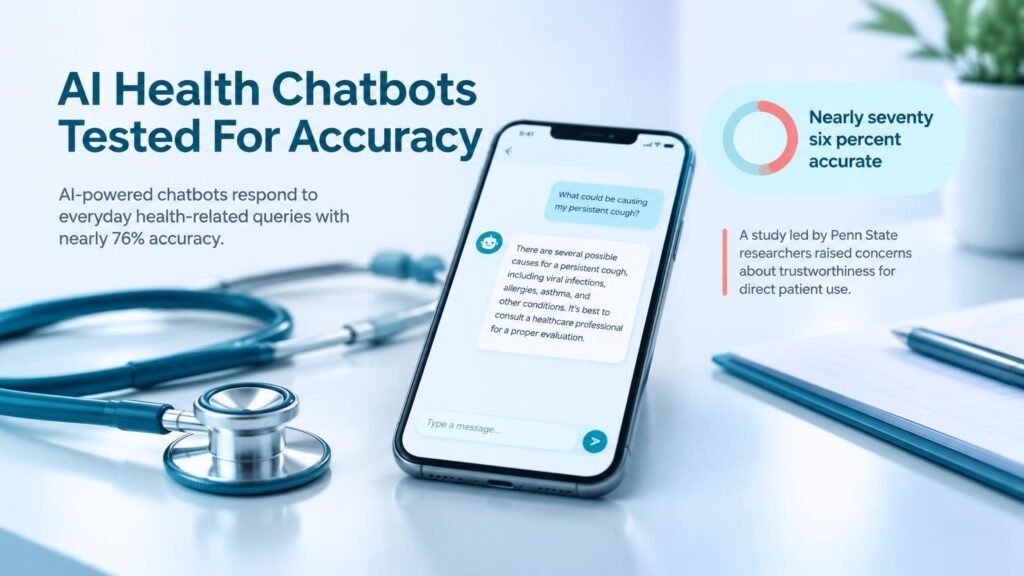
Consumer chatbots fail to answer basic health questions accurately nearly 24 percent of the time, creating substantial risk for unguided patient self-diagnosis.
Patients increasingly turn to conversational software to interpret symptoms before scheduling a doctor visit. Yet current models remain fundamentally unsuited for direct clinical advice.
An assessment across major models—including ChatGPT-4o, ChatGPT-3.5, Gemini-1.5 Pro, and Llama3-8b—found an average response accuracy of nearly 76 percent for everyday health queries.
Dangerous Knowledge Gaps
Performance varies wildly across medical domains. While chatbots scored higher in obstetrics and otolaryngology, accuracy dropped sharply in core diagnostic specialties.
Models made frequent errors in internal medicine, neurology, and dermatology. These areas demand precise symptom integration, where subtle oversight leads to bad outcomes.
A 24 percent error rate is unacceptable for patient triage. Other evaluations show that up to half of chatbot health responses are incomplete or inaccurate. Misinterpreting early neurological or internal medicine symptoms can delay critical emergency intervention.
Assistant, Not Doctor
Retrospective text benchmarks do not equal clinical safety. Static language models lack physical exam capabilities and real-time medical context.
Deploying these tools as direct-to-patient symptom checkers shifts clinical risk onto consumers. Healthcare organizations must limit consumer AI to administrative drafting and physician-supervised workflows while keeping patients grounded in professional care.