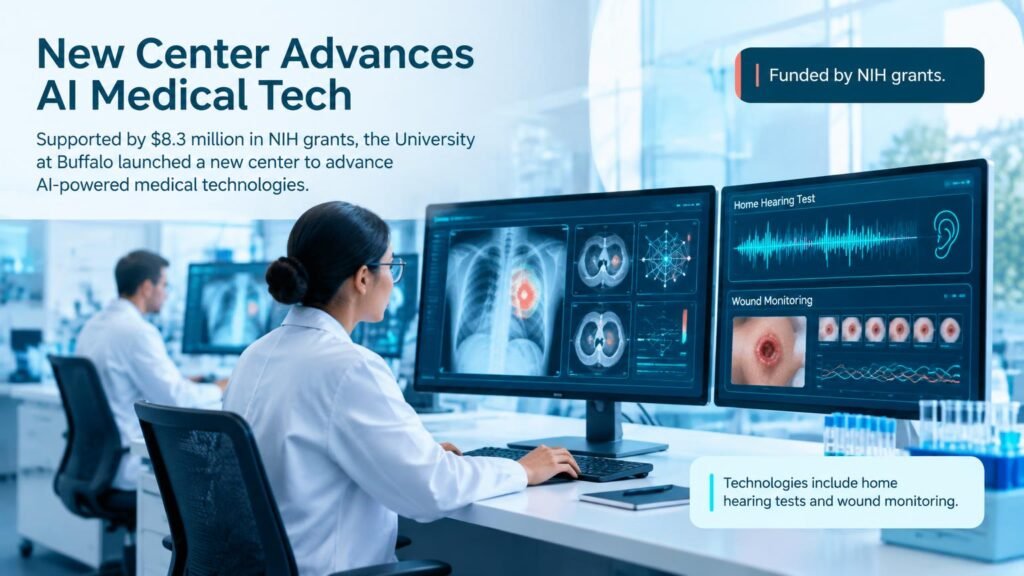
An $8.3 million NIH-backed initiative aims to push diagnostic AI directly into patient homes.
Moving Care Home
Healthcare relies heavily on centralized laboratories and in-person specialist evaluations. That model creates severe bottlenecks for routine monitoring and early diagnosis. A new center backed by $8.3 million in NIH grants focuses on shifting medical technology away from hospitals and directly to the point of care.
The initial projects target decentralized diagnostics. These include smartphone-based wound imaging, home hearing assessments, and wearable tools designed for smoking cessation intervention in HIV survivors. By turning consumer devices into monitoring tools, care moves from episodic clinic visits to continuous tracking.
The Validation Gap
Translating algorithms from controlled studies into real-world tools remains difficult. Diagnostic accuracy on a smartphone camera does not automatically guarantee improved patient outcomes. Point-of-care AI must prove reliable across diverse patient populations and varying hardware quality before clinicians can rely on it for actionable decisions.
decentralizing care could reduce facility burdens and expand access in remote communities. However, widespread adoption depends on rigorous multi-site clinical validation and seamless integration into existing provider workflows.