Relying solely on structured electronic health records leaves millions of eligible lung cancer patients without life-saving screenings.
National lung cancer screening rates linger at roughly 18%, despite low-dose CT scans significantly lowering mortality. The bottleneck is rarely patient unwillingness. It is hidden data.
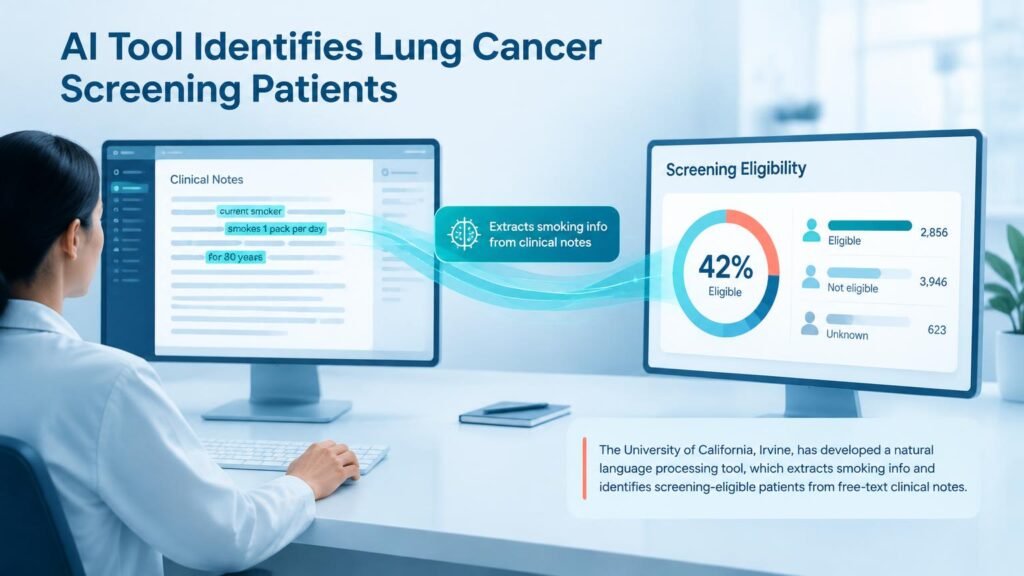
Traditional algorithms check structured EHR fields like smoking history checkboxes. When clinicians record habits in free-text clinical notes instead, automated system flags fail. Eligible candidates walk away without a referral.
Uncovering Hidden Risk
A natural language processing algorithm trained to read unstructured clinical notes identified over three times as many eligible patients compared to traditional structured data queries alone.
That is not just a statistical lift. It represents hundreds of missed opportunities converted into timely scans.
By automating the retrieval of unstructured history, the tool removes manual chart review burden from staff. Clinicians receive automated alerts for high-risk individuals without altering their documentation habits.
Validation Before Adoption
Identifying eligible patients is only the first hurdle. Retrospective extraction accuracy does not automatically translate to filled appointments or completed imaging.
Health systems implementing similar tools must ensure downstream clinical capacity exists to handle the sudden surge in referrals. Identifying three times more patients works only if radiology departments can actually scan them.