A causal AI model suggests default sleep machine settings are leaving patient adherence on the table.
Default device configurations are a silent bottleneck in sleep medicine. Millions of patients starting positive airway pressure (PAP) therapy abandon their devices early because standard factory settings feel uncomfortably restrictive. Adjusting these settings manually requires clinical consultations that busy care teams rarely have time to deliver.
That friction creates a persistent drop-out rate in sleep care.
A retrospective study published in Frontiers in Sleep evaluated whether data-driven personalization could solve this problem automatically. Researchers applied a causal forest model to patient data from AirSense 10 and AirSense 11 devices to estimate optimal pressure settings. They then compared patients whose actual settings matched the model recommendations against propensity score-matched controls who stayed on default setups.
Small tweaks yield clear adherence gains
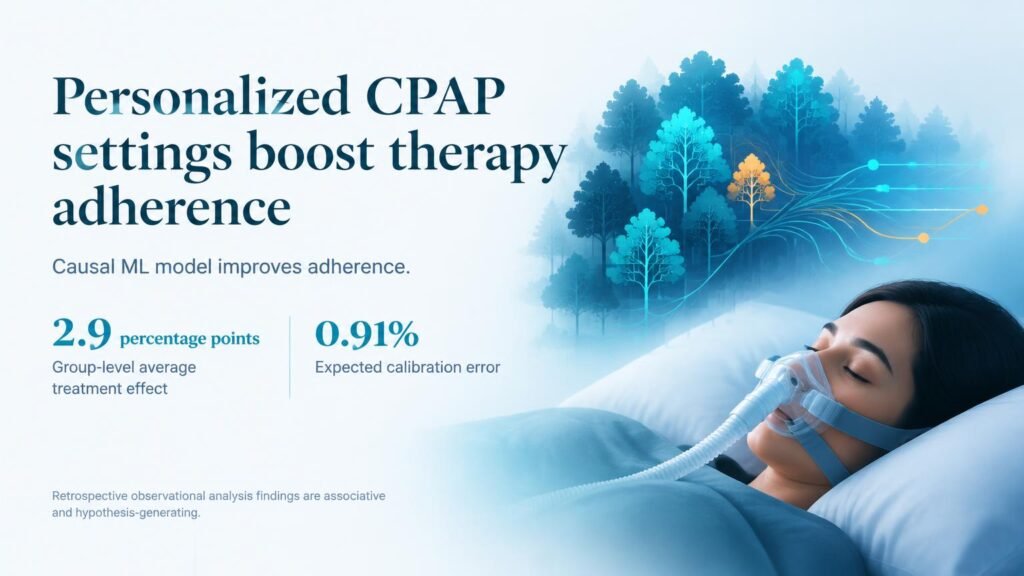
The model produced a measurable increase in long-term device adoption. Personalized configurations raised 90-day Medicare-defined adherence by 2.9 percentage points over default settings (p < 0.001). That adherence standard requires patients to use the machine for at least 4 hours per night on at least 70% of nights.
The system achieved high statistical accuracy without compromising therapy quality. Key parameters and clinical safety metrics included:
- Model balance and accuracy were high, showing an expected calibration error of 0.91% and a standardized mean difference below 0.1 across covariates.
- SHapley Additive exPlanations analysis showed that minimum pressure, start pressure, and patient age were the main drivers of personalized recommendations.
- Therapy remained clinically effective, keeping residual apnea-hypopnea index scores below safety thresholds with no meaningful worsening in mask leak.
The operational impact and limits
A nearly 3 percentage point boost in adherence across a large patient population matters operationally. It translates to thousands of patients staying on therapy without adding administrative burden to clinicians. Automated setup tools could easily integrate into existing onboarding workflows, giving patients tailored comfort on night one.
That disconnect between default settings and individual needs is the real takeaway.
However, retrospective observational data has strict limits. These results show a strong association, but they cannot prove that the software alone caused the improvement. Prospective randomized controlled trials must confirm these gains in real-time clinical workflows before health systems delegate setup decisions to algorithms.
Read the full study in Frontiers in Sleep.